

Key Findings
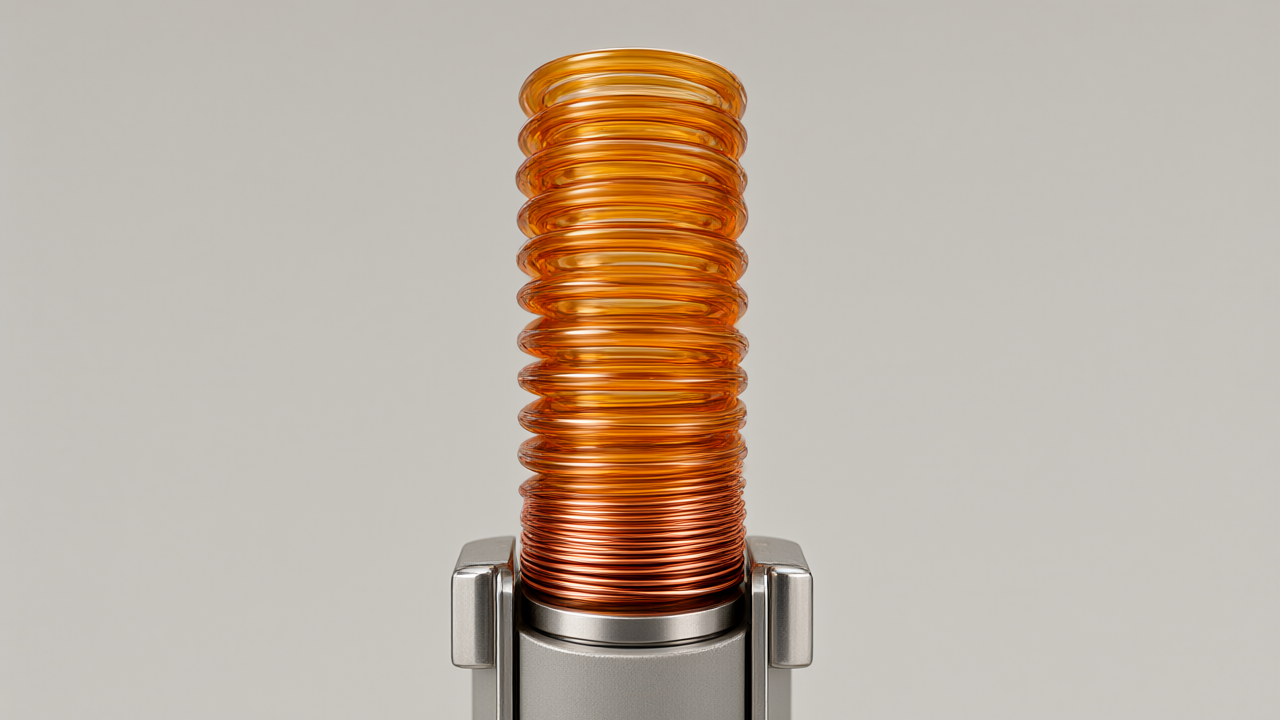
The University of Pennsylvania has developed CoilLCE, artificial muscle fibers capable of sensing their own contraction state and maintaining intermediate positions. By integrating a liquid crystal elastomer (LCE) with multilayer graphene powder and an embedded copper coil, the researchers created a soft actuator that translates electrical signals into muscle-like motion. In antagonistic pairs, these graphene-loaded fibers achieved an actuation strain of 16.1%, a 44% improvement over the 11.2% seen in pure LCE fibers.
Technical Details
The fibers, measuring 0.55 to 0.73 mm in diameter, utilize 0.25 wt.% graphene. This specific loading increased toughness to 632 MJ/m³—more than three times the 192 MJ/m³ of pure LCE—while decreasing stiffness to a range of 0.1 to 0.3 MPa, approximating human skeletal muscle. The researchers noted that at 0.75 wt.% graphene, alignment was impaired, reducing both breaking stress and actuation strain.
A 50 µm diameter copper coil serves as both the heater and the sensor. It triggers contraction via Joule heating, and because copper’s resistivity varies linearly with temperature, it provides a feedback signal. Using a PID controller, the system hit strain targets within approximately 2% and maintained a 30% contraction under a 13 g load for 30 minutes. The fibers demonstrated a work capacity of 343 J/kg, actuation rates up to 32% per second, and no measurable degradation over 116 cycles.
Demonstrations and Applications
The team demonstrated the technology through two primary applications:
- Robotic Hand: 3D-printed fingers played piano keys with tunable force, producing 48 mN for short notes and 120 mN for sustained notes.
- Robotic Eyes: Eight fibers in four antagonistic pairs rotated eyes up to 30°, matching geometric predictions.
Significance and Outlook
This work marks the first demonstration of feedback control on an LCE actuator. The researchers identify humanoid faces, which require dozens of small, coordinated muscles in confined spaces, as a primary target application. Funding for the project was provided by the National Science Foundation, the Army Research Office’s MURI program, and the National GEM Consortium.
Get our weekly technology intelligence — free
Receive an infographic that lets you judge at a glance whether each field’s analysis report is worth reading.
Subscribe Free — Weekly Tech Intelligence
By subscribing, you’ll receive Troy-Technical’s weekly technology intelligence newsletter.
- Your email and selected fields are used only to deliver the newsletter.
- We never share your information with third parties.
- You can unsubscribe anytime via the link in each email.
See our Privacy Policy for details.
Takes about a minute · Unsubscribe anytime