

Key Findings
The DASH MTB assay provides tuberculosis diagnosis within 20 minutes using either sputum or tongue swab specimens. In comparative studies, the test’s performance matched that of the Xpert MTB/RIF Ultra molecular test, reaching 100% accuracy on true negative tests and 91% accuracy on true positive results.
Technical Details
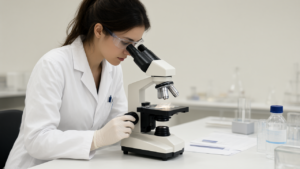
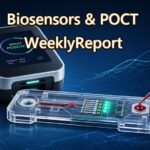
The assay operates on the DASH (Diagnostic Analyzer for Specific Hybridization) Rapid PCR System, a point-of-care device developed at Northwestern University. The workflow is designed for environments lacking laboratory infrastructure, requiring non-lab personnel to perform three processing steps before loading a test cartridge into the analyzer for automated detection.
- Specimen Versatility: While sputum is the preferred specimen due to higher bacterial loads, the assay supports tongue swabs for patients unable to produce sputum.
- Environmental Resilience: Test cartridges demonstrated storage stability at temperatures up to 113 F (45 C), making the system viable in regions with inconsistent electricity or refrigeration.
- Ease of Use: Tongue swab collection requires minimal training and can be performed on nearly all patients.
Background & Context
Traditional tuberculosis diagnosis often relies on bacterial culture, which is sensitive but time-consuming and prone to contamination. Furthermore, sputum collection via coughing can expose healthcare workers to infected air droplets. According to the World Health Organization, 1.23 million people died from tuberculosis in 2024, with the highest burden in impoverished areas with limited access to medical facilities.
Significance & Outlook
By enabling results within a single clinic visit, the DASH MTB assay addresses the “weakest link” in tuberculosis care: the diagnosis phase. The project, supported by the National Institutes of Health and the Gates Foundation, was led by Sally McFall of the Center for Innovation in Global Health Technologies. This work builds on previous point-of-care developments for hepatitis C and COVID, and collaborations with the University of Cape Town, Stellenbosch University, and the University of Washington.
Get our weekly technology intelligence — free
Receive an infographic that lets you judge at a glance whether each field’s analysis report is worth reading.
Subscribe Free — Weekly Tech Intelligence
By subscribing, you’ll receive Troy-Technical’s weekly technology intelligence newsletter.
- Your email and selected fields are used only to deliver the newsletter.
- We never share your information with third parties.
- You can unsubscribe anytime via the link in each email.
See our Privacy Policy for details.
Takes about a minute · Unsubscribe anytime