

Key Findings
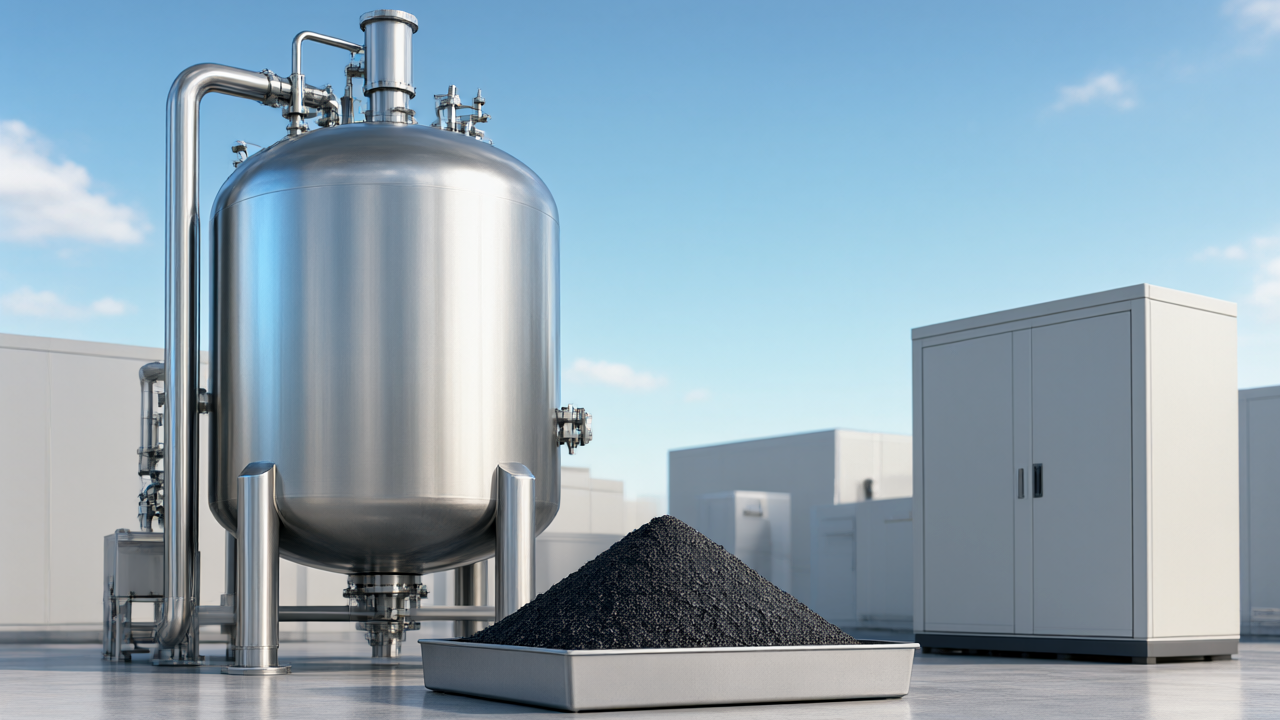
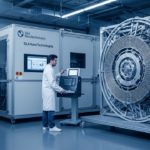
Molten Industries has launched a commercial-scale modular reactor in Oakland, California, capable of producing 300 tonnes per year of battery-grade graphite and hydrogen. The company claims this is the world’s first facility to produce battery-grade graphite directly from natural gas. The MG Series battery-anode graphite is scheduled to be available for customer sampling starting 1 December.
Technical Details
The production process utilizes methane pyrolysis, heating methane—the primary component of natural gas—in the absence of oxygen. This splits the gas into solid carbon and hydrogen rather than combusting it. Key technical advantages cited by Molten include:
- Yield: Natural gas-to-graphite yields exceeding 95%.
- Energy Efficiency: The technology eliminates the need for a graphitisation furnace and consumes approximately one-third of the electricity required for conventional synthetic graphite production.
- Cost: Natural gas feedstock costs are estimated to be around one-quarter of those for conventional synthetic graphite feedstocks.
- Emissions: The process produces zero process CO₂ emissions because methane is not combusted, though this does not include upstream emissions from gas production and transport.
Background & Context
Founded in 2021 by Stanford materials scientists Kevin Bush and Caleb Boyd, Molten has received backing from the US Department of Energy’s ARPA-E programme, the National Science Foundation, and investors including Breakthrough Energy Ventures, Fifty Years, and Union Square Ventures. The project addresses the US’s high dependency on imported battery-grade anode materials.
Significance & Outlook
The Oakland facility serves as a building block for larger production facilities, with Molten planning to replicate the modular reactor design to scale capacity. While most initial output will be sent to undisclosed customers for battery cell evaluation, the technology represents a shift toward domestic supply chains. Other North American efforts to reduce graphite dependence include Nouveau Monde Graphite’s proposed C$374 million plant in Quebec and research from the University of Kentucky into coal-to-graphite conversion.
Source: https://www.bestmag.co.uk/molten-graphite-production-from-natural-gas/
Get our weekly technology intelligence — free
Receive an infographic that lets you judge at a glance whether each field’s analysis report is worth reading.
Subscribe Free — Weekly Tech Intelligence
By subscribing, you’ll receive Troy-Technical’s weekly technology intelligence newsletter.
- Your email and selected fields are used only to deliver the newsletter.
- We never share your information with third parties.
- You can unsubscribe anytime via the link in each email.
See our Privacy Policy for details.
Takes about a minute · Unsubscribe anytime