Key Findings
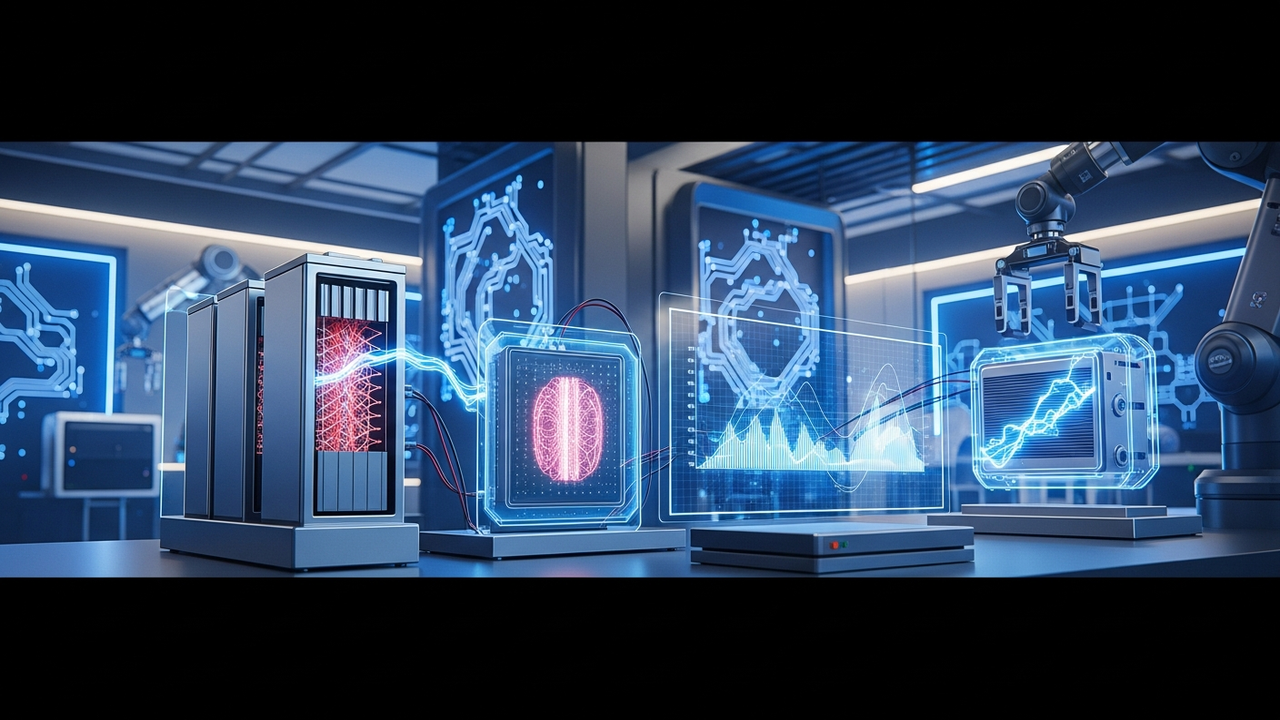
China has made solid-state battery development a core national strategy through its CASIP (China Automotive Solid-State Battery Industrialization Promotion) program, funneling over $830 million into a robust ecosystem integrating major corporations like CATL and BYD with universities and government agencies. Under this program, CATL initiated trial production of 20 Ah solid-state battery samples in late 2024, aiming for an ambitious energy density target of 500 Wh/kg. Furthermore, the Chinese Academy of Sciences has already unveiled a solid-state battery prototype achieving an impressive 451.5 Wh/kg. This concerted effort is focused on sulfide-based solid-state batteries, with the overarching goal of establishing China’s global leadership in EV battery technology through superior energy density and enhanced safety.
Technical Details
The CASIP program specifically prioritizes the development of sulfide-based solid-state batteries. Sulfide solid electrolytes are considered highly promising for realizing high-energy-density, fast-charging solid-state batteries due to their excellent ionic conductivity, relatively good mechanical properties, and wide electrochemical window. CATL’s 20 Ah samples represent a crucial first step towards cell-level validation for practical applications, with their 500 Wh/kg target representing nearly double the energy density of current top-performing lithium-ion batteries. The 451.5 Wh/kg prototype from the Chinese Academy of Sciences, with its high energy density, holds the potential to significantly extend EV driving ranges and revolutionize conventional EV performance. This technology, by eliminating liquid electrolytes, fundamentally removes the risk of battery thermal runaway, dramatically improving safety.
Background & Context
In an increasingly competitive electric vehicle market, supremacy in battery technology is a critical determinant of a nation’s industrial competitiveness. China is aggressively promoting EV adoption and aims to establish global leadership in battery technology, particularly in solid-state batteries. The CASIP program is a comprehensive initiative designed to achieve these national goals, maximizing the speed and efficiency of development by strengthening collaboration between research institutions and industry. The investment exceeding $830 million underscores China’s profound commitment to this sector.
Strategic Significance & Outlook
The national strategic focus on solid-state battery development through China’s CASIP program will have an immeasurable impact on the global EV and battery markets. The tangible achievements by CATL and the Chinese Academy of Sciences demonstrate China’s steady progress in solid-state battery technology, potentially transforming the competitive landscape of the EV market in the future. Higher energy density and enhanced safety are key to electric vehicles fully surpassing gasoline cars. As these technologies transition to mass production and enter the market, China is poised to establish new standards in EV battery technology and further accelerate the global electrification wave. This is expected to bring about significant changes across the entire automotive industry worldwide.
Source: https://www.youtube.com/watch?v=NfvZl61mzvs
Get our weekly technology intelligence — free
Receive an infographic that lets you judge at a glance whether each field’s analysis report is worth reading.
Subscribe Free — Weekly Tech Intelligence
By subscribing, you’ll receive Troy-Technical’s weekly technology intelligence newsletter.
- Your email and selected fields are used only to deliver the newsletter.
- We never share your information with third parties.
- You can unsubscribe anytime via the link in each email.
See our Privacy Policy for details.
Takes about a minute · Unsubscribe anytime


Comments