Key Findings
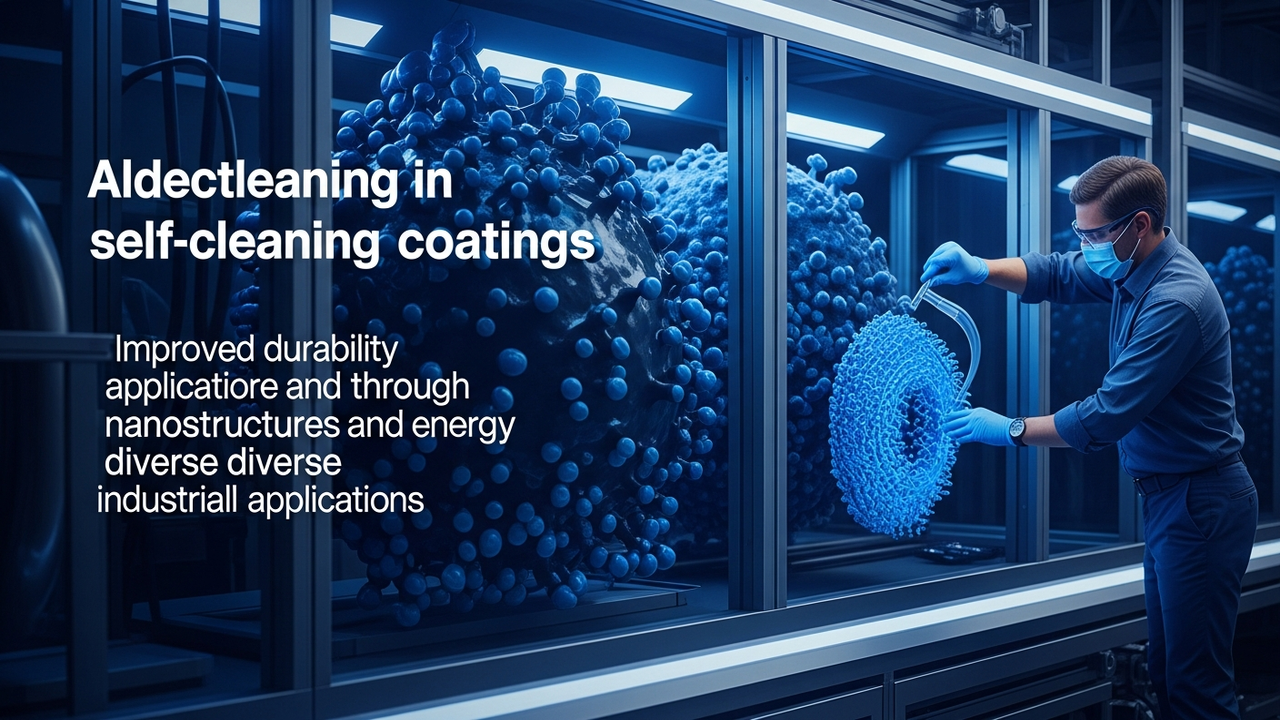
A comprehensive review has been published on self-cleaning coatings, deeply exploring their core functional characteristic: superhydrophobicity. The self-cleaning function is defined by surface properties characterized by high contact angles and low sliding angles, achieved through the synergistic effect of low surface energy and precisely engineered micro-surface structures. This review highlights design principles inspired by nature’s ‘Lotus-Effect’ and the wide range of industrial applications offered by these innovative coatings.
Technical / Clinical Details
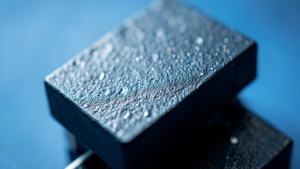
The primary mechanism of self-cleaning coatings is based on the surface’s superhydrophobicity—the property that water droplets barely adhere to the surface and easily roll off. This phenomenon allows water droplets to trap and wash away dirt particles as they roll, creating a self-cleaning effect. To achieve superhydrophobicity, controlling both the microstructure and chemical properties of the surface is essential. Microstructures are formed by creating roughness or pillar-like structures ranging from nanoscale to microscale, minimizing the contact area between water droplets and the surface. In terms of chemical properties, low surface energy materials such as fluoropolymers and silicon-based polymers are utilized. The review introduces various techniques for applying these materials to substrates, including sol-gel methods, chemical vapor deposition (CVD), spray coating, and dip coating. These techniques enable the imparting of self-cleaning properties to diverse substrates such as glass, metals, plastics, and textiles. According to experimental results, these coatings can achieve water contact angles exceeding 160° and sliding angles of less than 5° under specific conditions, demonstrating the ability to remove approximately 90% of pollutant particles.
Background & Context
In modern society, maintaining clean and hygienic environments is crucial for public health, industrial efficiency, and product lifespan. However, many surfaces—such as building facades, car windows, medical devices, and solar panels—are constantly exposed to dirt, dust, water stains, and microbial contamination. This contamination leads to aesthetic degradation, functional impairment, and increased maintenance costs. Traditional cleaning methods consume large amounts of water, energy, and chemical detergents, posing environmental challenges. Self-cleaning coatings offer a sustainable and efficient solution to these problems, particularly aligning with modern product design trends that emphasize ‘maintenance-free’ and ‘low environmental impact.’
Strategic Significance & Outlook
Self-cleaning coating technology is still in a developing stage, and key future research challenges include improving long-term durability, mechanical strength, stability against UV radiation, and cost-effectiveness in large-scale production. Currently, some coatings are vulnerable to friction and abrasion, and their effectiveness may degrade over time. Future research will focus on overcoming these challenges by designing hybrid materials, integrating nanocomposites, and developing more robust binder systems. Furthermore, with the exploration of potential needs in new application areas such as smart cities, autonomous vehicles, medical devices, and agriculture, the self-cleaning coating market is projected to expand rapidly. International standardization and safety evaluations are also essential for the widespread adoption of this technology.
Source: https://www.researchgate.net/publication/230248805_Coatings_with_self-cleaning_properties
Get our weekly technology intelligence — free
Receive an infographic that lets you judge at a glance whether each field’s analysis report is worth reading.
Subscribe Free — Weekly Tech Intelligence
By subscribing, you’ll receive Troy-Technical’s weekly technology intelligence newsletter.
- Your email and selected fields are used only to deliver the newsletter.
- We never share your information with third parties.
- You can unsubscribe anytime via the link in each email.
See our Privacy Policy for details.
Takes about a minute · Unsubscribe anytime




Comments