Key Findings
Nanoscience Instruments has announced its plans to prominently showcase innovative solutions for nanomaterial fabrication and characterization at the American Chemical Society (ACS) Fall 2026 conference, scheduled for August 24-26 in Chicago, Illinois, USA. Their technology is poised to enable precise material development and analysis at the nanoscale, thereby accelerating the pace of research and development across critical sectors.
Technical / Clinical Details
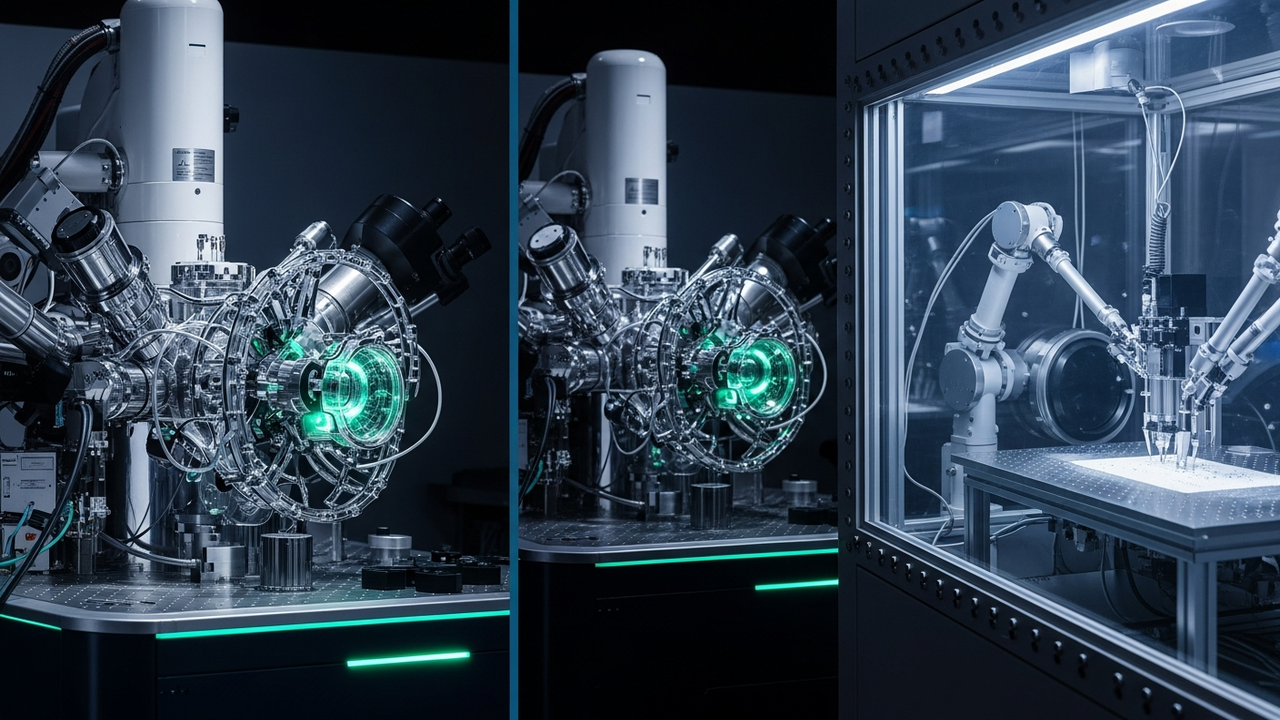
The solutions presented by Nanoscience Instruments encompass the entire lifecycle of nanomaterials. Specifically, they include electrospinning equipment for the efficient production of high-performance nanofibers, alongside advanced characterization tools such as Scanning Probe Microscopes (SPM) and Atomic Force Microscopes (AFM) for atomic-level analysis of material surface morphology, composition, and interfacial properties. These technologies are indispensable for a wide range of applications: exploring new synthetic routes in polymer science, optimizing cell-material interactions in biomaterials, and elucidating catalytic activity or adsorption mechanisms in surface chemistry. The company’s systems are crucial for gaining a deep understanding of the structure-function relationships in nanoscale materials, aiming to resolve bottlenecks in novel material development. The AFM technology, in particular, offers non-destructive, high-resolution mapping of surface roughness, mechanical properties, and electrical characteristics, contributing to the prediction and optimization of material performance.
Background & Context
Nanomaterial research and development stand at the forefront of innovation across numerous industries, including electronics, medicine, energy, and aerospace. In these fields, the ability to manipulate materials at the nanoscale and precisely control their properties dictates the performance of next-generation products. However, nanomaterial fabrication is often complex, and accurately evaluating their intricate structures and functionalities presents challenges with conventional analytical methods. Companies like Nanoscience Instruments address these challenges by providing reliable and reproducible advanced tools, assisting researchers and engineers in maximizing the potential of nanomaterials. The ACS Fall conference serves as one of the world’s largest events in chemistry and related sciences, acting as a pivotal venue for sharing the latest discoveries and technological trends.
Strategic Significance & Outlook
Nanoscience Instruments’ showcase will streamline the workflow from manufacturing to characterization in the nanomaterials field, accelerating new discoveries. The widespread adoption of their solutions is expected to drive the practical implementation of diverse nanotechnology products, including higher-performance battery materials, more effective drug delivery systems, more durable coatings, and innovative sensors. Furthermore, by fostering deeper collaboration between academia and industry, the bridge from fundamental research to applied development will be strengthened, maximizing the societal benefits delivered by nanotechnology. In the future, these advanced tools also hold the potential for integration with AI and machine learning, further automating and accelerating the material discovery process.
Source: #
Get our weekly technology intelligence — free
Receive an infographic that lets you judge at a glance whether each field’s analysis report is worth reading.
Subscribe Free — Weekly Tech Intelligence
By subscribing, you’ll receive Troy-Technical’s weekly technology intelligence newsletter.
- Your email and selected fields are used only to deliver the newsletter.
- We never share your information with third parties.
- You can unsubscribe anytime via the link in each email.
See our Privacy Policy for details.
Takes about a minute · Unsubscribe anytime








Comments