Key Findings
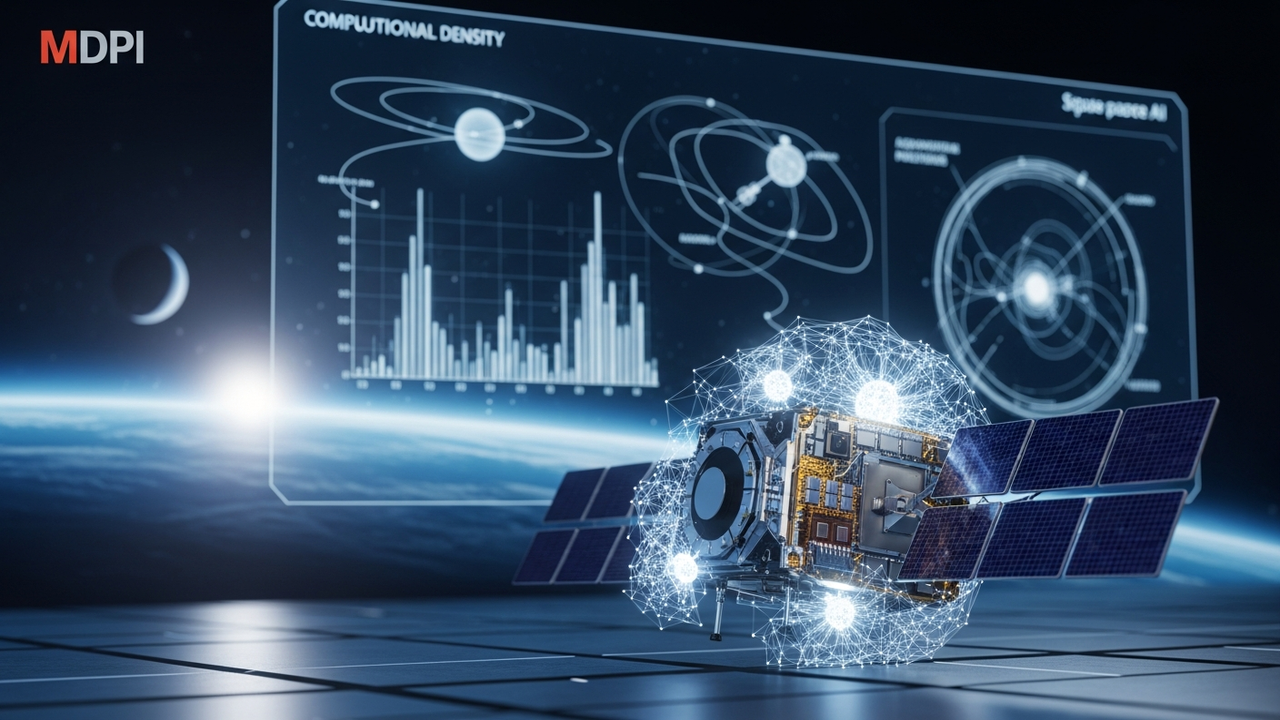
The paper ‘More TOPS, Less Mass: Compute-Density Metrics for Enabling Future AI Missions in Space,’ published in MDPI’s Engineering Proceedings, introduces compute-density (TOPS/kg, or Tera Operations Per Second per kilogram) as a crucial new metric for evaluating the feasibility of AI missions in space. This metric highlights how efficiently small spacecraft can perform advanced AI processing under stringent mass and power constraints, making it an indispensable criterion for future space system design. The research emphasizes that high-performance, space-qualified edge processors, akin to the Jetson class, pave the way for deploying previously impractical workloads like computer vision, data triage, change detection, and autonomy on small satellites.
Technical Details
This paper offers guidelines for selecting and optimizing AI hardware to maximize in-space AI processing capabilities. TOPS/kg plays a central role in evaluating the performance of onboard AI systems, especially for platforms with severe mass and power limitations like small satellites. The study deeply explores the potential of edge AI processors, which are commercial off-the-shelf (COTS) processors like the NVIDIA Jetson series adapted for the space environment. These processors combine high parallel processing power with energy efficiency, enabling tasks such as real-time image analysis, anomaly detection, and autonomous decision-making to be performed directly on board the spacecraft. This capability significantly reduces the volume of data transmitted to Earth and dramatically shortens mission response times.
Background & Context
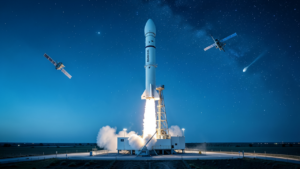
The application of AI in space missions is gaining significant attention across various domains, including scientific exploration, Earth observation, space situational awareness, and in-orbit servicing. The proliferation of small satellites (e.g., CubeSats) has amplified the need for low-cost, rapid deployment of AI capabilities in space. However, challenges such as space radiation, extreme temperature fluctuations, and stringent power and mass constraints have traditionally hindered the integration of high-performance AI hardware. The TOPS/kg metric proposed in this research provides a systematic framework for designing and evaluating space-borne AI systems while accounting for these constraints, thus alleviating a major bottleneck in the field.
Strategic Significance & Outlook
The adoption of the compute-density metric TOPS/kg is expected to accelerate the proliferation of onboard AI in future space missions. This will enable spacecraft to make more sophisticated decisions autonomously without direct Earth-based intervention, enhancing mission efficiency and resilience. For instance, autonomous scientific data collection, automated space debris tracking and avoidance, and intelligent path planning for planetary rovers become more feasible. Furthermore, the continuous evolution of space-qualified edge AI processors and the optimization of AI models for lightweight and energy-efficient operation will create new business opportunities in the space industry, making it an attractive sector for investors. Ultimately, this technology is anticipated to serve as a foundational element for the development of orbital data centers and space cloud computing.
Source: https://doi.org/10.3390/engproc2026142011
Get our weekly technology intelligence — free
Receive an infographic that lets you judge at a glance whether each field’s analysis report is worth reading.
Subscribe Free — Weekly Tech Intelligence
By subscribing, you’ll receive Troy-Technical’s weekly technology intelligence newsletter.
- Your email and selected fields are used only to deliver the newsletter.
- We never share your information with third parties.
- You can unsubscribe anytime via the link in each email.
See our Privacy Policy for details.
Takes about a minute · Unsubscribe anytime


Comments