Key Findings
The U.S. Department of Energy (DOE) has announced an $11 million funding commitment across three projects designed to accelerate domestic large-scale manufacturing of solid-state batteries. These initiatives, part of the FY22 AMMTO Battery Manufacturing Lab Call, specifically target the critical challenges associated with scaling up solid-state battery production and integrating these advanced technologies into existing manufacturing infrastructures.
Technical / Clinical Details
- Oak Ridge National Laboratory (ORNL) Project: Collaborating with Intecells and High-T Tech, ORNL will focus on converting the manufacturing process for oxide-based solid-state electrolytes from batch to continuous production. The ambitious goal is to scale up to large-format cells of 1 Ampere-hour (Ah) with an energy density exceeding 350 Watt-hours per kilogram (Wh/kg), which represents a significant leap in production efficiency and cell performance. This transition is vital for making solid-state batteries economically viable for mass markets.
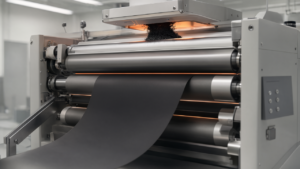
- Argonne National Laboratory (ANL) and ORNL Joint Project: In partnership with industrial collaborators including Ampcera, this project will undertake a comprehensive examination of both slurry-based and dry processes within roll-to-roll (R2R) manufacturing. The core objectives include optimizing solid electrolytes to improve their ionic conductivity and stability, while simultaneously enhancing the productivity and throughput of manufacturing lines. Key areas of focus will involve managing defects, reducing interfacial resistance, and improving compatibility between solid electrolytes and electrode materials.
Background & Context
Solid-state batteries are heralded as a transformative technology due to their potential for higher energy density, enhanced safety (eliminating flammable liquid electrolytes), and longer cycle life compared to conventional lithium-ion batteries. However, mass production challenges, particularly the technical complexities and cost implications of scaling these novel materials and manufacturing processes, have hindered their widespread adoption. The DOE’s strategic investment underscores a national priority to de-risk and accelerate the domestic development and production of these next-generation batteries. This move is aligned with broader efforts to secure a resilient domestic battery supply chain, reducing reliance on foreign sources for critical components and advancing clean energy goals.
Strategic Significance & Outlook
The success of these funded projects will be pivotal in establishing a robust domestic ecosystem for solid-state battery manufacturing in the U.S. The development of continuous manufacturing techniques and optimized R2R processes promises substantial reductions in production costs and significant improvements in efficiency, thereby accelerating the commercialization timeline for solid-state technology. Furthermore, close collaboration between national laboratories and industrial partners is expected to facilitate rapid translation of research breakthroughs into practical applications. In the long term, these advancements are poised to underpin the widespread deployment of solid-state batteries across various sectors, including electric vehicles (EVs), grid-scale energy storage, and critical defense applications, cementing the U.S.’s leadership in advanced battery technologies.
Source: https://www.energy.gov/cmei/ammto/funding-selections-fy23-ammto-battery-manufacturing-lab-call
Get our weekly technology intelligence — free
Receive an infographic that lets you judge at a glance whether each field’s analysis report is worth reading.
Subscribe Free — Weekly Tech Intelligence
By subscribing, you’ll receive Troy-Technical’s weekly technology intelligence newsletter.
- Your email and selected fields are used only to deliver the newsletter.
- We never share your information with third parties.
- You can unsubscribe anytime via the link in each email.
See our Privacy Policy for details.
Takes about a minute · Unsubscribe anytime