Key Findings
A bibliometric analysis covering 2,630 PROTAC (Proteolysis-Targeting Chimera) publications from 2001 to 2025 demonstrates a clear evolution in research focus. The field has shifted from early investigations into E3 ligase recruitment and small-molecule design to current hotspots such as understanding the structural basis, optimizing ternary complex design, targeting EGFR for degradation, enhancing oral bioavailability, and leveraging AI-driven design. China and the USA are the leading contributors to global research output. Identified as emerging frontiers are the improvement of oral bioavailability, the expansion of the E3 ligase repertoire, and the design of central nervous system (CNS)-penetrant degraders. This analysis highlights that PROTAC research has entered the pivotal-trial era, with the first Phase 3 trial readout reported in 2025.
Technical / Clinical Details
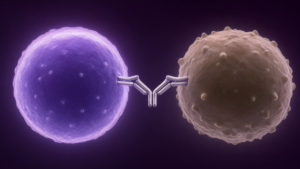
PROTACs are bifunctional molecules that induce the ubiquitination and subsequent proteasomal degradation of target proteins by bringing them into proximity with an E3 ubiquitin ligase. Early research focused on validating the PROTAC concept and optimizing ligands that recruit specific E3 ligases (e.g., VHL, CRBN). However, this analysis indicates a transition towards more complex aspects:
- Structural Basis and Ternary Complex Design: Understanding the structural requirements for PROTACs to stably bridge the target protein and E3 ligase, forming a functional ternary complex, is crucial for improving efficiency and selectivity.
- EGFR-Directed Degradation: Active research targets proteins like EGFR (Epidermal Growth Factor Receptor), which are critical in cancers like lung cancer and often develop resistance to conventional inhibitors. PROTACs offer a novel way to degrade them.
- Oral Bioavailability and CNS Penetrance: Developing PROTACs with good oral bioavailability for patient convenience and CNS penetrance for treating neurodegenerative diseases is a significant future challenge.
- AI-Driven Design: AI is emerging as a powerful tool to predict and design optimal PROTAC structures from vast chemical spaces, thereby accelerating the synthetic process.
The reporting of the first PROTAC Phase 3 trial results in 2025 signifies that this modality is moving beyond the proof-of-concept stage and is establishing itself as a clinically effective therapeutic option.
Background & Context
PROTAC technology holds the potential to intervene in ‘undruggable’ target proteins that were inaccessible to traditional small molecules and antibody drugs in many diseases, including cancer. This potential has driven substantial R&D investments from both academia and the pharmaceutical industry. The dominance of the USA and China in research output indicates their pivotal roles in technological innovation in this field. China, in particular, has seen rapid development in PROTAC research due to increased investment in biotechnology and regulatory reforms in recent years.
Strategic Significance & Outlook
The future frontiers of PROTAC research lie in further improving oral bioavailability, expanding the E3 ligase repertoire to enhance target selectivity, and developing CNS-penetrant degraders for neurological disorders like Alzheimer’s and Parkinson’s disease. AI will be a powerful means to solve these complex design challenges. The reporting of the first Phase 3 trial results suggests that PROTACs will soon be widely used in clinical practice, potentially revolutionizing the treatment paradigms for cancer and other diseases globally.
Get our weekly technology intelligence — free
Receive an infographic that lets you judge at a glance whether each field’s analysis report is worth reading.
Subscribe Free — Weekly Tech Intelligence
By subscribing, you’ll receive Troy-Technical’s weekly technology intelligence newsletter.
- Your email and selected fields are used only to deliver the newsletter.
- We never share your information with third parties.
- You can unsubscribe anytime via the link in each email.
See our Privacy Policy for details.
Takes about a minute · Unsubscribe anytime