Key Findings
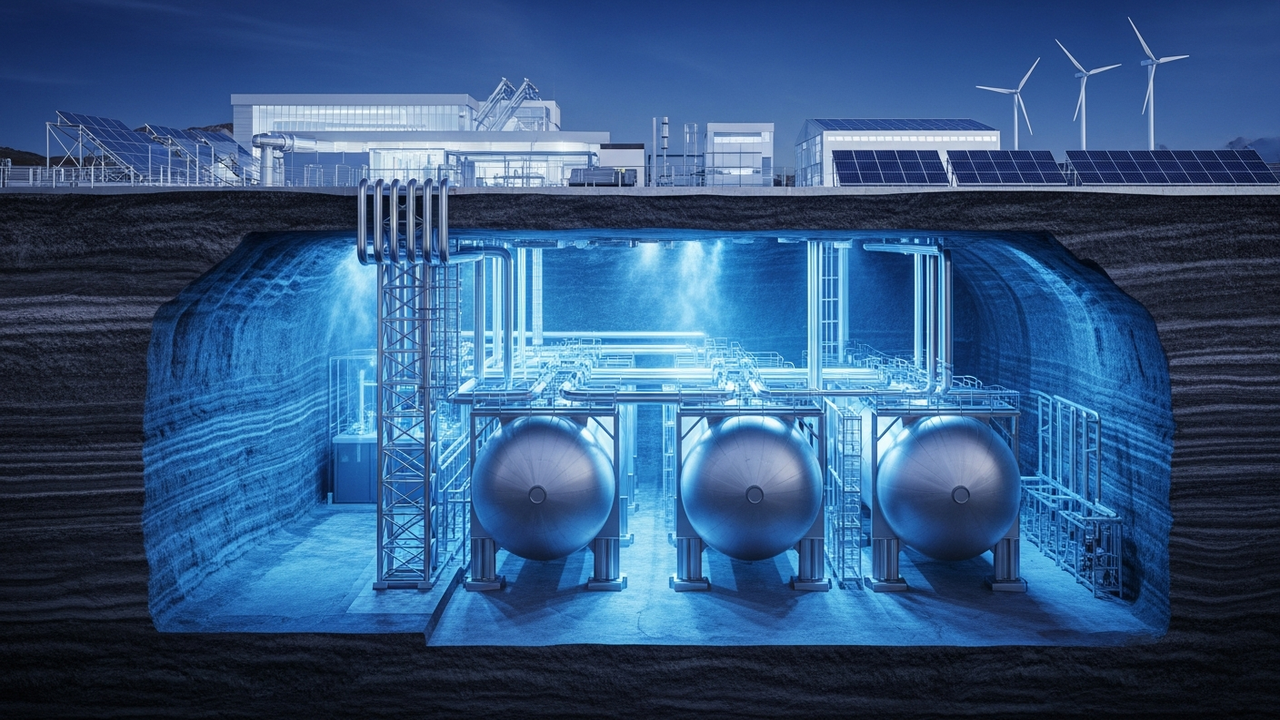
The U.S. Department of Energy (DOE) has released a comprehensive update on hydrogen storage options, crucial for enabling the widespread adoption of hydrogen energy across central production facilities, transportation terminals, and end-use sites. Key advancements highlighted include sophisticated cryogenic storage solutions for liquid hydrogen (LH2) and the exploration of large-scale subsurface geological storage methods, particularly in salt caverns, building upon decades of experience in the natural gas sector.
Technical / Clinical Details
- Liquid Hydrogen (LH2) Storage: Storing hydrogen in its liquid state requires extremely low temperatures, specifically -253°C (-423°F). This necessitates the use of highly insulated, specialized cryogenic vessels to minimize heat ingress. Despite advanced insulation, some heat leakage is inevitable, leading to a phenomenon known as ‘boil-off,’ where liquid hydrogen converts back into gaseous hydrogen. To manage the resultant pressure increase, systems typically incorporate mechanisms for either venting the gaseous hydrogen or re-compressing it back into the storage system. These technical solutions are vital for maintaining storage efficiency and safety, especially for long-duration applications and transportation.
- Large-Scale Subsurface Storage: Subsurface geological storage is emerging as a highly cost-effective and scalable solution for storing large volumes of hydrogen. The DOE is actively investigating formations such as salt caverns, which have a proven track record for safely storing natural gas for many years. Other potential candidates include depleted oil and gas fields and aquifers. These geological structures offer capacities ranging from hundreds to thousands of tons of hydrogen, making them ideal for buffering seasonal fluctuations in hydrogen supply and demand, thereby enhancing grid stability and energy security.
Background & Context
Hydrogen, as a versatile clean energy carrier, holds immense promise for decarbonizing various sectors. However, its widespread deployment hinges on the development of efficient, safe, and cost-effective storage technologies. With the increasing integration of intermittent renewable energy sources for hydrogen production, large-scale storage infrastructure is paramount to reconcile variable supply with consistent demand. Current hydrogen storage methods, such as compressed gas and liquid storage, each present their own challenges regarding cost, energy density, and efficiency. The DOE’s strategic focus on these advanced storage solutions is a critical step towards overcoming these barriers and facilitating a robust transition to a hydrogen-centric economy.
Strategic Significance & Outlook
The DOE’s investments in these hydrogen storage technologies are designed to fortify the entire hydrogen supply chain, from production to end-use. Improved efficiency in liquid hydrogen storage will accelerate its adoption in long-haul transportation and mobility applications. Concurrently, the development of large-scale geological storage will enable greater integration with renewable energy projects, serving as a vital component for seasonal energy storage and contributing to grid stabilization. As these technologies mature, hydrogen is poised to become a more pervasive energy source across industrial, commercial, and residential sectors, playing a decisive role in achieving global decarbonization targets and enhancing energy resilience.
Source: https://www.energy.gov/cmei/fuels/site-and-bulk-hydrogen-storage
Get our weekly technology intelligence — free
Receive an infographic that lets you judge at a glance whether each field’s analysis report is worth reading.
Subscribe Free — Weekly Tech Intelligence
By subscribing, you’ll receive Troy-Technical’s weekly technology intelligence newsletter.
- Your email and selected fields are used only to deliver the newsletter.
- We never share your information with third parties.
- You can unsubscribe anytime via the link in each email.
See our Privacy Policy for details.
Takes about a minute · Unsubscribe anytime