Key Findings
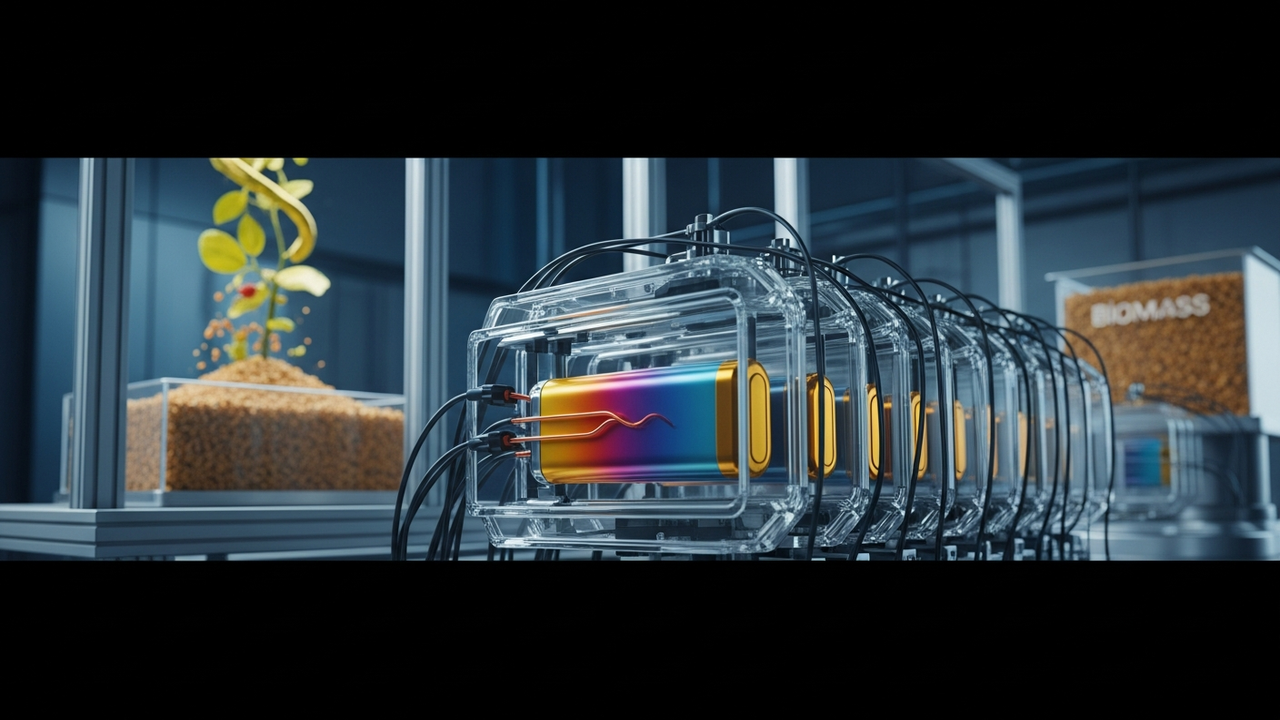
In a recent study announced via EurekAlert!, a groundbreaking CuAu alloy electrocatalyst has been developed that enables ultralow-voltage bipolar hydrogen production. This innovation achieves a dramatic reduction in cell voltage by replacing the energy-intensive oxygen evolution reaction (OER) at the anode with the electrochemical oxidation of biomass-derived 5-hydroxymethylfurfural (HMF). This dual benefit of highly efficient hydrogen production and the simultaneous creation of high-value chemicals from biomass represents a significant leap forward in the economics and sustainability of green hydrogen technologies.
Technical / Clinical Details
- Catalyst Composition: The CuAu alloy is specifically engineered to exhibit high selectivity and activity for particular electrochemical oxidation reactions. Gold (Au) plays a crucial role in boosting the activity for HMF oxidation, while copper (Cu) contributes to catalyst stability and helps manage overall cost, making the catalyst economically viable.
- Reaction Mechanism: Traditional water electrolysis involves the generation of oxygen gas at the anode, a reaction that demands a high overpotential, consuming a substantial portion of the total cell voltage. In this novel approach, HMF is selectively oxidized at the anode, converting into high-value products like HMF-FDCA (furan-2,5-dicarboxylic acid) at a much lower potential. This bypasses the OER entirely, significantly reducing the external energy input required for the process.
- Bipolar Hydrogen Production: This system facilitates ‘bipolar’ production, where hydrogen gas is generated at the cathode through water reduction, while HMF oxidation occurs simultaneously at the anode. This co-production strategy not only enhances energy efficiency by lowering the overall cell voltage but also creates additional economic value by producing valuable chemical intermediates.
Background & Context
The production of green hydrogen, by coupling renewable energy with water electrolysis, is heralded as a crucial strategy for combating global warming. However, its energy efficiency has been consistently limited by the oxygen evolution reaction (OER) at the anode. The OER requires significant electrical input, making it a primary contributor to the high overall cost of hydrogen production. Approaches such as this research, which replace OER with more efficient and beneficial reactions, are gaining prominence under the concept of ‘hydrogen and chemical co-production,’ and are vital for improving the economic viability of the hydrogen economy.
Strategic Significance & Outlook
The development of ultralow-voltage bipolar hydrogen production using CuAu alloy electrocatalysts offers a twofold advantage: reducing hydrogen manufacturing costs and simultaneously producing high-value chemicals from biomass. If this technology is successfully commercialized, it could dramatically enhance the competitiveness of green hydrogen, while also opening new avenues to reduce reliance on fossil fuel-derived chemical products. This represents a transformative breakthrough that is expected to significantly contribute to the advancement of sustainable energy and chemical industries worldwide, fostering a more integrated and resource-efficient industrial ecosystem.
Source: https://www.eurekalert.org/news-releases/1134959
Get our weekly technology intelligence — free
Receive an infographic that lets you judge at a glance whether each field’s analysis report is worth reading.
Subscribe Free — Weekly Tech Intelligence
By subscribing, you’ll receive Troy-Technical’s weekly technology intelligence newsletter.
- Your email and selected fields are used only to deliver the newsletter.
- We never share your information with third parties.
- You can unsubscribe anytime via the link in each email.
See our Privacy Policy for details.
Takes about a minute · Unsubscribe anytime