Key Findings
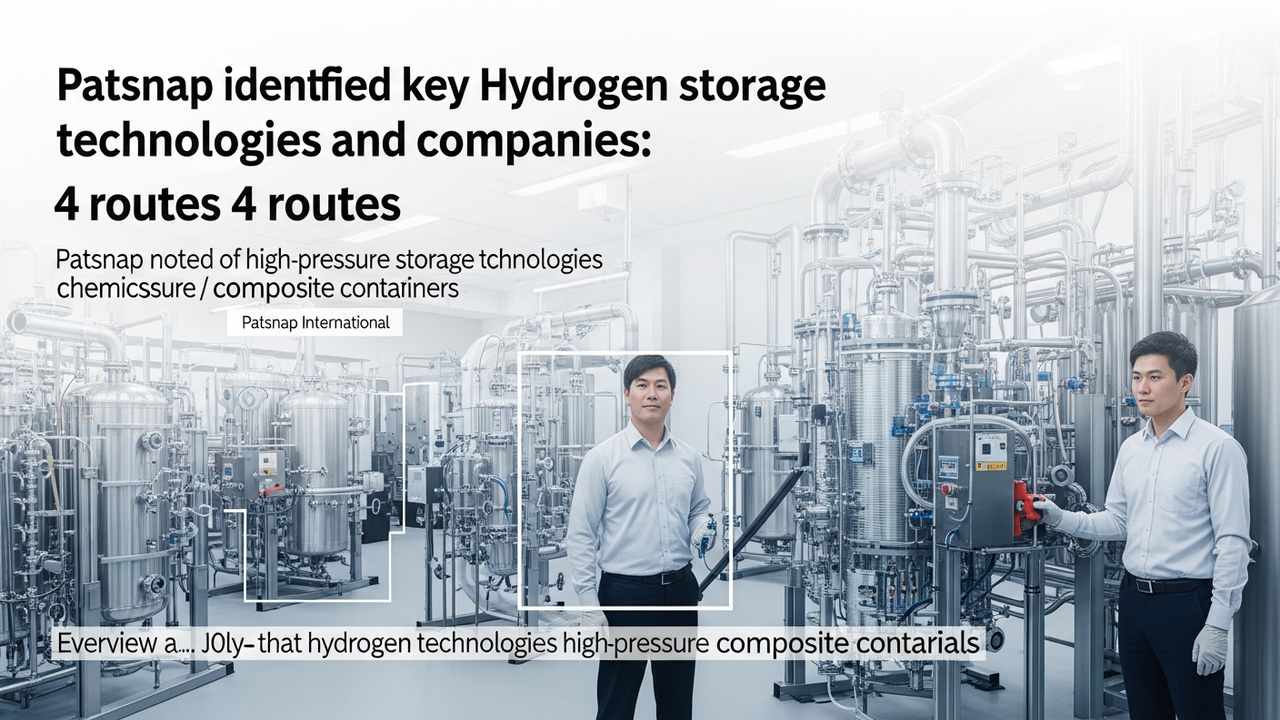
According to an analysis by Patsnap, an intellectual property intelligence platform, hydrogen storage technologies are currently advancing along four distinct and primary technological routes: high-pressure composite vessels, cryogenic liquid systems, chemical carriers, and solid-state materials. This diversified approach is essential for addressing the varied storage requirements and challenges inherent in the commercialization and widespread adoption of hydrogen energy across different sectors.
Technical / Clinical Details
- High-Pressure Composite Vessels:
- Overview: These are lightweight, high-strength containers designed to store hydrogen gas at elevated pressures (350 to 700 bar). Typically constructed from carbon fiber composite materials, they are predominantly used in automotive and other transportation applications where weight and safety are critical.
- Leading Companies: NPROXX, Hexagon Purus, and OPmobility (formerly Plastic Omnium) are key suppliers in this segment, continuously working on enhancing safety, capacity, and cost-efficiency of these tanks.
- Cryogenic Liquid Systems:
- Overview: This method involves liquefying hydrogen at an extremely low temperature of -253°C (-423°F) and storing it in insulated tanks. Liquid hydrogen offers a higher energy density by volume compared to compressed gas, making it suitable for long-distance transportation and large-volume storage applications.
- Leading Companies: Chart Industries is a global leader in cryogenic liquid hydrogen storage and transport systems, leveraging extensive expertise in ultra-low temperature technologies for various industrial gases.
- Chemical Carriers (LOHC: Liquid Organic Hydrogen Carriers):
- Overview: Hydrogen is chemically bound to an organic compound (e.g., benzyl toluene), allowing it to be stored and transported as a liquid at ambient temperature and pressure. Hydrogen can then be released from the carrier molecule when needed. This method offers inherent safety advantages.
- Leading Companies: Hydrogenious LOHC Technologies is a pioneer in LOHC technology, providing safe and efficient hydrogen carrier solutions that integrate seamlessly with existing liquid fuel infrastructure.
- Solid-State Materials:
- Overview: This route involves storing hydrogen by absorption or adsorption into solid materials such as metal hydrides, Metal-Organic Frameworks (MOFs), or other advanced porous materials. These systems can potentially allow storage at relatively lower pressures and temperatures, enhancing safety.
- Leading Companies: H2MOF is focused on developing MOF-based hydrogen storage materials, aiming to achieve high-density and inherently safe storage solutions for various applications.
Background & Context
While hydrogen holds immense potential as a clean energy carrier, its storage and transportation continue to pose significant technical and economic challenges. Due to hydrogen’s low volumetric energy density and high flammability, developing safe, efficient, and cost-effective storage solutions is paramount for the widespread adoption of a hydrogen economy. Patsnap’s analysis illustrates how each technological route is evolving to meet specific market requirements, such as those for automotive, stationary power, or long-distance bulk transport, highlighting the diverse needs of the global hydrogen value chain.
Strategic Significance & Outlook
These diverse hydrogen storage technologies, while potentially competitive, are also complementary, serving to strengthen the entire hydrogen energy supply chain by addressing different application and scale needs. Continued technological innovation and cost reductions are expected to lead to the proliferation of safer, more efficient, and economically viable hydrogen storage solutions, accelerating the expansion of hydrogen utilization across the transportation, industrial, and power sectors. The collective expertise of these companies working across different routes ensures a more robust and flexible path toward realizing a comprehensive hydrogen economy, facilitating the global energy transition.
Source: https://www.patsnap.com/resources/blog/articles/hydrogen-storage-companies/
Get our weekly technology intelligence — free
Receive an infographic that lets you judge at a glance whether each field’s analysis report is worth reading.
Subscribe Free — Weekly Tech Intelligence
By subscribing, you’ll receive Troy-Technical’s weekly technology intelligence newsletter.
- Your email and selected fields are used only to deliver the newsletter.
- We never share your information with third parties.
- You can unsubscribe anytime via the link in each email.
See our Privacy Policy for details.
Takes about a minute · Unsubscribe anytime