Key Findings
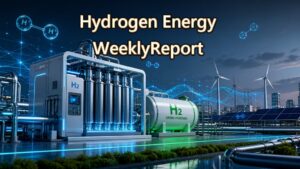
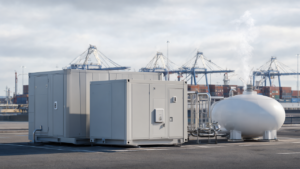
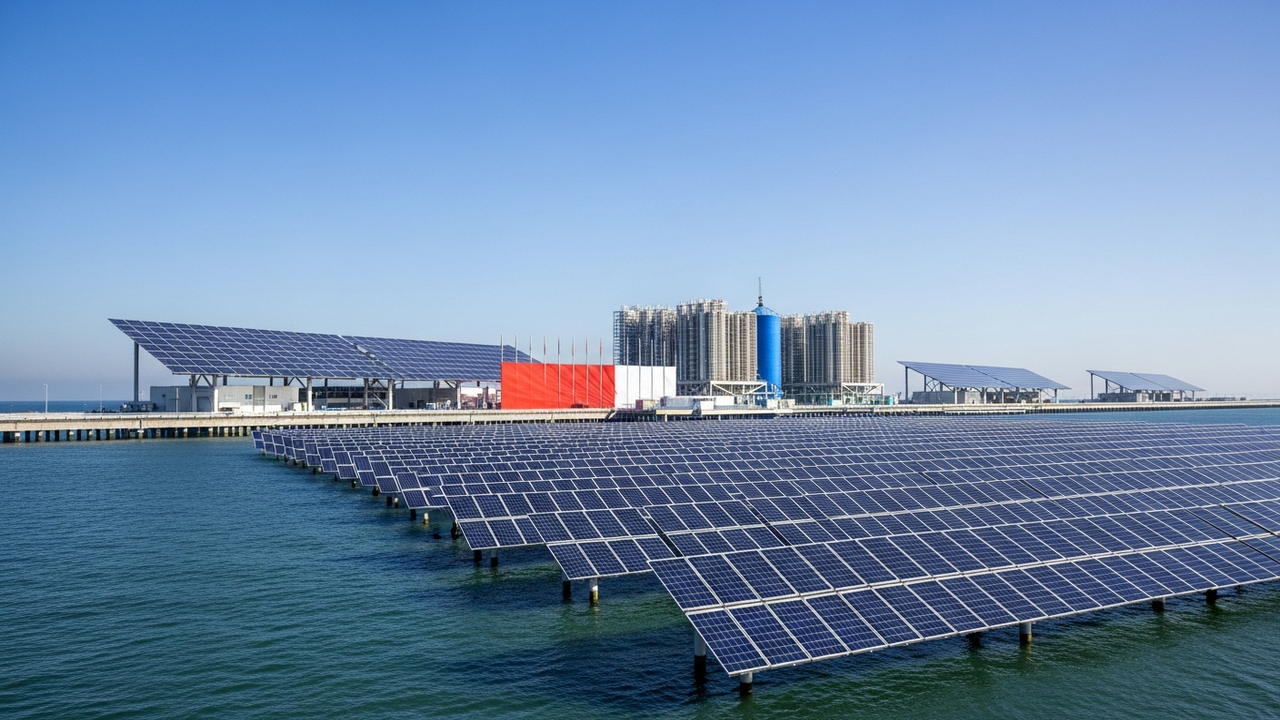
Off the coast of Rudong, Jiangsu Province, China has successfully brought online one of the world’s largest integrated solar-hydrogen storage plants. This groundbreaking system seamlessly combines 400 MW of solar power generation, a 60 MW/120 MWh battery energy storage system, and a green hydrogen production facility capable of producing 482 tonnes of high-purity hydrogen annually, marking a significant step in the effective utilization of renewable energy and industrial decarbonization.
Technical & Industrial Details
A key feature of this integrated plant is its ability to overcome the intermittency challenges of renewable energy by intelligently coordinating multiple technologies. Electricity generated from the solar farm is not only fed into the grid but also stored in the battery system during periods of surplus and directly supplied to electrolyzers for green hydrogen production. This ‘direct current direct supply’ approach minimizes energy losses typically associated with AC/DC conversion, thereby enhancing overall system efficiency. The high-purity hydrogen produced is then distributed to local steel mills, chemical plants, and the transportation sector, making a substantial contribution to the decarbonization of these heavy industrial sectors. The annual production capacity of 482 tonnes is scaled to meet specific industrial demands, helping to reduce reliance on fossil fuels.
Background & Context
China has prioritized large-scale renewable energy deployment and hydrogen energy development as cornerstones of its national strategy to achieve carbon neutrality by 2060. Eastern coastal regions, with their vibrant industrial activity and high energy demand, face significant pressure for decarbonization. The operational launch of such an integrated plant in this region serves as a powerful model for expanding renewable energy adoption and demonstrates an efficient integration of variable renewables with hydrogen production. This initiative underscores China’s leadership in the global energy transition, providing a scalable blueprint for other industrialized areas.
Strategic Significance & Outlook
The successful operation of the Rudong integrated solar-hydrogen storage plant is expected to serve as an important benchmark for similar models to be replicated across other regions and countries. Operational data and insights from this plant will contribute to further optimizing integrated renewable energy and hydrogen production technologies and reducing costs. In the future, these types of plants are anticipated to scale up even further, strengthening the entire hydrogen value chain—from production and storage to transportation and utilization. This will accelerate decarbonization in heavy industry and long-distance transport, playing an indispensable role in building sustainable energy systems. Investors are showing considerable interest in such proven integrated solutions, recognizing their potential for significant environmental and economic impact.
Source: https://www.youtube.com/watch?v=dEX3K68657g
Get our weekly technology intelligence — free
Receive an infographic that lets you judge at a glance whether each field’s analysis report is worth reading.
Subscribe Free — Weekly Tech Intelligence
By subscribing, you’ll receive Troy-Technical’s weekly technology intelligence newsletter.
- Your email and selected fields are used only to deliver the newsletter.
- We never share your information with third parties.
- You can unsubscribe anytime via the link in each email.
See our Privacy Policy for details.
Takes about a minute · Unsubscribe anytime