Key Findings
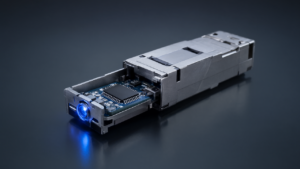
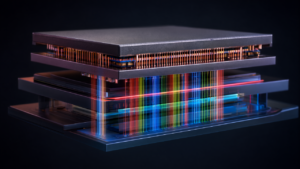
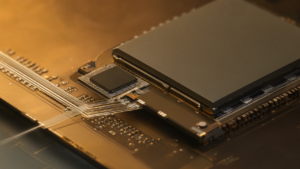
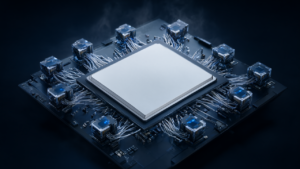
A novel photonic AI accelerator has been developed, delivering a groundbreaking improvement in AI computing performance on edge devices while achieving an approximate 70% reduction in power consumption compared to existing GPUs. This breakthrough enables complex simulations to be executed efficiently at the device level by fusing light and logic on a single chip.
Technical / Clinical Details
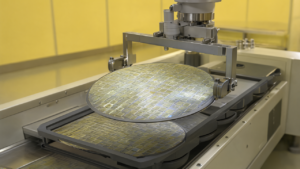
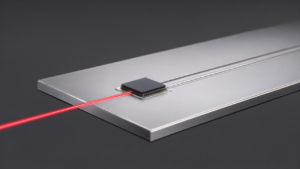
This innovative accelerator integrates traditional CMOS semiconductor technology with advanced nanophotonic circuits. Photons, traveling faster than electrons and generating minimal heat, dramatically accelerate data task processing while significantly improving energy efficiency. For edge AI applications, where power constraints are strict and real-time processing is critical, this 70% power reduction is profoundly impactful. Potential applications include autonomous vehicles, IoT devices, and wearables, all requiring high-performance AI processing under low-power conditions.
Background & Context
As AI adoption grows, the demand for AI processing on edge devices, not just in data centers, is surging. However, edge devices typically have limited power budgets, making efficient AI processing challenging with conventional high-performance electronic chips. This photonic AI accelerator is a promising solution to the long-standing ‘power wall’ and ‘thermal wall’ challenges in the semiconductor industry. Experts anticipate this technology will have substantial societal impacts, enabling more precise climate models, rapid discovery of new drugs, and real-time smart city management. Concurrently, scaling the precise manufacturing of nanophotonic circuits and efficient thermal management in confined spaces are identified as key challenges for future commercialization.
Strategic Significance & Outlook
The advent of this photonic AI accelerator has the potential to fundamentally transform edge AI capabilities and open up new application domains. Its low power consumption will be a significant advantage, particularly for battery-powered devices and AI processing in remote environments. Future research and development will likely focus on optimizing manufacturing processes, ensuring scalability, and enhancing compatibility with a broader range of AI frameworks. Widespread adoption of this technology could enable more devices to perform advanced AI processing in real-time, bringing immeasurable benefits to daily life and industrial activities.
Source: https://www.youtube.com/shorts/ttXv2tIeTk0
Get our weekly technology intelligence — free
Receive an infographic that lets you judge at a glance whether each field’s analysis report is worth reading.
Subscribe Free — Weekly Tech Intelligence
By subscribing, you’ll receive Troy-Technical’s weekly technology intelligence newsletter.
- Your email and selected fields are used only to deliver the newsletter.
- We never share your information with third parties.
- You can unsubscribe anytime via the link in each email.
See our Privacy Policy for details.
Takes about a minute · Unsubscribe anytime