Background
Indonesia possesses the world’s second-largest geothermal resources, offering immense potential for national decarbonization and energy security. Leveraging this abundant renewable energy, PT Pertamina Geothermal Energy Tbk (PGEO) is spearheading clean energy strategies by utilizing geothermal for hydrogen production. Globally, as interest in green hydrogen intensifies, challenges persist in reducing manufacturing costs and ensuring stable supply. Geothermal-powered hydrogen production is emerging as a particularly promising solution to these hurdles, thanks to its stable, weather-independent baseload power.
Key Findings
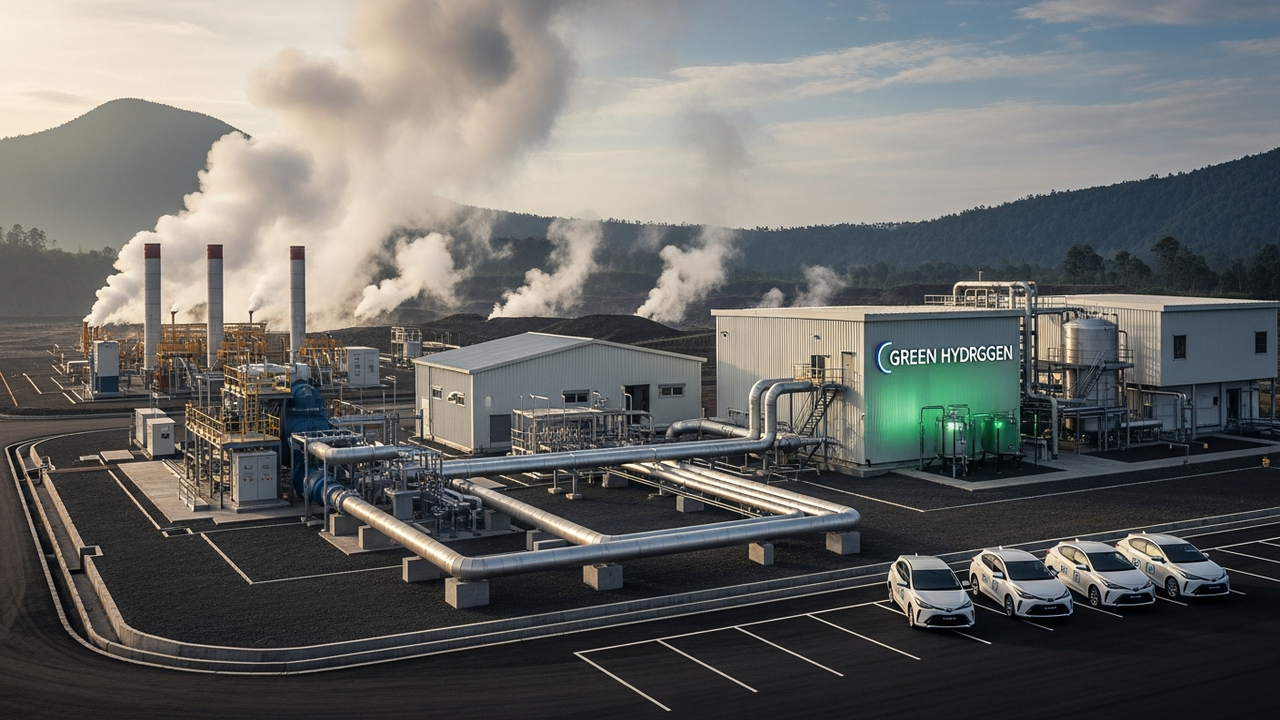
PT Pertamina Geothermal Energy Tbk (PGEO) has announced plans to commence commercial operations of its pilot green hydrogen project by the end of 2026. This pioneering initiative, representing a significant milestone in the industrial application of clean hydrogen, will see global automotive giant Toyota Motor Corporation as its inaugural customer.
Project Specifics:
- Location and Timeline: The project will be integrated within PGEO’s Ulubelu geothermal power plant in Lampung province, Indonesia. Commercial operations are slated to begin by November 2026, with full operational capacity targeted for year-end.
- Production Capacity: The initial phase aims to produce up to 100kg of green hydrogen per day. This pilot volume will provide critical data for assessing and planning future expansion.
- Geothermal Advantage: Utilizing geothermal energy as the power source ensures the production of truly clean “green hydrogen.” The inherent stability and baseload nature of geothermal power will contribute to a consistent and reliable hydrogen supply.
- Toyota’s Role: Toyota Motor Corporation’s commitment as the first major off-taker validates the project’s commercial viability and potential for expansion. Toyota is actively pursuing stable sources of green hydrogen to support its ongoing development and promotion of hydrogen fuel cell vehicles (FCEVs).
This geothermal-derived hydrogen project is poised to serve as a crucial case study, demonstrating commercial viability in Indonesia and potentially catalyzing further hydrogen development leveraging the country’s vast geothermal resources. For Toyota, this move strengthens its commitment to sustainable supply chains and securing a clean fuel source to accelerate FCEV adoption, setting a potential model for the clean hydrogen economy in Asia.
Get our weekly technology intelligence — free
Receive an infographic that lets you judge at a glance whether each field’s analysis report is worth reading.
Subscribe Free — Weekly Tech Intelligence
By subscribing, you’ll receive Troy-Technical’s weekly technology intelligence newsletter.
- Your email and selected fields are used only to deliver the newsletter.
- We never share your information with third parties.
- You can unsubscribe anytime via the link in each email.
See our Privacy Policy for details.
Takes about a minute · Unsubscribe anytime