Background
The demand for advanced energy-absorbing materials is escalating across diverse critical sectors, from automotive crash safety and personal protective equipment (helmets, clothing) to lightweight aerospace components and high-performance sports gear. Historically, conventional materials like foams and composites have presented limitations in achieving optimal performance, weight reduction, and design flexibility. The advent and rapid evolution of additive manufacturing (3D printing) technologies have begun to overcome these constraints, dramatically expanding the possibilities for material selection and intricate structural design. This paradigm shift enables the production of highly customized, energy-absorbing components meticulously optimized for specific load conditions and application requirements.
Key Findings
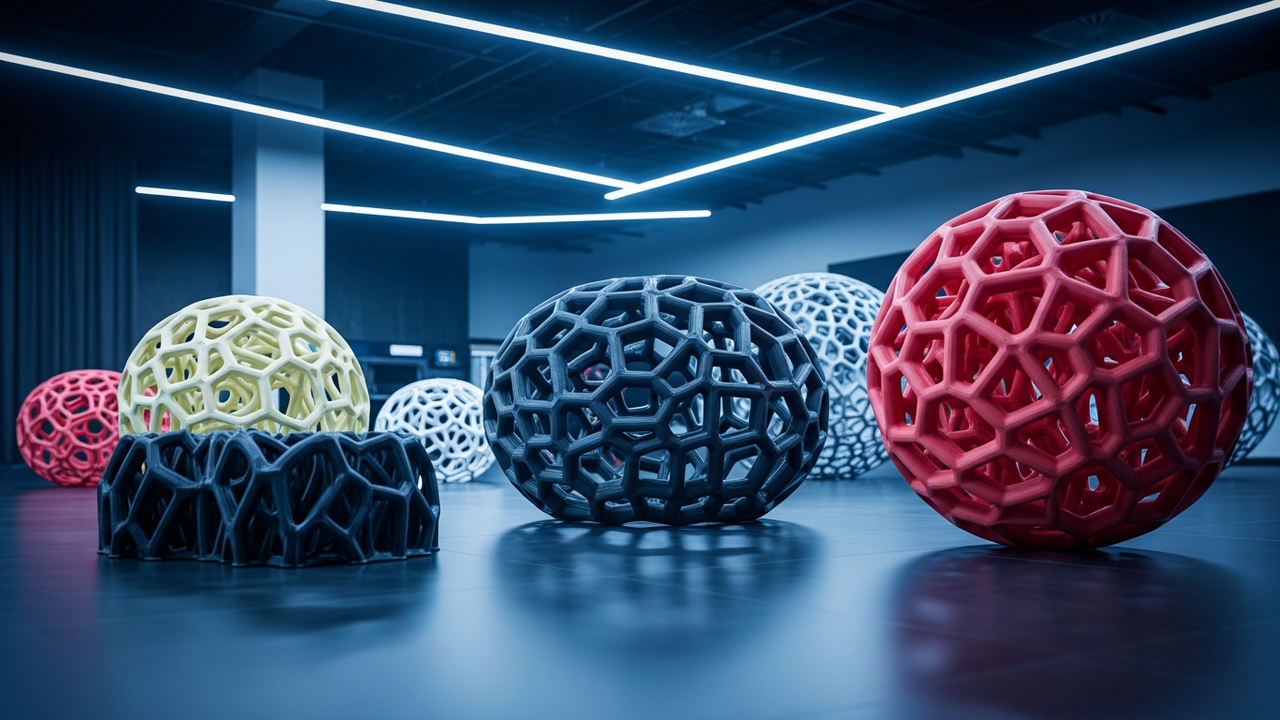
A recent academic review underscores the transformative impact of additive manufacturing (3D printing) on polymer structures engineered for mechanical energy absorption. Crucially, the deployment of meticulously designed lattice structures has emerged as exceptionally effective in significantly enhancing energy dissipation capabilities while simultaneously minimizing peak impact loads. This technological leap facilitates the creation of complex, high-performance impact-absorbing materials that were previously unattainable through traditional manufacturing processes.
Technical Details
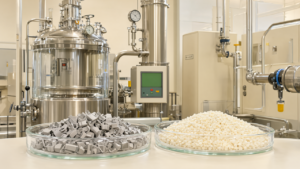
The advancements leverage a sophisticated palette of polymer materials. Thermoplastic polyurethane (TPU) is widely adopted for both prototyping and end-use applications, valued for its superior elasticity and inherent energy absorption characteristics. Polylactic acid (PLA) offers a distinct advantage through its biodegradability, aligning with sustainable engineering principles. For high-demand environments, Polyether ether ketone (PEEK) and its carbon fiber-reinforced variant (CF/PEEK) are employed, providing exceptional strength and thermal stability. Acrylonitrile butadiene styrene (ABS) is also a subject of extensive research due to its favorable processability and mechanical attributes. These materials are precisely fabricated using state-of-the-art additive manufacturing techniques, including Fused Deposition Modeling (FDM), Selective Laser Sintering (SLS), and Multi Jet Fusion (MJF). The deliberate design of lattice structures, characterized by their controlled porosity and intricate geometric arrangements, proves instrumental in effectively absorbing and dispersing impact energy. This methodological approach enables fine-tuned optimization of impact resistance, often tailored for specific directional loading scenarios.
Strategic Outlook
The trajectory of research in additively manufactured polymer structures for energy absorption points towards rapid acceleration and profound future implications. The immediate next frontier will undoubtedly focus on the development of multifunctional materials, envisioning structures that seamlessly integrate capabilities such as embedded sensing or autonomous self-healing mechanisms. Concurrently, continuous advancements in sophisticated simulation and topology optimization algorithms are anticipated to enable the design of even more efficient, lighter-weight, and geometrically complex structures. This convergent evolution promises to fundamentally revolutionize sectors demanding high-performance, customized impact absorption, including future transportation systems, advanced robotics, personalized medical devices, and critical defense applications, ultimately paving the way for groundbreaking product innovations.
Source: https://pmc.ncbi.nlm.nih.gov/articles/PMC13164696/
Get our weekly technology intelligence — free
Receive an infographic that lets you judge at a glance whether each field’s analysis report is worth reading.
Subscribe Free — Weekly Tech Intelligence
By subscribing, you’ll receive Troy-Technical’s weekly technology intelligence newsletter.
- Your email and selected fields are used only to deliver the newsletter.
- We never share your information with third parties.
- You can unsubscribe anytime via the link in each email.
See our Privacy Policy for details.
Takes about a minute · Unsubscribe anytime