Background
As nations worldwide accelerate decarbonization efforts, green hydrogen is emerging as a crucial component for achieving net-zero emissions. High-performance proton exchange membrane (PEM) electrolyzers are a leading technology for producing green hydrogen due to their compactness and efficiency, outperforming traditional alkaline electrolyzers in many aspects. However, their widespread adoption has been significantly hampered by the reliance on expensive and scarce iridium catalysts. This dependence on a strategic, rare metal has posed a substantial challenge to the economic viability and scalability of PEM technology, limiting its potential for broader industrial applications.
Key Findings
A German research team has made a significant breakthrough in green hydrogen production, developing a proton exchange membrane (PEM) electrolyzer that entirely eliminates expensive iridium. This novel, precious-metal-free electrolyzer demonstrates performance comparable to conventional iridium-catalyzed PEM cells, achieving a current density of 2 A/cm² at just 1.8 V.
Technical Details
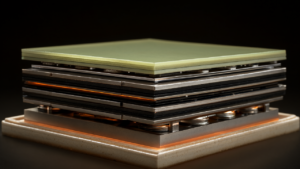
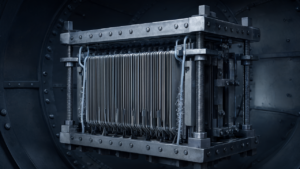
The core innovation resides in its catalytic architecture, which utilizes earth-abundant and inexpensive nickel and iron catalysts for both the anode and cathode. This fundamental shift away from critical noble metals is projected to reduce the manufacturing cost of electrolyzer stacks by up to 80%. Iridium, a rare and costly platinum-group metal, has long been a major limiting factor for the global scalability of PEM electrolyzers, despite their advantages as a leading technology for high-efficiency green hydrogen production. This development directly addresses the supply chain vulnerabilities and substantial cost implications associated with iridium, charting a viable pathway to more sustainable and cost-effective hydrogen generation.
Strategic Significance & Outlook
This breakthrough is expected to dramatically lower the production cost of green hydrogen, making it significantly more competitive in the energy market by alleviating the constraints of precious metal supply. In the long term, it provides a more cost-effective option for constructing large-scale green hydrogen plants, thereby accelerating the pace of the global energy transition. The research team is now focused on further scaling up and commercializing this technology, which holds the potential to revolutionize the hydrogen economy and contribute significantly to global climate goals.
Source: https://www.facebook.com/groups/849994733672039/posts/1446218687382971/
Get our weekly technology intelligence — free
Receive an infographic that lets you judge at a glance whether each field’s analysis report is worth reading.
Subscribe Free — Weekly Tech Intelligence
By subscribing, you’ll receive Troy-Technical’s weekly technology intelligence newsletter.
- Your email and selected fields are used only to deliver the newsletter.
- We never share your information with third parties.
- You can unsubscribe anytime via the link in each email.
See our Privacy Policy for details.
Takes about a minute · Unsubscribe anytime