Key Findings
The burgeoning demand from AI workloads is fundamentally reshaping the power demands and infrastructure planning for data centers globally. AI training clusters, in particular, with their reliance on high-power GPUs and specialized systems, concentrate immense compute, heat, and electrical loads per rack. The International Energy Agency (IEA) forecasts that global data center electricity consumption will more than double by 2030, underscoring the critical need for liquid cooling solutions, larger substations, and more robust backup power systems. This scenario mandates a radical overhaul of traditional data center design and operational strategies.
Technical / Clinical Details
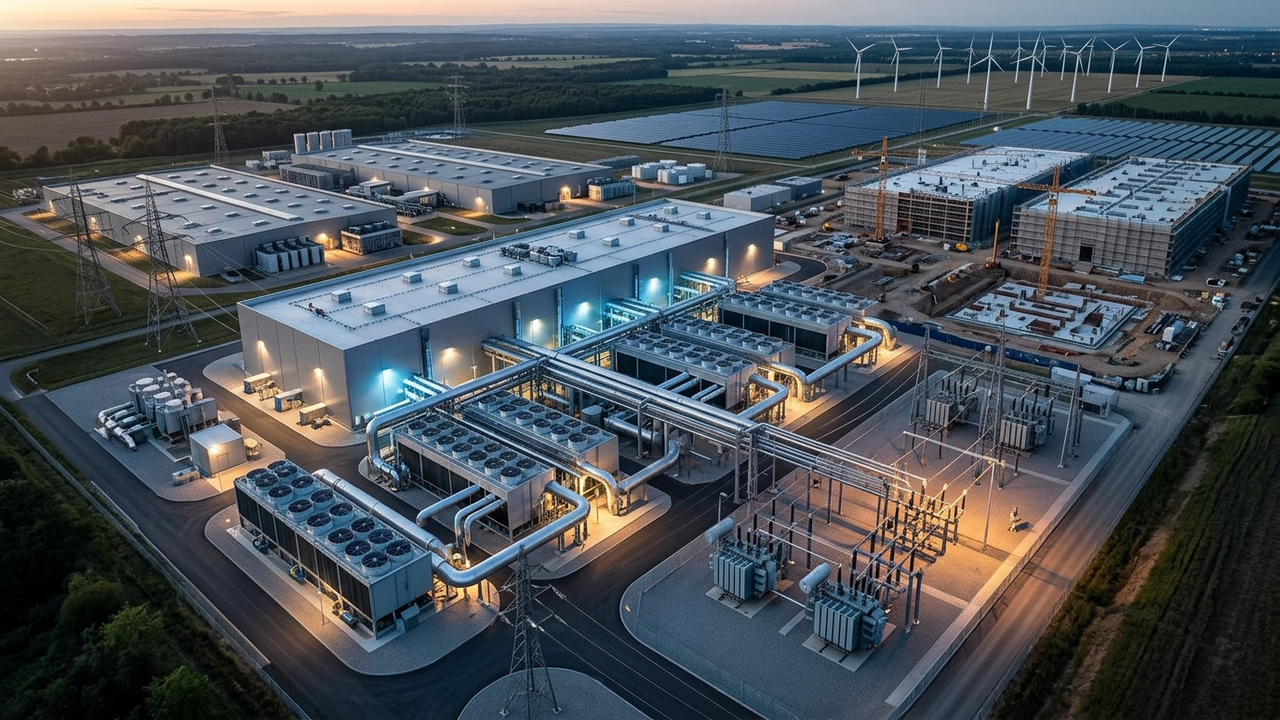
Traditional data center designs typically assumed average rack power densities of a few kilowatts. However, contemporary AI servers, exemplified by products like NVIDIA’s GB300, routinely demand over 100kW per rack. Such high-density compute loads generate extraordinary amounts of heat, rendering conventional air-cooling systems inadequate. Consequently, liquid cooling technologies, especially cold-plate technology, which now commands a significant share of the liquid-cooled market, have become indispensable. Furthermore, AI data centers require power delivery ranging from tens of megawatts to gigawatts, exerting considerable strain on regional power grids. This necessitates the construction of dedicated large substations, integration with renewable energy sources, and sophisticated battery backup systems or redundant power pathways to ensure stable operation during peak demands or emergencies.
Background & Context
The rapid proliferation of generative AI and large language models (LLMs) has unleashed unprecedented computational requirements. This phenomenon is transforming data centers from mere server housing facilities into strategic assets where advanced power and cooling engineering are paramount. The entire supply chain is being reconfigured by AI demand, with High Bandwidth Memory (HBM) and advanced packaging now accounting for over 60% of the cost of AI chips. Data center operators are confronted with the dual challenge of building sustainable and scalable AI infrastructure while simultaneously addressing increasing environmental concerns. A substantial portion of existing data centers will likely require significant retrofitting or complete rebuilding to accommodate these new AI workloads.
Strategic Significance & Outlook
The transformation of data center infrastructure driven by AI workloads is set to intensify, with ‘compute-centric’ designs, where power and cooling are inextricably integrated with compute architecture, becoming the norm. This shift will make data center location selection increasingly dependent on factors such as the availability of clean energy, grid reliability, and access to water resources. Concurrently, investments in efficient cooling technologies and advanced power management systems will escalate in parallel with AI chip advancements. Data center designers and operators must continuously pursue innovative solutions that embody sustainability, efficiency, and scalability to thrive in the AI era.
Get our weekly technology intelligence — free
Receive an infographic that lets you judge at a glance whether each field’s analysis report is worth reading.
Subscribe Free — Weekly Tech Intelligence
By subscribing, you’ll receive Troy-Technical’s weekly technology intelligence newsletter.
- Your email and selected fields are used only to deliver the newsletter.
- We never share your information with third parties.
- You can unsubscribe anytime via the link in each email.
See our Privacy Policy for details.
Takes about a minute · Unsubscribe anytime