Key Findings
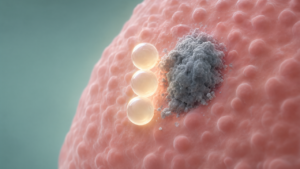
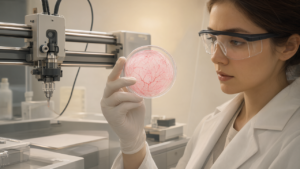
An interdisciplinary research team at Penn State University has established the foundational principles for creating innovative 3D-printed spheroids, small living cell clusters, capable of effectively regenerating bone tissue lost due to severe trauma or infection. These spheroids are engineered by introducing specific genetic information into undifferentiated stem cells, and have been demonstrated to not only promote bone tissue healing but also stimulate the formation of new blood vessels within the regenerating tissue. This achievement holds the potential to revolutionize regenerative medicine approaches for large bone defects and intractable fractures.
Technical / Clinical Details
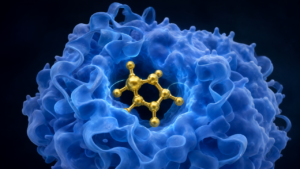
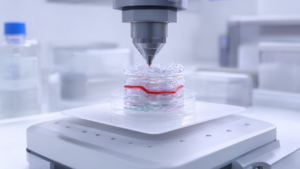
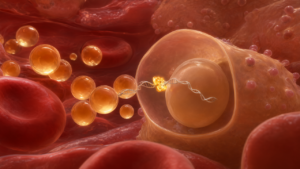
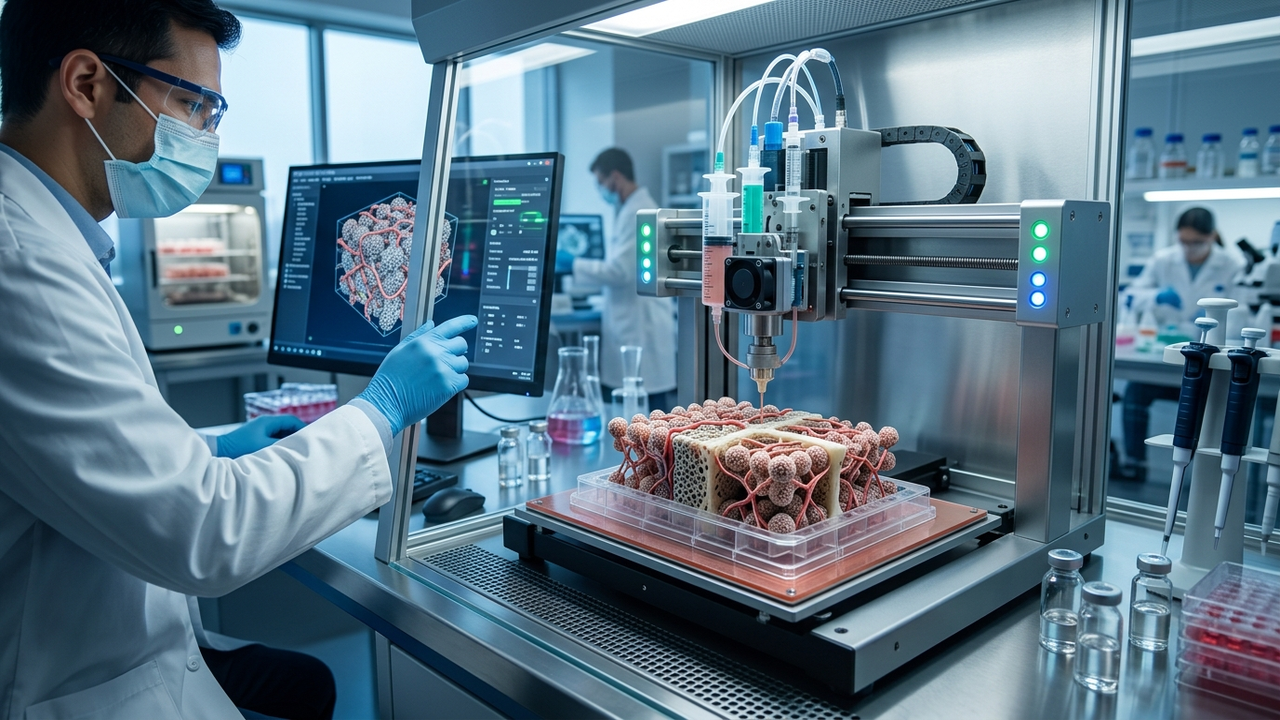
The research team employed advanced methods to introduce distinct genetic information into stem cells. Specifically, by manipulating ‘genetic switches’ that govern cell fate, they designed spheroids that promote osteogenic differentiation while simultaneously expressing factors that encourage endothelial cell proliferation for vascularization. By precisely arranging these genetically modified stem cell clusters using 3D bioprinting technology, they provide a scaffold for bone tissue formation in vivo and facilitate the early establishment of a vascular network essential for nutrient supply. The resulting spheroids exhibit excellent biocompatibility and provide a microenvironment that efficiently supports cell adhesion, proliferation, and differentiation, promising rapid tissue integration and functional recovery at bone defect sites.
Background & Context
Large bone defects, often caused by trauma, tumor resection, or infection, present significant challenges for healing and severely diminish patients’ quality of life. Existing treatments, such as autologous bone grafts and synthetic bone substitutes, have limitations; autografts carry risks of donor site complications, while synthetics often struggle with biological integration and vascularization. The combination of 3D bioprinting and stem cell technology is gaining traction as a promising approach to overcome these challenges. The ability to simultaneously regenerate both bone tissue and a vascular network is particularly crucial for the repair of complex tissues, driving rapid advancements at the forefront of regenerative medicine.
Strategic Significance & Outlook
The research findings from Penn State University represent a significant step towards accelerating the clinical application of 3D bioprinting technology in bone tissue regeneration. This spheroid technology holds the potential to become a standard treatment for severe bone defects in the future. Future research will focus on further validating the long-term in vivo safety and efficacy of these bioprinted spheroids in animal models, ultimately aiming for translation into human clinical trials. The ability to simultaneously promote vascularization is key to improving tissue integration in larger bone defect sites and enabling functional regeneration. If this technology is commercialized, it is expected to improve the prognosis for many patients and contribute to reducing healthcare costs.
Get our weekly technology intelligence — free
Receive an infographic that lets you judge at a glance whether each field’s analysis report is worth reading.
Subscribe Free — Weekly Tech Intelligence
By subscribing, you’ll receive Troy-Technical’s weekly technology intelligence newsletter.
- Your email and selected fields are used only to deliver the newsletter.
- We never share your information with third parties.
- You can unsubscribe anytime via the link in each email.
See our Privacy Policy for details.
Takes about a minute · Unsubscribe anytime