Key Findings
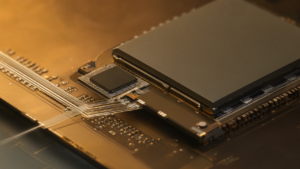
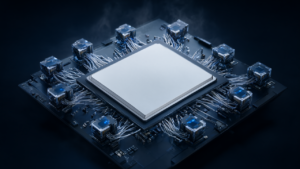
The optical transceiver industry is undergoing a significant transformation in 2026 with the full-scale market entry of silicon photonics (SiPh) products. Major players including Intel, Cisco, Marvell, and Coherent are aggressively deploying SiPh-based transceiver modules. SiPh’s dominance is particularly evident in next-generation 1.6T designs, where it holds a commanding 72% market share, marking a critical milestone in meeting the escalating bandwidth and power efficiency demands driven by the explosive growth of AI data centers.
Technical / Clinical Details
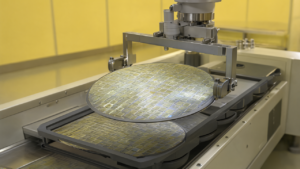
- Emergence of Silicon Photonics (SiPh): SiPh is a technology that integrates optical circuits onto silicon chips using standard semiconductor manufacturing processes, offering significant advantages in terms of cost-efficiency, scalability, and performance. This enables the miniaturization, lower power consumption, and higher speed of optical transceivers.
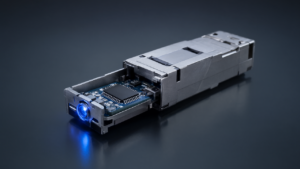
- Major Manufacturers Launch SiPh Products: Industry leaders such such as Intel, Cisco, Marvell, and Coherent are introducing transceiver modules built on SiPh technology. These products provide high-performance alternatives to traditional electrical solutions for interconnects within and between data centers.
- SiPh’s Dominant Share in 1.6T Designs: With SiPh securing a 72% market share in advanced 1.6T optical transceiver designs, it is rapidly becoming the de facto standard for next-generation high-speed communication. InnoLight also reports that over half of its optical transceiver shipments now utilize SiPh technology, underscoring the accelerating industry-wide shift towards SiPh.
- NVIDIA’s Strategic Investment: As AI data center connectivity requirements intensify, NVIDIA has invested a total of $2 billion in Coherent and Lumentum. The objective of this investment is to accelerate Indium Phosphide (InP) production capacity, a strategic move to secure the supply of high-performance lasers and optical modulators essential for meeting the high-speed demands of AI infrastructure.
Background & Context
The explosive growth of AI workloads necessitates higher-performance interconnect technologies for efficient massive data movement and processing within data centers. Traditional electrical interconnects are reaching their limits in terms of power consumption, latency, and signal attenuation, making a transition to optical communication inevitable. Silicon photonics is the key enabling technology for this transition, and its value is particularly amplified as AI data centers increase in scale and complexity.
Strategic Significance & Outlook
The full-scale adoption of silicon photonics technology and continuous investment by major corporations will drive further innovation in the optical transceiver market. The widespread use of 1.6T transceivers will boost AI infrastructure performance, enabling the realization of larger and more distributed AI systems. Strategic investments from hyperscalers like NVIDIA will stimulate the expansion of production capacity among optical component suppliers, accelerating overall industry growth. It is anticipated that the evolution of SiPh technology and its applications will continue to dominate the data center market going forward.
Source: https://www.100gmodules.com/info/2026-top-optical-transceiver-manufacturers-103418406.html
Get our weekly technology intelligence — free
Receive an infographic that lets you judge at a glance whether each field’s analysis report is worth reading.
Subscribe Free — Weekly Tech Intelligence
By subscribing, you’ll receive Troy-Technical’s weekly technology intelligence newsletter.
- Your email and selected fields are used only to deliver the newsletter.
- We never share your information with third parties.
- You can unsubscribe anytime via the link in each email.
See our Privacy Policy for details.
Takes about a minute · Unsubscribe anytime