Key Findings
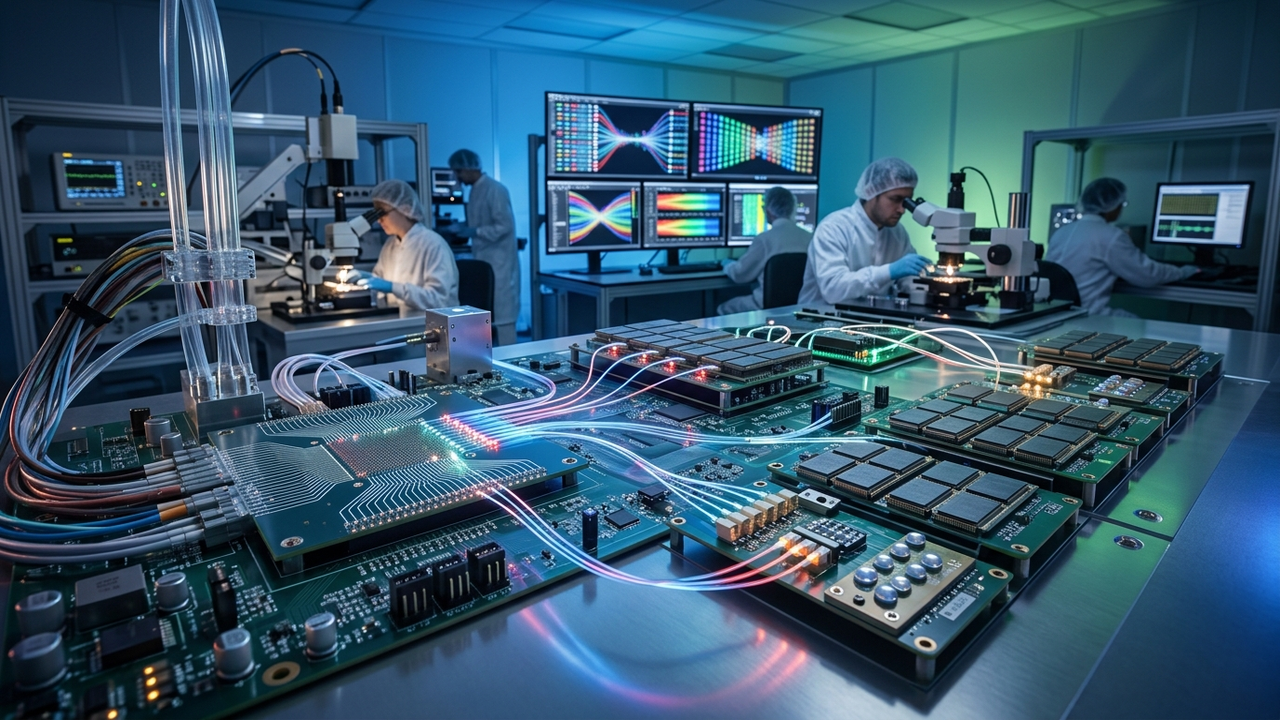
Marvell has announced an expansion of its Photonic Fabric architecture, leveraging optical technology to enable disaggregated and pooled memory across multi-rack AI systems. This groundbreaking approach aims to overcome the traditional electrical reach and power limitations inherent in conventional scale-up systems, significantly enhancing the efficiency of AI workloads.
Technical / Clinical Details
- Photonic Fabric Memory Appliance: The new appliance integrates up to 32 terabytes (TB) of DDR5 memory and approximately 1TB of High Bandwidth Memory (HBM). This creates an unprecedented scale of memory pooling within AI systems.
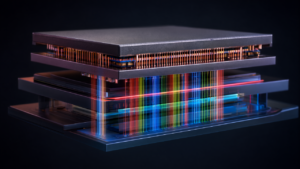
- Optical-Connected Memory Pooling: The Photonic Fabric utilizes optical interconnects to make these memory resources available as a shared pool across 16 different hosts. This allows individual AI accelerators to dynamically access necessary memory, maximizing resource utilization efficiency.
- Overcoming Electrical Constraints: In large-scale AI systems, increasing electrical signal transmission distances between memory and processors leads to greater signal attenuation and power consumption. Marvell’s optical interconnect approach resolves these electrical bottlenecks, enabling broader and lower-power placement and access to memory.
- Impact on AI Systems: Memory disaggregation and pooling have significant implications for AI model training and inference. Especially for large AI models handling massive datasets, fast and high-capacity memory access critically influences performance, making this technology a potential breakthrough for AI computing.
Background & Context
With the surge in AI workloads, the demand for high-performance memory such as HBM has dramatically increased. However, traditional system architectures have limited available memory capacity and accessibility due to physical wiring distances and power consumption constraints. Marvell has long been a leader in interconnect solutions for data centers, and this expansion of Photonic Fabric represents its strategic response to a key challenge in AI infrastructure evolution. Applying optical technology to memory interconnects has the potential to fundamentally redefine AI system architectures.
Strategic Significance & Outlook
Marvell’s Photonic Fabric Memory Appliance holds the potential to dramatically improve the efficiency of memory management and access in AI data centers. If widely adopted, this technology will help sustain system performance even as AI model sizes and complexity continue to grow. Memory pooling enables flexible resource allocation and is expected to contribute to a reduction in the total cost of ownership (TCO) for AI infrastructure. In the future, such optical-interconnect-based memory systems are likely to become standard components in next-generation AI supercomputers and hyperscale clouds.
Source: https://convergedigest.com/marvell-photonic-fabric-32tb-optical-memory-ai/
Get our weekly technology intelligence — free
Receive an infographic that lets you judge at a glance whether each field’s analysis report is worth reading.
Subscribe Free — Weekly Tech Intelligence
By subscribing, you’ll receive Troy-Technical’s weekly technology intelligence newsletter.
- Your email and selected fields are used only to deliver the newsletter.
- We never share your information with third parties.
- You can unsubscribe anytime via the link in each email.
See our Privacy Policy for details.
Takes about a minute · Unsubscribe anytime