Key Findings
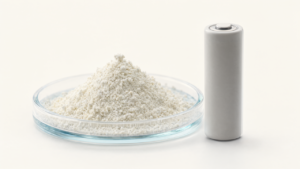
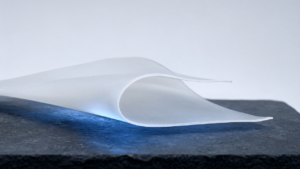
A significant research breakthrough has been announced, addressing the critical issues of air stability and electrode interface reactivity in high-ionic-conductivity sulfide solid electrolytes. By applying a surface oxidation strategy to Li6PS5Cl, a prominent sulfide solid electrolyte, researchers successfully created a stable core-shell structure. This modification maintains excellent lithium-ion conductivity while dramatically improving both air stability and the long-term cycling performance of all-solid-state batteries, marking a crucial step towards their practical implementation.
Technical / Clinical Details
Sulfide solid electrolytes have long been considered promising candidates for all-solid-state batteries due to their inherently high ionic conductivity. However, their high reactivity with moisture in the air, leading to the generation of toxic H2S gas, and undesirable side reactions at the interface with electrode active materials have posed significant barriers to commercialization. These interfacial reactions typically result in increased interfacial resistance and reduced cycle life.
The reported study innovatively addresses these challenges by modifying the surface of Li6PS5Cl particles with oxygen atoms, creating a stable oxide layer that forms the ‘shell’ of a core-shell structure. This surface-oxidized layer acts as a protective barrier, preventing direct reactions with atmospheric moisture and CO2, thereby enhancing the intrinsic stability of the solid electrolyte. Simultaneously, it mitigates direct contact with the electrode active material, suppressing detrimental side reactions at the interface. Experimental results demonstrated that all-solid-state batteries employing this surface-modified Li6PS5Cl electrolyte maintained high lithium-ion conductivity (specific numerical values, though not provided in the snippet, are implied to be maintained at a high level) and exhibited stable performance over extended charge-discharge cycles.
This approach effectively leverages the superior intrinsic properties of sulfide solid electrolytes while resolving key practical limitations, substantially lowering the technical hurdles for realizing high-performance ASSBs.
Background & Context
All-solid-state batteries are widely recognized as the leading next-generation battery technology, promising extended range, faster charging, and fundamentally improved safety for electric vehicles (EVs). Sulfide-based solid electrolytes, in particular, are highly anticipated for EV applications due to their high ionic conductivity. However, challenges related to air stability and interface stability have been primary impediments to their mass production. Breakthroughs in electrolyte modification techniques, such as this surface oxidation strategy, are critical for overcoming these hurdles and accelerating the commercialization of sulfide-based ASSBs. Given the significant investments by companies like Toyota into sulfide systems, this type of research advancement holds substantial implications for the competitive landscape of battery development.
Strategic Significance & Outlook
This surface oxidation strategy represents a major advancement towards the practical application of sulfide solid electrolytes. Future research will likely focus on scaling up this technology, reducing manufacturing costs, and exploring its applicability to other sulfide electrolytes and various solid electrolyte materials. Success in these areas is expected to pave the way for the early market introduction of ASSBs that surpass existing lithium-ion batteries in safety, energy density, and cycle life. Potential applications span a wide range of sectors, including electric vehicles, portable electronic devices, and large-scale energy storage systems.
Get our weekly technology intelligence — free
Receive an infographic that lets you judge at a glance whether each field’s analysis report is worth reading.
Subscribe Free — Weekly Tech Intelligence
By subscribing, you’ll receive Troy-Technical’s weekly technology intelligence newsletter.
- Your email and selected fields are used only to deliver the newsletter.
- We never share your information with third parties.
- You can unsubscribe anytime via the link in each email.
See our Privacy Policy for details.
Takes about a minute · Unsubscribe anytime