Key Findings
In 2026, the Contract Development and Manufacturing Organization (CDMO) industry is experiencing significant strategic investments and acquisitions by major players, aimed at substantially expanding manufacturing capacity and strengthening supply chains. Notably, Samsung Biologics acquired a former GSK facility in Maryland for $353 million, which is projected to boost its global cGMP manufacturing capacity to an impressive 845,000 liters. Furthermore, Samsung Biologics has announced plans to acquire PolyPeptide Group, a leader in peptide therapeutics, for $1.8 billion, diversifying its modality portfolio.
Technical / Clinical Details
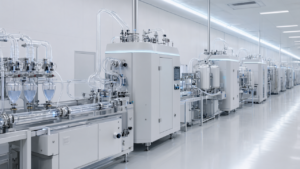
These investments are strategically addressing manufacturing bottlenecks across various biopharmaceutical modalities. Samsung Biologics’ capacity expansion is geared towards large-scale production of monoclonal antibodies and other recombinant proteins, contributing to the stabilization of the global biopharmaceutical supply. Lonza’s ongoing CHF 500 million investment in a commercial fill-and-finish facility in Switzerland aims to bolster sterile filling and packaging capabilities for final drug products, thereby reducing time-to-market. Resilience’s expanded partnership with Eli Lilly and its $750 million investment in Ohio manufacturing operations are focused on enhancing advanced manufacturing technologies and capacities in specific therapeutic areas, particularly gene and cell therapies. These state-of-the-art facilities are designed to maximize quality control and production efficiency, incorporating single-use bioreactors, advanced process automation, and data analytics systems.
Background & Context
The burgeoning biopharmaceutical pipeline, coupled with supply chain vulnerabilities exposed during the pandemic, has accelerated capacity expansion and technological innovation within the CDMO sector. Many biopharmaceutical companies are adopting a strategy of outsourcing substantial capital expenditures and complex manufacturing process management to CDMOs, allowing them to focus on core R&D. This shift has transformed CDMOs from mere manufacturing partners into comprehensive solution providers offering technical advice and regulatory strategy support from early development stages. The current moves by leading CDMOs reflect the overall industry growth trend, with an increasing focus on developing capabilities for next-generation modalities like cell and gene therapies, which are crucial for future competitive advantage.
Strategic Significance & Outlook
This active wave of investment and M&A in the CDMO industry is anticipated to continue. The cell and gene therapy sector, in particular, will likely see an even greater reliance on specialized CDMOs due to manufacturing complexity and high regulatory hurdles. Investments in advanced manufacturing technologies, such as continuous processing and AI-driven process optimization, are also expected to accelerate, leading to more efficient and cost-competitive biopharmaceutical production. This will enable pharmaceutical companies to concentrate more intensely on new drug development, ultimately expediting the delivery of innovative therapies to patients globally.
Source: https://www.dcatvci.org/features/cdmo-cmo-the-key-moves-in-2026/
Get our weekly technology intelligence — free
Receive an infographic that lets you judge at a glance whether each field’s analysis report is worth reading.
Subscribe Free — Weekly Tech Intelligence
By subscribing, you’ll receive Troy-Technical’s weekly technology intelligence newsletter.
- Your email and selected fields are used only to deliver the newsletter.
- We never share your information with third parties.
- You can unsubscribe anytime via the link in each email.
See our Privacy Policy for details.
Takes about a minute · Unsubscribe anytime