Background
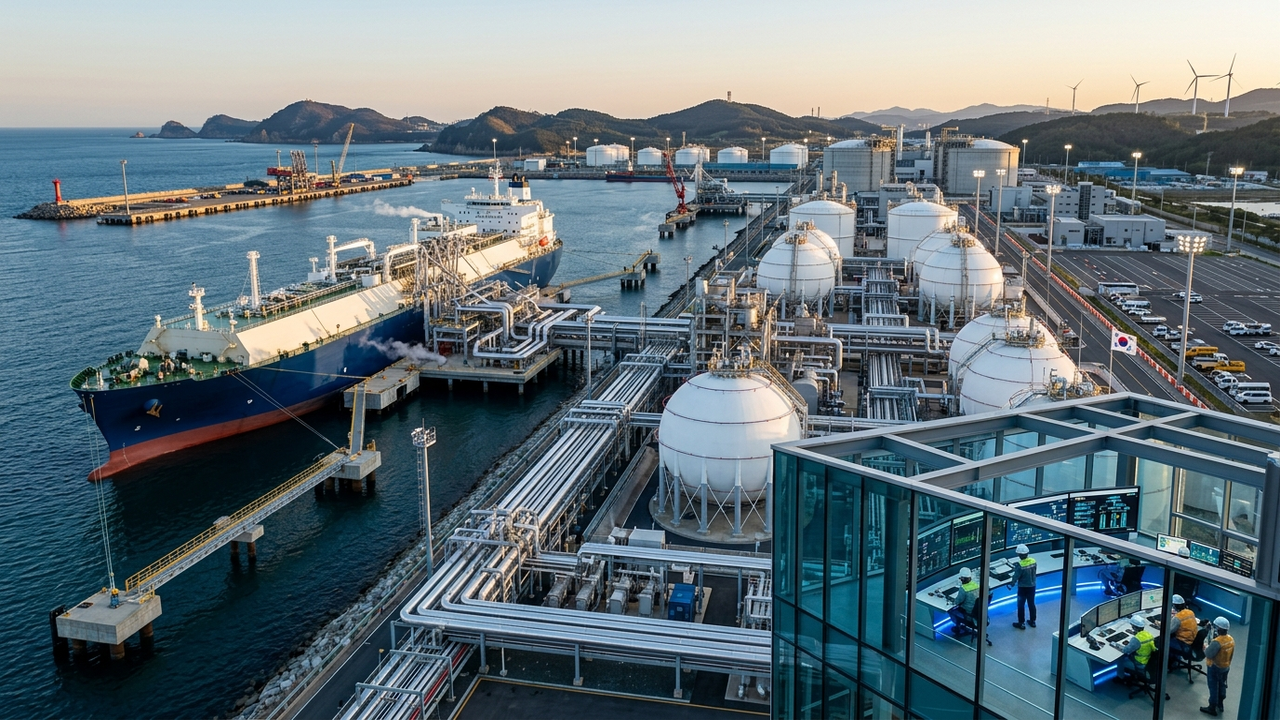
As a resource-poor nation heavily reliant on energy imports, South Korea faces the dual imperatives of combating climate change and bolstering energy security. In response, the nation has strategically positioned green hydrogen as a primary future energy source. Building on its established ‘Hydrogen Economy Roadmap,’ which promotes fuel cell vehicles and fuel cell power generation, the government acknowledges that domestic green hydrogen production alone will be insufficient to meet anticipated demand. Consequently, securing stable international hydrogen import routes has become essential. This planned import terminal will function as a strategic entry point for clean hydrogen procured from major production hubs in regions like the Middle East and Australia, facilitating its seamless integration into the domestic energy system.
Key Findings
The South Korean government has unveiled comprehensive plans for a major hydrogen import terminal, designed to satisfy the nation’s long-term energy demands and underpin its rapidly evolving hydrogen economy initiatives. This infrastructure is considered indispensable for securing a consistent supply of clean hydrogen and significantly bolstering South Korea’s energy security. The terminal will operate as a central hub for the reception, storage, regasification, and domestic distribution of imported hydrogen.
This large-scale project is strategically crucial for establishing South Korea as a key hub within the global hydrogen supply chain. Although requiring several years for planning, construction, and pilot operation, its completion will provide a foundational supply of clean, sustainable energy for industries and citizens alike. This initiative is expected to accelerate domestic decarbonization efforts, reinforce South Korea’s international environmental commitments, and spur the development of hydrogen-related technologies and industries, creating new economic growth opportunities. The terminal is positioned as more than just energy infrastructure; it is a symbolic project set to profoundly shape South Korea’s future energy landscape.
Technical Details
The planned hydrogen import terminal will be engineered to receive, store, and vaporize substantial volumes of hydrogen, primarily transported as liquefied hydrogen (LH2) or liquefied ammonia (LNH3), for subsequent distribution to meet domestic demand. Core technologies integrated into the terminal will encompass state-of-the-art cryogenic hydrogen storage tanks, ammonia cracking units (essential for hydrogen extraction from ammonia), and robust connections to the national distribution grid via pipelines and specialized trucks. Storing liquefied hydrogen necessitates maintaining ultralow temperatures of -253°C, demanding advanced insulation technologies and comprehensive safety management systems. The facility is projected to achieve a processing capacity of several thousand tons of hydrogen per day, ensuring a reliable supply to critical industrial sectors including steel, chemicals, power generation, and transportation.
Source: #
Get our weekly technology intelligence — free
Receive an infographic that lets you judge at a glance whether each field’s analysis report is worth reading.
Subscribe Free — Weekly Tech Intelligence
By subscribing, you’ll receive Troy-Technical’s weekly technology intelligence newsletter.
- Your email and selected fields are used only to deliver the newsletter.
- We never share your information with third parties.
- You can unsubscribe anytime via the link in each email.
See our Privacy Policy for details.
Takes about a minute · Unsubscribe anytime






Comments