Key Findings
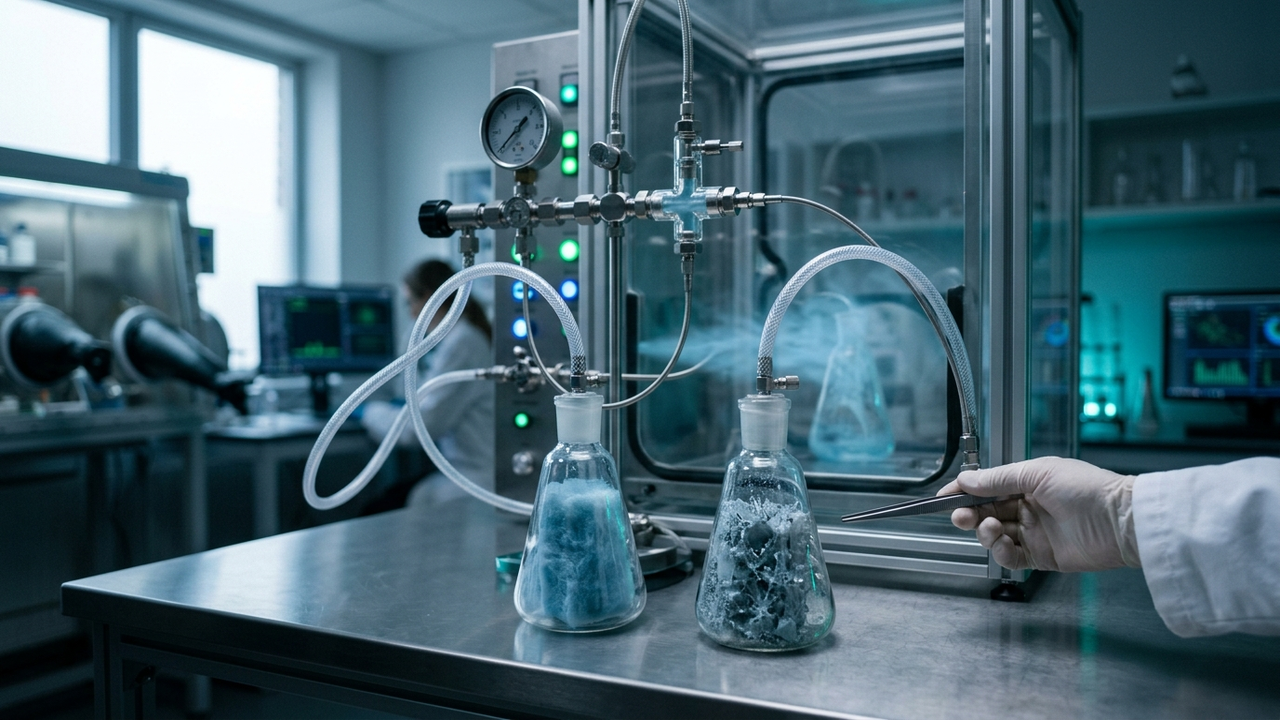
This paper outlines how aerogels demonstrate exceptional performance in carbon dioxide (CO2) capture technology, leveraging their unique properties. Specifically, aerogels composited with Metal-Organic Frameworks (MOFs) are highlighted for inheriting MOFs’ inherent tunable microporosity and ultra-high specific surface area while exhibiting remarkably high CO2 selectivity. This positions them for diverse CO2 capture scenarios, including Direct Air Capture (DAC), post-combustion flue gas capture, natural gas purification, and carbon sequestration.
Technical / Clinical Details
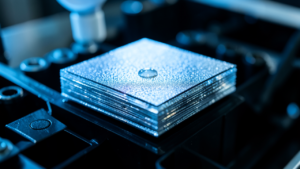
Aerogels are three-dimensional nanoporous solid materials characterized by nanoscale pore structures. Their distinctive features include:
- Ultra-high specific surface area: Providing abundant adsorption sites for CO2 molecules due to their vast internal surface.
- Tunable nanopores: Allowing for precise control over pore size, which can enhance selectivity for specific molecules like CO2.
- Abundant surface functional groups: Introducing functional groups that chemically interact with CO2 on the surface can further improve adsorption capacity and selectivity.
MOF composite aerogels, in particular, combine the crystalline porous structure of MOFs with the lightweight and mechanical strength of aerogels, achieving performance levels difficult to match with conventional adsorbents. MOFs’ high adsorption capacity and specific interactions with CO2 (e.g., chemisorption through amine modification) significantly boost CO2 capture efficiency and selectivity. This opens up possibilities for efficiently recovering CO2 even from low-concentration sources.
Background & Context
With the escalating severity of global warming, reducing atmospheric CO2 emissions has become an urgent global challenge. The development of effective CO2 capture technologies is a critical strategy for achieving a sustainable society. Traditional CO2 capture methods, such as amine scrubbing, face challenges including high energy consumption and corrosivity. Aerogels, especially MOF composite aerogels, are gaining significant attention as next-generation materials capable of overcoming these issues. Their high performance and versatile applicability are attracting active research and development investments from industries and governments, raising expectations for their role as a key tool in climate change mitigation.
Strategic Significance & Outlook
While MOF composite aerogels hold revolutionary potential for CO2 capture technology, several challenges remain for commercialization. These include simplifying manufacturing processes, reducing costs, improving long-term stability and reusability, and demonstrating efficacy in large-scale plants. Future efforts will focus on developing more environmentally friendly synthesis routes and designing aerogels optimized for specific industrial exhaust gas conditions. Advances in this technology are expected to contribute significantly to reducing greenhouse gas emissions, profoundly impacting the energy industry, chemical industry, and environmental protection sectors, potentially acting as a game-changer in climate change mitigation efforts worldwide.
Source: https://www.mdpi.com/2310-2861/12/9/797
Get our weekly technology intelligence — free
Receive an infographic that lets you judge at a glance whether each field’s analysis report is worth reading.
Subscribe Free — Weekly Tech Intelligence
By subscribing, you’ll receive Troy-Technical’s weekly technology intelligence newsletter.
- Your email and selected fields are used only to deliver the newsletter.
- We never share your information with third parties.
- You can unsubscribe anytime via the link in each email.
See our Privacy Policy for details.
Takes about a minute · Unsubscribe anytime



Comments