
Background & Context
In today’s hyper-competitive global landscape, the rapid discovery and development of novel materials are paramount for sustaining economic growth and ensuring national security. The United Arab Emirates (UAE) is actively pursuing an economic diversification strategy, seeking to transition beyond its traditional oil-dependent economy by significantly investing in knowledge-based and high-tech industries. Artificial Intelligence (AI) is central to this vision, with its application in fundamental technological domains like materials science being indispensable for fostering new industries and enhancing the competitiveness of existing ones. Furthermore, integrating AI into materials discovery processes is crucial for bolstering the resilience of global supply chains and mitigating external dependencies on critical strategic materials.
Key Findings
The UAE is fully integrating the transformative potential of Artificial Intelligence into its national strategy to robustly accelerate future materials development. By harnessing AI, the nation aims to dramatically curtail the time required for materials discovery, transitioning from conventional, often protracted, trial-and-error processes to more efficient, prediction-based methodologies. This strategic commitment to AI infrastructure is highlighted as critically important for strengthening the UAE’s pivotal industries, including semiconductors, advanced energy storage, and aerospace, while simultaneously driving comprehensive economic diversification.
Technical Details
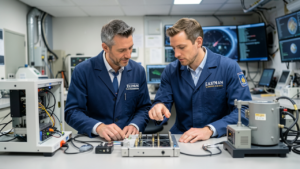
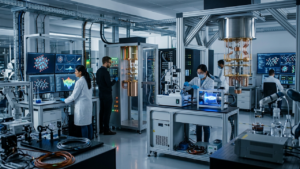
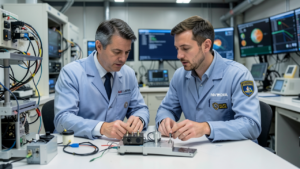
AI significantly augments the capabilities of materials scientists, enabling them to explore vast chemical spaces and engineer new materials with unprecedented precision and specific properties. A salient example is GNoME (Graph Networks for Materials Exploration), an AI tool developed by Google DeepMind, which has demonstrated the capability to predict and discover millions of novel crystal structures in remarkably short periods. The UAE is accelerating material design, simulation, and characterization by synergistically integrating such cutting-edge AI models with high-performance computing (HPC) infrastructure, including supercomputers and sophisticated cloud platforms. This integrated approach facilitates the rapid and cost-effective identification of materials optimized for specific applications, thereby expediting prototype development. This methodology is proving particularly effective for advancements in solar cells, high-density batteries, high-performance alloys, and advanced composite materials.
Strategic Significance & Outlook
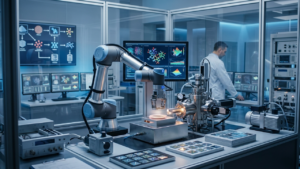
The UAE’s profound commitment to AI-driven materials development holds the potential to redefine the global frontier of materials science. This strategic investment is poised not only to significantly enhance domestic research and development capabilities but also to foster deeper international collaborations, positioning the UAE as a prominent hub for the convergent fields of AI technology and materials science. Looking ahead, the realization of ‘self-driving labs’—autonomous systems capable of designing and synthesizing materials—is within reach. This future-forward approach is expected to further shorten the time-to-market for new materials, playing a vital role in establishing the UAE as a frontrunner in the development and deployment of next-generation technologies.
Get our weekly technology intelligence — free
Receive an infographic that lets you judge at a glance whether each field’s analysis report is worth reading.
Subscribe Free — Weekly Tech Intelligence
By subscribing, you’ll receive Troy-Technical’s weekly technology intelligence newsletter.
- Your email and selected fields are used only to deliver the newsletter.
- We never share your information with third parties.
- You can unsubscribe anytime via the link in each email.
See our Privacy Policy for details.
Takes about a minute · Unsubscribe anytime





Comments