Key Findings
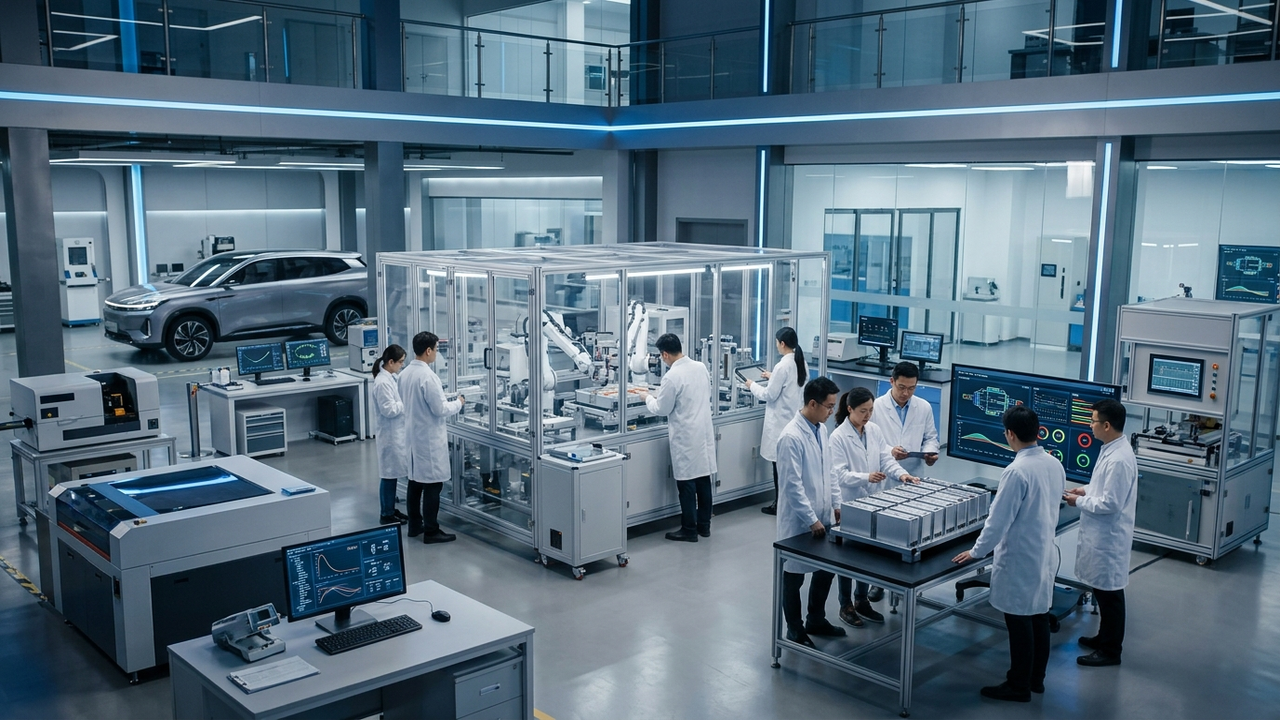
Chery Automobile, a leading Chinese automaker, has announced a substantial investment in the development of next-generation solid-state battery technology. The company plans to allocate a total of 10 billion yuan, equivalent to approximately $1.5 billion USD (around 210 billion Japanese Yen), to this critical sector. As part of this ambitious investment strategy, Chery aims to commence real-world vehicle testing of its solid-state batteries by 2027, signaling a clear commitment to the early commercialization of this advanced battery technology.
Technical and Manufacturing Details
Chery’s development efforts are focused on a solid-state battery line designated ‘Rhino S’. The primary objective for this line is to achieve high-energy-density battery cells with gravimetric energy densities ranging from 400 Wh/kg to an ambitious 600 Wh/kg. The target of 600 Wh/kg is particularly significant, representing approximately double the energy density of current mass-produced lithium-ion batteries. If achieved, this could dramatically extend the driving range of electric vehicles (EVs). Chery aims to enable an astonishing driving range of up to 1,500 km on a single charge with these high-energy-density solid-state batteries, potentially redefining the concept of EV range.
Background and Industry Context
Solid-state batteries are widely expected to surpass conventional batteries in terms of safety (reduced risk of thermal runaway), energy density, and longevity, due to their elimination of liquid electrolytes. Consequently, automotive manufacturers and battery developers worldwide are engaged in fierce competition to develop this technology. China, a global leader in the EV market and battery supply chain, is strongly supporting domestic development and commercialization of solid-state batteries. Chery’s announcement contrasts with the more cautious view expressed by the CATL chairman, who stated that mass production of solid-state batteries would not materialize before 2030, highlighting the diverse approaches and rapid pace of solid-state battery technology development within China.
Future Outlook
Chery’s $1.5 billion investment and the target of commencing vehicle real-world testing by 2027 suggest the company’s confidence in solving the technical challenges associated with solid-state battery mass production. The success of these tests is crucial for verifying the technology’s reliability and practicality, and favorable outcomes could significantly enhance the company’s competitiveness in the EV market. However, numerous challenges remain, including achieving high-energy-density targets, optimizing mass production costs, and ensuring long-term durability. Chery’s developments will serve as a key indicator for the future evolution of the solid-state battery market in China and globally.
Get our weekly technology intelligence — free
Receive an infographic that lets you judge at a glance whether each field’s analysis report is worth reading.
Subscribe Free — Weekly Tech Intelligence
By subscribing, you’ll receive Troy-Technical’s weekly technology intelligence newsletter.
- Your email and selected fields are used only to deliver the newsletter.
- We never share your information with third parties.
- You can unsubscribe anytime via the link in each email.
See our Privacy Policy for details.
Takes about a minute · Unsubscribe anytime


Comments