Key Findings
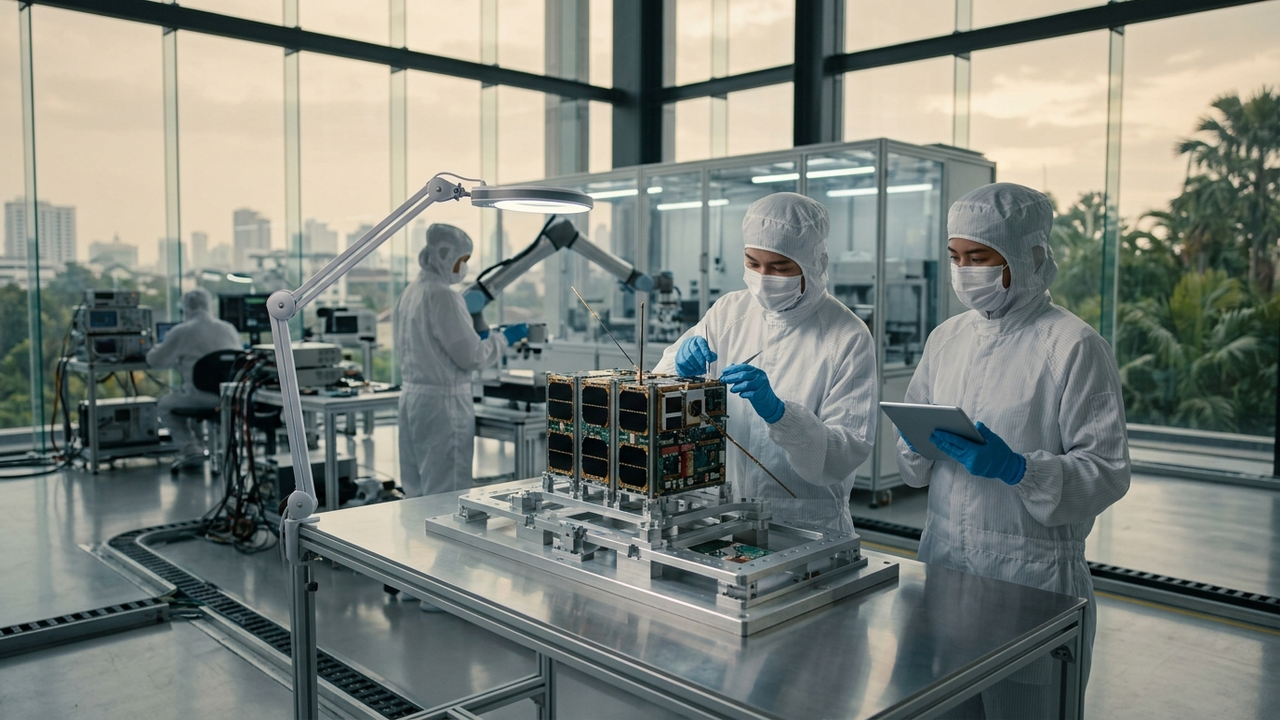
China’s commercial space company, GalaxySpace, has completed a landmark deal with Thailand for the export and launch of the Lingzhi-09 CubeSat, achieving its first turnkey satellite export to the Southeast Asian market. This significant transaction underscores the growing global footprint of China’s commercial space industry, signaling its evolution from a provider of space products to a comprehensive solutions provider, encompassing operational services and technology transfer.
Technical and Operational Details
The Lingzhi-09 CubeSat is specifically tailored to meet Thailand’s unique requirements, primarily focusing on delivering high-resolution remote sensing data. This satellite is expected to support various national sectors in Thailand, including agricultural monitoring, disaster management, and urban planning. Crucially, the project integrates a practical training program for students and researchers from Thai universities and research institutions, covering satellite data analysis, operations, and space technology development. This initiative enhances Thailand’s indigenous space capabilities while strengthening China’s international partnerships through technological cooperation.
Background and Industry Context
In recent years, the Chinese government has vigorously promoted the development of its commercial space sector, encouraging private enterprise participation alongside its state-led programs. This effort is particularly evident within the ‘Belt and Road’ initiative, which leverages space technology for infrastructure development and service provision. Southeast Asia, in particular, exhibits a surging demand for space services such as remote sensing, communications, and navigation, and China is actively working to establish its leadership in this region. This turnkey agreement suggests a future where China offers similar comprehensive space solutions to an increasing number of nations.
Future Outlook
This success represents a crucial milestone for GalaxySpace and other Chinese commercial space firms, enhancing their competitiveness in the international market. Especially, the integrated package offering – including small-to-medium satellite manufacturing, launch, operations, and data services – will be an attractive option for emerging spacefaring nations. China is anticipated to aggressively pursue commercial space opportunities not only in Southeast Asia but also in regions like Africa and South America, thereby cementing its position as a major player in the global space industry. This expansion is set to intensify competition for established space powers, notably companies from the United States and Europe.
Get our weekly technology intelligence — free
Receive an infographic that lets you judge at a glance whether each field’s analysis report is worth reading.
Subscribe Free — Weekly Tech Intelligence
By subscribing, you’ll receive Troy-Technical’s weekly technology intelligence newsletter.
- Your email and selected fields are used only to deliver the newsletter.
- We never share your information with third parties.
- You can unsubscribe anytime via the link in each email.
See our Privacy Policy for details.
Takes about a minute · Unsubscribe anytime









Comments