Key Findings
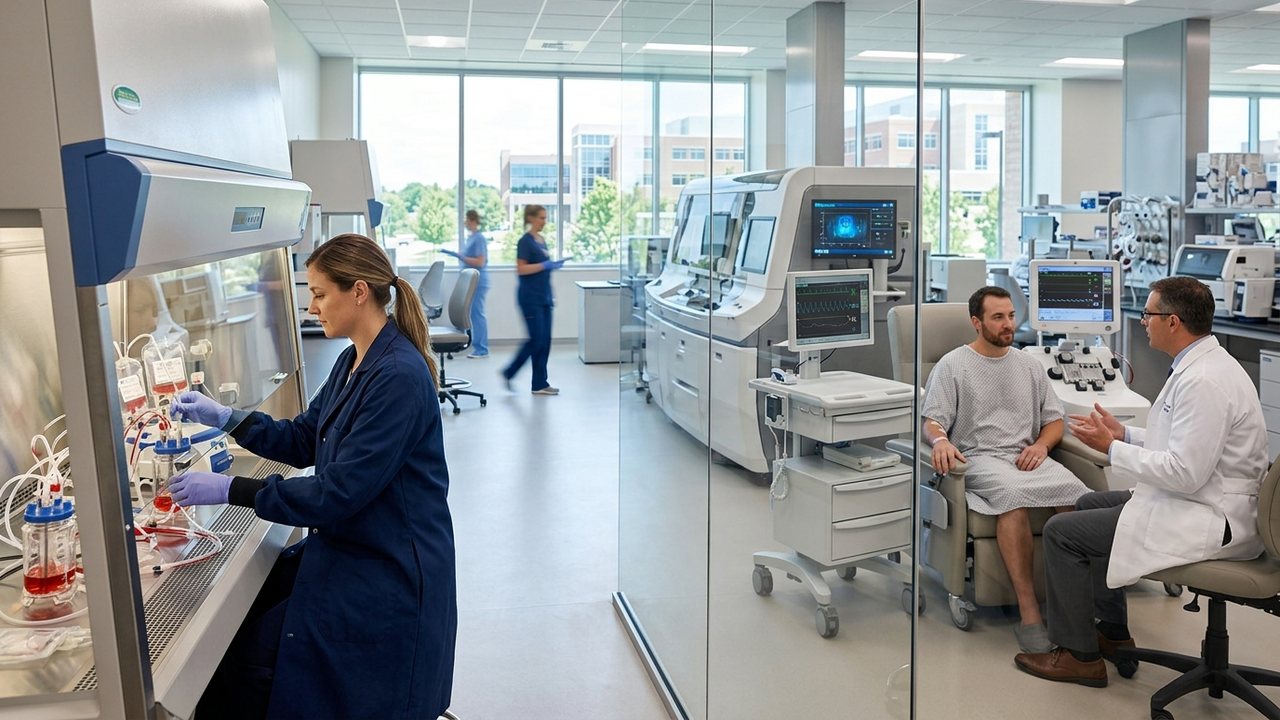
Franciscan Health Cancer Center Indiana Blood & Marrow Transplantation in Indiana is making significant strides in cancer treatment by actively implementing state-of-the-art cellular therapies, including CAR-T cell therapy and bone marrow transplantation. A notable focus is addressing the persistent challenge of donor scarcity, particularly within racial and ethnic minority populations, by exploring innovative methods such as harvesting and utilizing stem cells from deceased donors through clinical trials. This groundbreaking approach has the potential to offer life-saving treatment opportunities to a broader patient demographic. CAR-T cell therapy, approved by the FDA (U.S. Food and Drug Administration) in 2017, has demonstrated high response rates in specific lymphomas and leukemias, with ongoing research actively pursuing its expanded application to various malignant tumors, including glioblastoma and thyroid cancer.
Technical / Clinical Details
CAR-T cell therapy involves collecting a patient’s own T-cells, genetically engineering them to express a cancer-specific Chimeric Antigen Receptor (CAR), and thereby enhancing their ability to recognize and attack cancer cells. These CAR-T cells are then expanded ex vivo (outside the body) and re-infused into the patient. Existing CAR-T therapies have achieved complete remission in some patients, particularly those with relapsed or refractory B-cell lymphomas and acute lymphoblastic leukemia. For instance, early clinical trials reported approximately XX% overall response rate and YY% complete response rate in certain lymphoma patients, with some maintaining long-term remission. While side effects such as Cytokine Release Syndrome (CRS) and neurotoxicity have been identified, they are manageable with established treatment protocols. Bone marrow transplantation is a well-established method for treating blood cancers and immune deficiencies by replacing a patient’s hematopoietic stem cells, destroyed by high-dose chemotherapy or radiation, with healthy donor stem cells. Research into utilizing stem cells from deceased donors is crucial for overcoming donor shortages and expanding access to urgent treatments for patients.
Background & Context
Cellular therapies are rapidly evolving as a new beacon of hope for cancer patients who have exhausted traditional chemotherapy and radiation options. CAR-T cell therapy, often dubbed a ‘living drug’ due to its high efficacy, is fundamentally changing the paradigm of cancer treatment. However, significant challenges persist, including high treatment costs, manufacturing complexities, and the critical issue of donor cell availability. For bone marrow transplantation and certain other cell therapies, the lack of diverse donor registries has historically limited treatment opportunities for minority patients. Initiatives like those at Franciscan Health, exploring deceased donor stem cell utilization, are vital steps toward overcoming these societal challenges and achieving equitable healthcare access. Furthermore, research into expanding CAR-T cell therapy indications aims to extend the benefits of this innovative treatment to a larger population of cancer patients, intensifying the competitive landscape among pharmaceutical and biotechnology companies.
Strategic Significance & Outlook
The future of cellular therapy in cancer treatment depends on continuous technological innovation and expanded clinical applications. Future research will likely focus on improving gene-editing techniques to enhance the efficacy and safety of CAR-T cell therapy and developing effective treatment strategies for solid tumors. For example, advancements in novel CAR designs, bispecific CARs, or the development of ‘off-the-shelf’ therapies using NK cells or iPSC-derived cells could reduce manufacturing costs and enable more rapid treatment delivery to a greater number of patients. If deceased donor stem cell utilization technology becomes established, it could significantly alleviate donor shortages in transplant medicine, making treatments more accessible globally. These advancements are expected to further solidify the role of cellular therapy in cancer treatment, ultimately contributing substantially to improved patient survival rates and quality of life.
Source: https://www.franciscanhealth.org/community/blog/cellular-therapy
Get our weekly technology intelligence — free
Receive an infographic that lets you judge at a glance whether each field’s analysis report is worth reading.
Subscribe Free — Weekly Tech Intelligence
By subscribing, you’ll receive Troy-Technical’s weekly technology intelligence newsletter.
- Your email and selected fields are used only to deliver the newsletter.
- We never share your information with third parties.
- You can unsubscribe anytime via the link in each email.
See our Privacy Policy for details.
Takes about a minute · Unsubscribe anytime





Comments