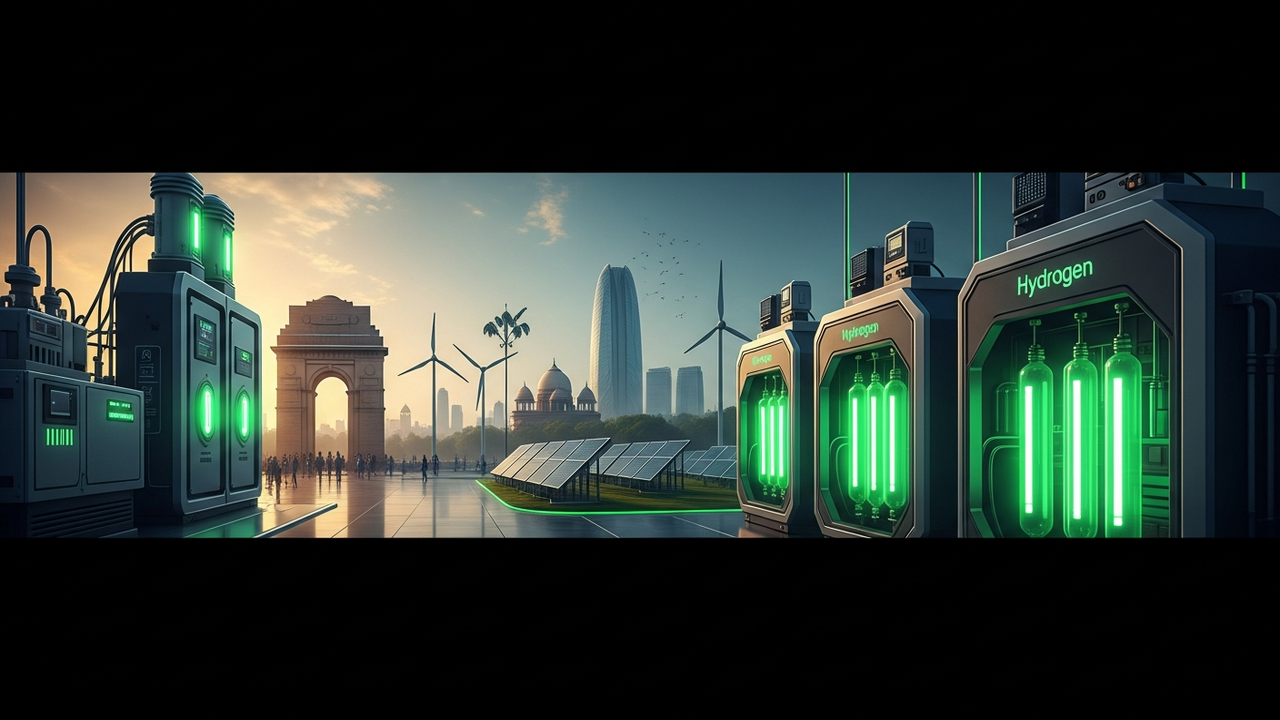
Background: India’s Surging Energy Demand and Decarbonization Challenges
India is one of the world’s largest energy consumers, driven by rapid economic growth and population expansion. However, a significant portion of its current energy supply relies on fossil fuels, which are major contributors to air pollution and greenhouse gas emissions. To achieve sustainable development goals and advance climate change mitigation, diversifying energy sources and transitioning to clean energy are urgent imperatives. In this context, green hydrogen is garnering significant attention as a new solution.
Pankaj Jain’s Statement and the National Green Hydrogen Mission
In a recent announcement, Pankaj Jain, Secretary of the Ministry of Petroleum and Natural Gas, emphasized that India’s enormous energy demand will continue to expand rapidly. He explicitly stated that green hydrogen is an “attractive energy option” for transforming the nation’s energy consumption into a cleaner and more sustainable one. To materialize this vision, the Indian government approved the “National Green Hydrogen Mission” on January 4, 2022, and is actively promoting the production, utilization, and export of green hydrogen.
- Demand Forecasts: Under the National Green Hydrogen Mission, India projects staggering green hydrogen demand figures: 12.5 Million Metric Tons (MMT) annually by 2040, and an even more ambitious 25 MMT per year by 2050. These forecasts account for growing demand in hard-to-abate industrial sectors such as steel, fertilizers, petroleum refining, and heavy transportation.
- Mission Objectives: The mission aims to establish India as a global hub for green hydrogen, reduce dependency on fossil fuel imports, and enhance energy security. It also anticipates the creation of new industries and expansion of employment opportunities.
Impact and Outlook: Contribution to the Global Hydrogen Economy
India’s strengthened commitment to green hydrogen, as a major economy, will significantly impact the development of the global hydrogen economy. India’s immense demand has the potential to accelerate innovation and cost reduction in green hydrogen technologies worldwide, fostering the construction of global supply chains. This move is also expected to serve as a model for other developing nations pursuing a transition to clean energy.
However, achieving these ambitious targets will necessitate the deployment of massive renewable energy capacity, expansion of electrolyzer manufacturing capabilities, development of hydrogen infrastructure (transportation and storage), and the establishment of robust financing mechanisms. India’s endeavor will be a crucial test case in the global clean energy transition.
Source: #







Comments