


Key Findings: NASA Introduces ‘Bioculture System’ for Microgravity Bio-Research on ISS
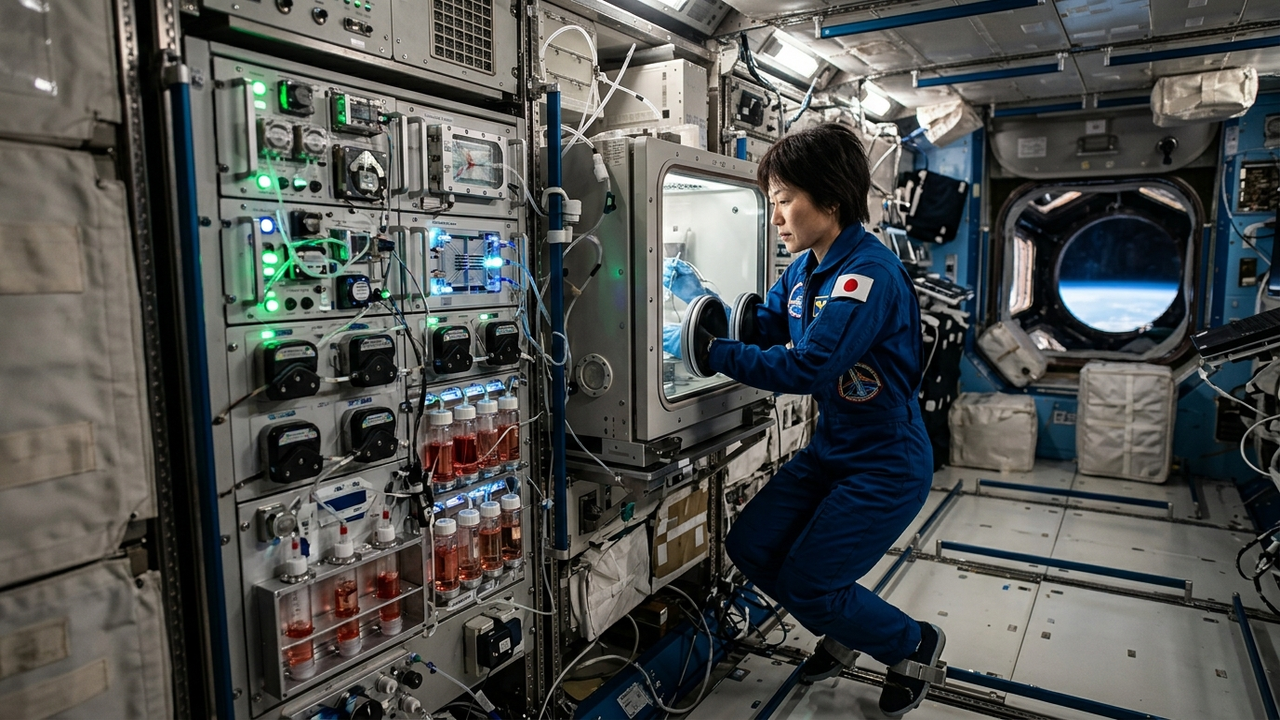
NASA has unveiled its ‘Bioculture System,’ an automated biological science incubator operational on the International Space Station (ISS). This advanced system is specifically engineered to comprehensively investigate how the microgravity environment influences the physiology, biochemistry, and gene expression of cells, tissues, and microorganisms. By providing conditions unattainable on Earth, the Bioculture System is poised to facilitate novel discoveries in life science research and pave the way for critical medical applications.
Technical Details: Automated Incubator and Experimental Capabilities
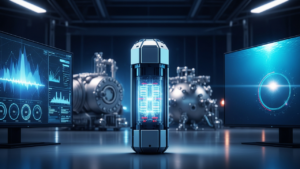
The Bioculture System features fully automated environmental controls, allowing researchers to monitor and manipulate experiments remotely from Earth. It can simultaneously conduct experiments in multiple cell culture chambers while precisely controlling parameters such as temperature, CO2 levels, and humidity. In microgravity, cells tend to form more natural 3D structures, unlike the 2D cultures on Earth, enabling studies of cellular behavior in a more in-vivo-like context. This promises breakthroughs in areas such as improving drug screening accuracy, elucidating infectious disease progression mechanisms, and researching cancer cell proliferation patterns. The system’s data collection capabilities allow for detailed physiological and gene expression profiling, deepening our understanding of gravitational responses.
Background & Industry Context: The Importance of Space-Based Life Science Research
Life science research in the space environment is crucial not only for developing countermeasures against health risks to long-duration astronauts (e.g., bone density loss, muscle atrophy, immune system impairment) but also for discovering new treatments for Earth-bound diseases. Microgravity is known to alter fundamental aspects of biological processes, including gene expression, protein folding, and cell-to-cell interactions. The ISS serves as the premier platform for such unique research, and the introduction of tools like the Bioculture System further enhances its research capabilities. Biotechnology and pharmaceutical companies are increasingly leveraging the unique data derived from space experiments to gain a competitive edge.
Future Outlook: Impact on Drug Discovery, Disease Research, and Space Medicine
Insights gained from the Bioculture System will directly contribute to innovating drug discovery processes, identifying new therapeutic targets, and advancing personalized medicine. Understanding how infectious diseases progress in microgravity and how antibiotic resistance might change is applicable not only to astronaut health management but also to global public health. Furthermore, this system could aid in tissue engineering for regenerative medicine and the development of self-contained life support systems for space. The Bioculture System positions space as the ultimate laboratory for deepening human health and life science understanding, driving both next-generation space medicine and terrestrial healthcare innovation.
Source: https://www.nasa.gov/ames/space-biosciences/cell-science/bioculture-system/
Get our weekly technology intelligence — free
Receive an infographic that lets you judge at a glance whether each field’s analysis report is worth reading.
Subscribe Free — Weekly Tech Intelligence
By subscribing, you’ll receive Troy-Technical’s weekly technology intelligence newsletter.
- Your email and selected fields are used only to deliver the newsletter.
- We never share your information with third parties.
- You can unsubscribe anytime via the link in each email.
See our Privacy Policy for details.
Takes about a minute · Unsubscribe anytime