Key Findings
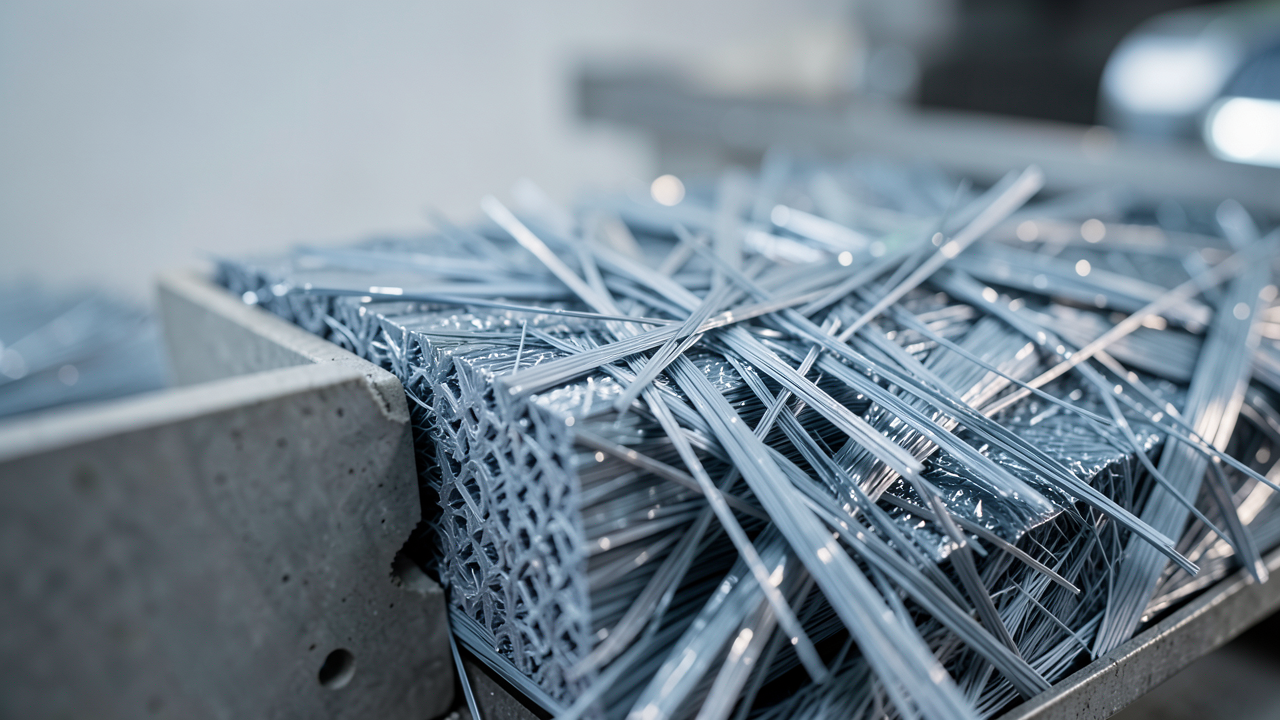
Addressing the long-standing challenge of recycling carbon fiber-reinforced thermoset composites (CFRTCs), an innovative decomposition strategy has been proposed based on an exchange reaction between intrinsic Mannich base bridges within polybenzoxazine (PBZ) and primary amine groups. This novel approach, conducted under catalyst- and solvent-free conditions, successfully demonstrated that treating PBZ-based CFRTCs with aniline efficiently decomposes the resin matrix into soluble oligomers while recovering carbon fibers with negligible damage. This represents a significant breakthrough towards realizing a circular economy for high-performance composite materials.
Technical / Clinical Details
Thermoset composites are widely utilized in aerospace and automotive industries due to their superior mechanical properties, but once cured, their three-dimensional crosslinked structure makes recycling extremely challenging. Traditional methods like pyrolysis or mechanical recycling often result in significant degradation of carbon fiber strength and quality. The decomposition strategy developed in this research focuses on the Mannich base bridges (-CH2-N(R)-CH2-) inherent in the molecular structure of polybenzoxazine resin. These Mannich base bridges are capable of undergoing an exchange reaction with primary amines (e.g., aniline) under mild conditions. Experimental results confirmed that reacting PBZ-based CFRTCs with aniline, without catalysts or additional solvents, selectively cleaves the resin matrix and efficiently depolymerizes it into soluble oligomers. Through this process, carbon fibers are completely separated from the resin components and recovered with virtually no loss in their original tensile strength and modulus. The fact that the decomposition products (oligomers) are also reusable suggests the potential for establishing a complete closed-loop recycling system.
Background & Context
Carbon fiber reinforced polymers (CFRPs) are essential materials for lightweighting and enhancing the performance of aircraft, automobiles, and wind turbine blades. However, as the demand for these materials grows, the volume of end-of-life CFRP waste is increasing, raising environmental concerns and anxieties about resource depletion. Recycling CFRPs has faced significant technical and economic barriers for decades due to their complex composition and the characteristics of thermosetting resins. This new recycling technology, by enabling the recovery of carbon fibers while maintaining their high value, is critically important for aerospace and automotive industries to achieve their sustainability goals and improve resource efficiency within their supply chains. Furthermore, with strengthening regulations on CFRP recycling in regions like the European Union, this technology will contribute to meeting future legal requirements.
Strategic Significance & Outlook
This innovative recycling technology holds the potential to bring about a major transformation in the lifecycle management of high-performance composite materials. Future research is expected to focus on optimizing the process for industrial-scale implementation, expanding its applicability to various PBZ composites, and exploring methods for reusing the recovered oligomers. Its success would significantly reduce the environmental impact of carbon fiber composites and promote the sustainable use of resources, accelerating the transition to a circular economy model across numerous industries, including aerospace, automotive, and sporting goods. Moreover, it could inspire the development of recycling technologies for other types of thermoset composites.
Get our weekly technology intelligence — free
Receive an infographic that lets you judge at a glance whether each field’s analysis report is worth reading.
Subscribe Free — Weekly Tech Intelligence
By subscribing, you’ll receive Troy-Technical’s weekly technology intelligence newsletter.
- Your email and selected fields are used only to deliver the newsletter.
- We never share your information with third parties.
- You can unsubscribe anytime via the link in each email.
See our Privacy Policy for details.
Takes about a minute · Unsubscribe anytime









Comments