Key Findings
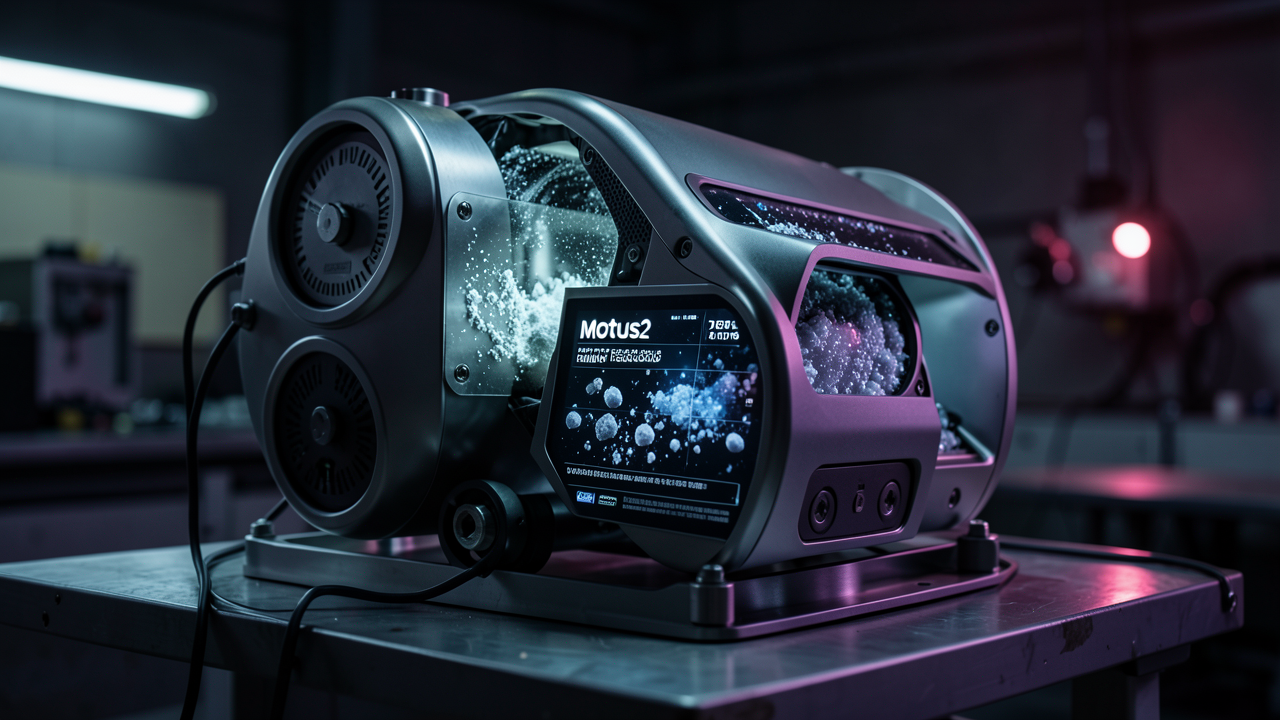
The “Motus2” model, a self-evolving general world model designed for dexterous manipulation, has been announced. This model integrates tactile feedback with a global auto-regression memory, allowing robots to gain a deeper understanding of object interactions. This approach leads to a significant performance improvement compared to imitation learning, specifically enhancing success rates by 12.5 points in contact-rich tasks such as “tearing paper.”
Technical / Clinical Details
- Self-Evolving General World Model: Motus2 internally represents the dynamics of the physical world, enabling robots to make predictions and plan for task execution. This “self-evolving” characteristic means the model can continuously improve its internal representations through experience.
- Integration of Tactile Feedback: The model actively utilizes feedback from tactile sensors in addition to visual information. This allows the robot to perceive crucial details like pressure, slip, and friction during object grasping, leading to more delicate and robust operations. This is particularly vital for contact-dependent tasks (ee.g., handling soft objects, utilizing friction) where visual information alone is insufficient.
- Global Auto-Regression Memory: Motus2 incorporates a global auto-regression memory, which enables it to retain and leverage past experiences and object-related information over the long term. This allows the robot to “remember” the characteristics of objects and manipulation techniques it has learned, efficiently transferring knowledge to new situations or similar objects.
- Superiority Over Imitation Learning: Experimental results demonstrated that Motus2 significantly outperforms traditional imitation learning (a method where robots learn actions directly from human demonstrations). Specifically, in tasks requiring precise contact force control, such as “tearing paper,” Motus2, leveraging tactile feedback, achieved a 12.5-point increase in success rate, clearly validating its effectiveness.
Background & Context
Advanced robotic manipulation is a key enabler for automation across many sectors, including manufacturing, logistics, and services. However, enabling robots to handle objects with human-like dexterity, especially when performing complex, contact-rich tasks, has been a long-standing challenge. Conventional robots have primarily relied on visual information for task execution, which is often insufficient for accurately understanding physical interactions with objects. Motus2 addresses this gap by integrating tactile information and constructing a self-evolving world model, marking a significant step towards robots exhibiting higher levels of intelligence and dexterity.
Strategic Significance & Outlook
Self-evolving, tactile-integrated world models like Motus2 will significantly enhance robots’ dexterous manipulation capabilities, promoting their deployment in more complex and uncertain environments. This will allow robots to perform more reliably in a wide range of applications, including precision assembly in industrial settings, surgical assistance in healthcare, and daily task support in homes. In the future, Motus2’s technology is expected to serve as a crucial foundation for realizing “general-purpose robots” that can autonomously learn and adapt to new tasks without direct human intervention.
Source: https://www.alphaxiv.org/abs/2608.30237
Get our weekly technology intelligence — free
Receive an infographic that lets you judge at a glance whether each field’s analysis report is worth reading.
Subscribe Free — Weekly Tech Intelligence
By subscribing, you’ll receive Troy-Technical’s weekly technology intelligence newsletter.
- Your email and selected fields are used only to deliver the newsletter.
- We never share your information with third parties.
- You can unsubscribe anytime via the link in each email.
See our Privacy Policy for details.
Takes about a minute · Unsubscribe anytime








Comments