Key Findings
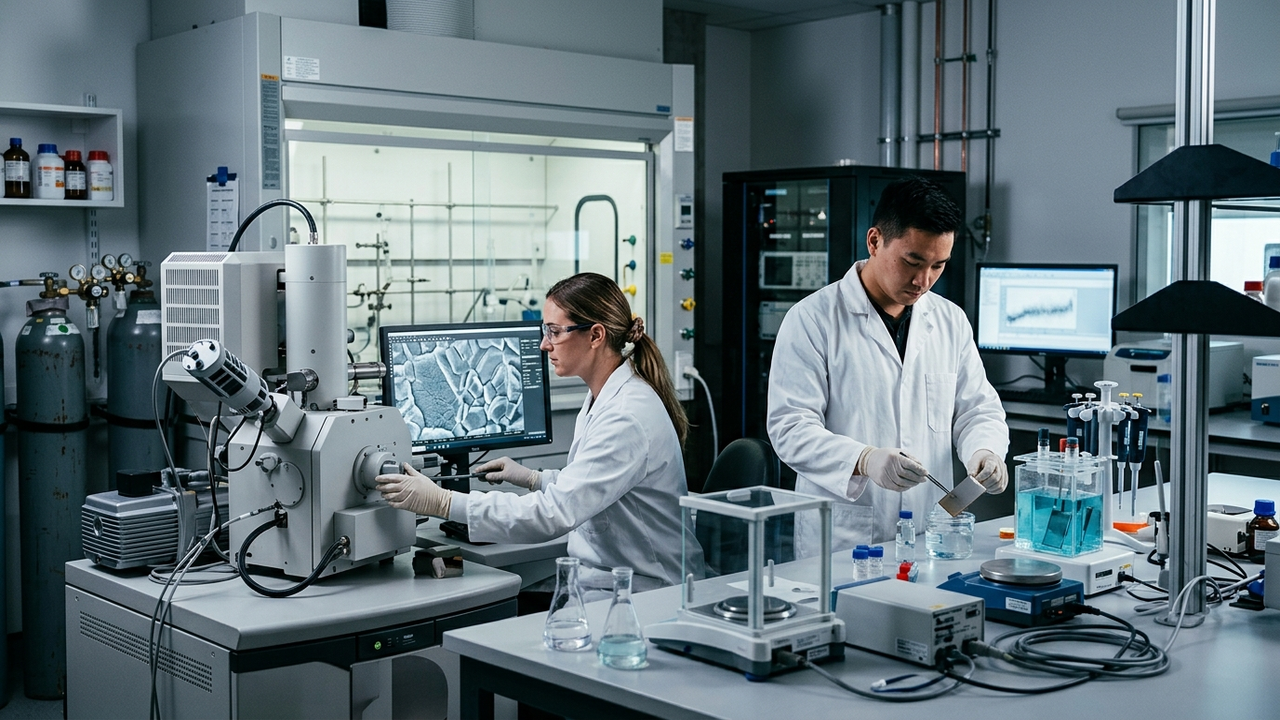
Researchers at the University of Queensland have engineered a smart nanocoating that drastically slows down rust corrosion in steel by over 600 times compared to unprotected steel. This innovative coating, which embeds pH-sensitive nanocontainers filled with benzotriazole (BTA) corrosion inhibitor within an aqueous polyurethane matrix, achieved an impressive calculated corrosion rate of just 0.0000372 millimeters per year in electrochemical assessments.
Technical / Clinical Details
The developed smart nanocoating utilizes an aqueous polyurethane (WPU) base, in which pH-sensitive nanocontainers encapsulate the benzotriazole (BTA) corrosion inhibitor. These nanocontainers are engineered to respond to pH changes (typically acidification) that occur when corrosion initiates on the metal surface, triggering the release of the BTA inhibitor. Upon release, BTA forms a protective layer on the steel surface, effectively stifling further corrosion reactions. Electrochemical tests, such as electrochemical impedance spectroscopy (EIS), demonstrated that this coating exhibited extremely low corrosion current densities, reducing the annual corrosion rate from approximately 0.0225 millimeters for unprotected steel to a mere 0.0000372 millimeters. This result unequivocally highlights a protective efficacy far superior to that of conventional passive barrier coatings.
Background & Context
Metal corrosion represents a formidable economic challenge, incurring trillions of dollars in losses annually across critical sectors like infrastructure, transportation, and manufacturing. Traditional anti-corrosion coatings primarily function as physical barriers, but their protective capability is compromised when scratches or micro-defects occur, leading to localized corrosion. Research into self-healing or active anti-corrosion coatings has thus become a crucial avenue for addressing these vulnerabilities. The University of Queensland’s research provides a transformative approach by integrating ‘smart’ functionality—autonomous inhibitor release at the initial stages of corrosion—thereby dramatically extending the lifespan of metal structures beyond simple barrier protection.
Strategic Significance & Outlook
This smart nanocoating technology holds the potential to revolutionize corrosion protection for steel components in harsh environments, including bridges, ships, automobiles, aircraft, and offshore structures. It promises substantial reductions in maintenance costs and resource consumption associated with corrosion, contributing to a more sustainable society. Future research will likely focus on enhancing the durability of the nanocontainers, exploring a broader range of corrosion inhibitors beyond BTA, scaling up coating production, and evaluating its applicability to various metal substrates. This active corrosion prevention strategy has the potential to redefine the standard for future material protection technologies globally.
Source: https://www.thebrighterside.news/post/smart-nanocoating-slows-rust-corrosion-by-more-than-600-times/
Get our weekly technology intelligence — free
Receive an infographic that lets you judge at a glance whether each field’s analysis report is worth reading.
Subscribe Free — Weekly Tech Intelligence
By subscribing, you’ll receive Troy-Technical’s weekly technology intelligence newsletter.
- Your email and selected fields are used only to deliver the newsletter.
- We never share your information with third parties.
- You can unsubscribe anytime via the link in each email.
See our Privacy Policy for details.
Takes about a minute · Unsubscribe anytime






Comments