Key Findings
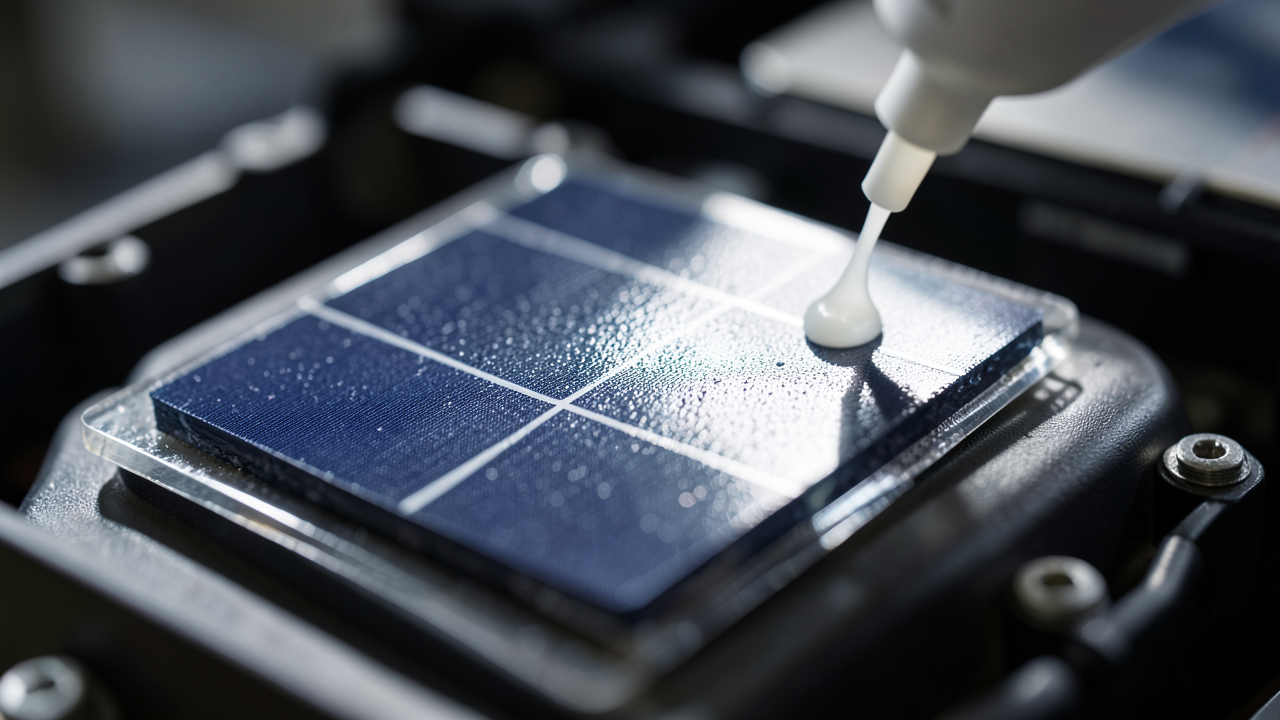
Scientists have made a significant breakthrough in addressing the primary challenge of stability in environmentally friendly lead-free perovskite solar cells. A newly developed protective coating, dubbed a ‘raincoat’ layer, has demonstrated remarkable durability, allowing devices to retain over 95% of their initial efficiency after 1,600 hours in dry air and approximately 80% efficiency after 1,000 hours under continuous simulated sunlight at 55°C. This innovation substantially improves the long-term viability of these devices, accelerating the commercialization of lead-free solar technology.
Technical Details
The innovative ‘raincoat’ layer is composed of a chlorine-containing organic molecule, 4-chlorophenethylammonium (4ClPEA). When integrated into the perovskite material’s crystalline structure, this molecule facilitates the formation of a more densely packed lattice. This tighter arrangement acts as an effective barrier, preventing the ingress of detrimental environmental factors such as moisture and oxygen, which are primary causes of degradation in perovskite solar cells. The lead-free devices employing this protection achieved a power conversion efficiency of 16.2%, indicating that this robust stability is achieved without compromising practical performance.
Background & Context
Perovskite solar cells are heralded as a next-generation photovoltaic technology due to their high power conversion efficiencies and low manufacturing costs. However, the most efficient perovskites typically contain lead, raising environmental concerns that have driven an urgent search for high-performing lead-free alternatives. Earlier lead-free perovskites generally suffered from inferior efficiency and, critically, poor long-term stability compared to their lead-containing counterparts. The development of this ‘raincoat’ layer represents a pivotal advancement in overcoming the stability challenge, contributing significantly to the realization of high-performance, eco-friendly solar cells.
Strategic Significance & Outlook
This new protective layer technology marks a major step towards the commercialization of lead-free perovskite solar cells. The research team intends to further boost conversion efficiency while rigorously validating stability under various environmental conditions and exploring its applicability in large-scale manufacturing processes. Widespread adoption of this technology could accelerate the deployment of perovskite solar cells as a sustainable, environmentally conscious energy source. This advancement is particularly promising for diverse applications such as building-integrated photovoltaics (BIPV) and flexible solar cells, where durability and environmental safety are paramount.
Get our weekly technology intelligence — free
Receive an infographic that lets you judge at a glance whether each field’s analysis report is worth reading.
Subscribe Free — Weekly Tech Intelligence
By subscribing, you’ll receive Troy-Technical’s weekly technology intelligence newsletter.
- Your email and selected fields are used only to deliver the newsletter.
- We never share your information with third parties.
- You can unsubscribe anytime via the link in each email.
See our Privacy Policy for details.
Takes about a minute · Unsubscribe anytime

Comments