Key Findings
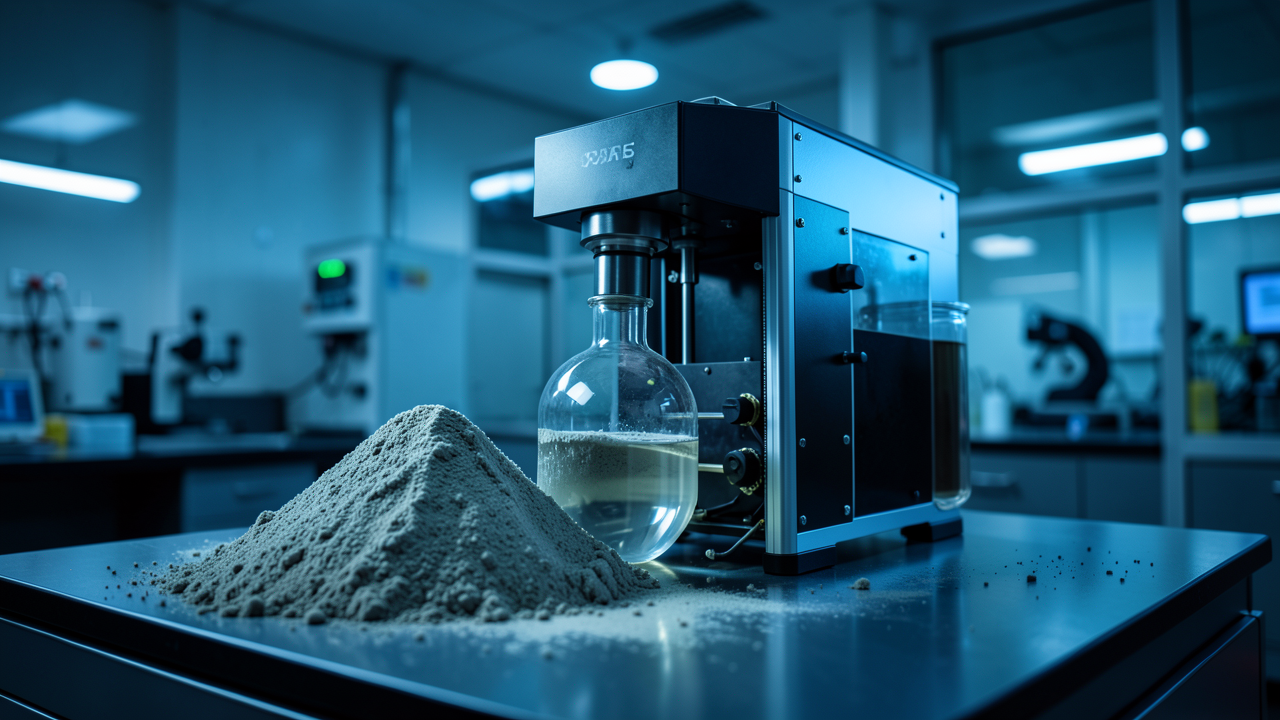
Artificial intelligence has demonstrated remarkable success in solving complex ‘generation problems,’ exemplified by AlphaFold’s protein structure predictions and DeepMind’s GNoME in discovering new material candidates. However, this progress has shifted the critical bottleneck in materials discovery from AI-driven ‘generation’ to the subsequent ‘verification’ of these generated candidates. A significant challenge lies in the fact that only approximately 0.2% of the 380,000 stable crystal candidates predicted by GNoME have been independently synthesized and experimentally validated. This stark figure underscores a growing disparity between AI’s capacity to generate possibilities and humanity’s current ability to confirm them in the real world.
Technical / Clinical Details
DeepMind’s GNoME is a powerful tool that leverages machine learning to predict new stable crystal structures, dramatically expanding the exploratory space of materials science. Yet, the core challenge remains whether these predicted materials are practically synthesizable and can maintain their predicted stability under real-world conditions. While the autonomous ‘A-Lab’ at Lawrence Berkeley National Laboratory reported the successful synthesis of 41 new materials based on GNoME’s predictions, the community of chemists has raised concerns regarding the rigor of the verification methodologies employed. Thermodynamic stability represents only the initial phase in a protracted material qualification process; for a material to be truly useful, it must undergo extensive validation for numerous other properties, including mechanical strength, electrical conductivity, and chemical durability. The current verification process remains largely manual, time-consuming, and expensive, failing to match the rapid generation rate of AI.
Background & Context
Materials informatics aims to accelerate the discovery of new materials by harnessing the power of AI and computational science. However, it is impractical to manually verify the millions of candidates generated by AI using existing experimental facilities and human resources. This verification bottleneck significantly impedes the full realization of AI’s potential. Past instances have shown discrepancies between computational predictions and experimental outcomes, and predicted stability does not always guarantee real-world performance. This necessitates ongoing discussions about the reliability and interpretability of AI models. As AI-driven material design gains traction in industry, there is an increasing demand for ‘Trustworthy AI,’ particularly concerning the transparency and reproducibility of verification processes.
Strategic Significance & Outlook
The future of AI-driven materials discovery hinges on bridging the gap between ‘generation’ and ‘verification.’ Addressing this requires further advancements in AI-enabled autonomous experimental systems and the development of high-throughput synthesis and characterization technologies. Strategies such as ‘active learning,’ where generative models quantify predictive uncertainties to focus experimental resources on the most promising candidates, and ‘digital twin’ approaches that integrate simulations with physical experiments, will be crucial. Furthermore, promoting the standardization and sharing of experimental data to create a closed-loop research ecosystem where verification results feed back into new AI model training is key to accelerating reliable materials discovery. Resolving this bottleneck is the next frontier for materials informatics to deliver truly transformative industrial impact.
Source: https://www.ainvasion.com/ai-for-science/
Get our weekly technology intelligence — free
Receive an infographic that lets you judge at a glance whether each field’s analysis report is worth reading.
Subscribe Free — Weekly Tech Intelligence
By subscribing, you’ll receive Troy-Technical’s weekly technology intelligence newsletter.
- Your email and selected fields are used only to deliver the newsletter.
- We never share your information with third parties.
- You can unsubscribe anytime via the link in each email.
See our Privacy Policy for details.
Takes about a minute · Unsubscribe anytime






Comments