Key Findings
NASA is issuing a broad solicitation for technology proposals aimed at accelerating lunar exploration and establishing a sustainable human presence at the lunar South Pole. This call focuses on critical advancements such as vertical solar array technology for continuous power generation, in-situ resource utilization (ISRU) for oxygen extraction from lunar regolith, radioisotope Stirling generators (RSGs) for reliable nuclear energy, and advanced manufacturing capabilities in space. These strategic investments are designed to drastically decrease dependence on Earth-based resupply missions, thereby enhancing the autonomy, flexibility, and resilience of future lunar operations.
Technical Details
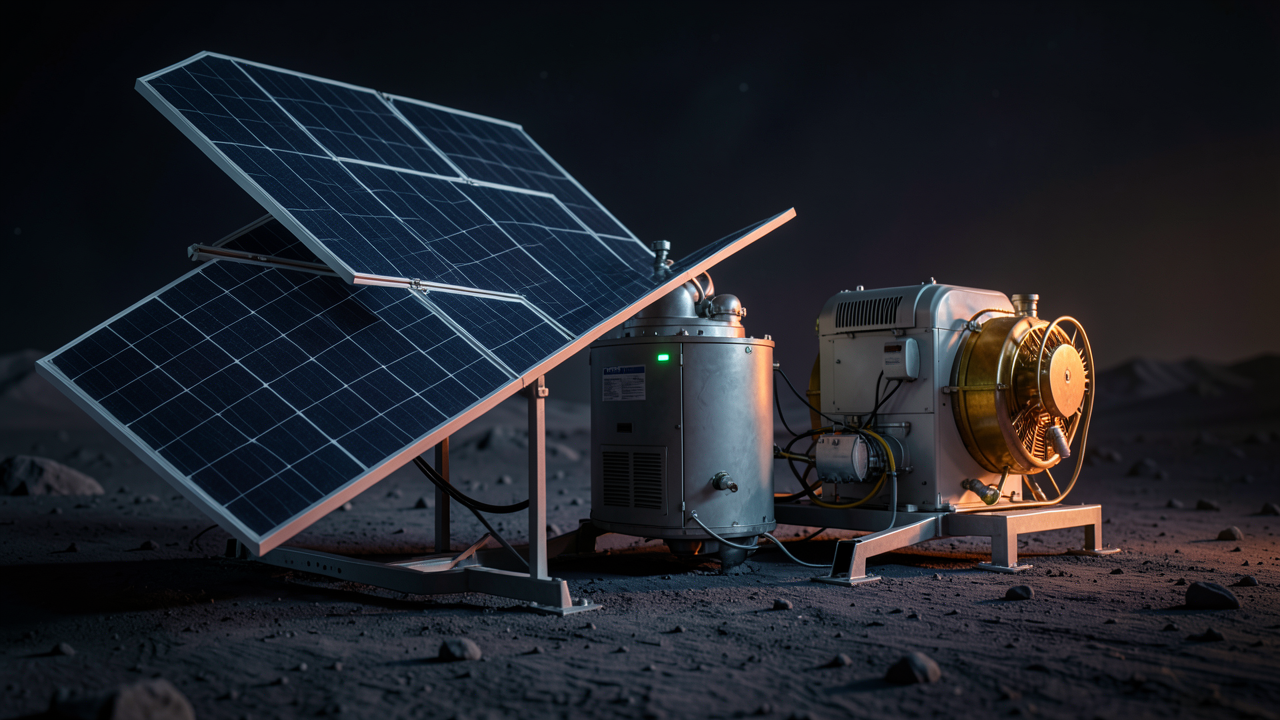
- Vertical Solar Array Technology: At the lunar South Pole, the sun’s angle is consistently low, making vertically oriented solar arrays more effective at capturing sunlight over long periods, including during lunar day-night cycles that can last for Earth-weeks. This design maximizes power output and ensures continuous energy supply for a permanent lunar outpost.
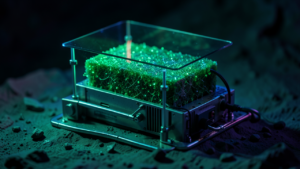
- Oxygen Extraction from Regolith (ISRU): Lunar regolith contains oxygen bound within its mineral compounds. Technologies to extract this oxygen – such as reduction with hydrogen or methane, or molten salt electrolysis – are vital for producing breathable air, propellants (oxidizer), and water. This significantly reduces the mass that needs to be launched from Earth.
- Radioisotope Stirling Generators (RSGs): As a highly efficient nuclear power source, RSGs convert the heat from the radioactive decay of plutonium-238 dioxide into electricity using a Stirling engine. These systems are crucial for providing continuous power during the two-week-long lunar nights and in permanently shadowed regions where solar power is unavailable, offering superior efficiency and longevity compared to traditional Radioisotope Thermoelectric Generators (RTGs).
- In-Space Advanced Manufacturing: This involves technologies like 3D printing and robotic construction to fabricate tools, spare parts, and structures directly on the Moon from lunar resources or feedstock transported from Earth. This reduces logistics burdens, allows for rapid repair, and enables the construction of larger habitats and infrastructure that would be impractical to launch fully assembled.
Background & Context
NASA’s Artemis program aims to establish a long-term human presence on the Moon, a goal that necessitates robust, self-sustaining infrastructure. The high cost and logistical complexity of launching all necessary supplies from Earth make ISRU and autonomous power generation critical. By developing technologies that allow astronauts to ‘live off the land’ and generate their own power, NASA can unlock longer-duration missions and reduce the overall risk and expense. This solicitation reflects a strategic shift towards greater lunar self-sufficiency, building foundational capabilities not just for the Moon, but as a stepping stone for future Mars missions.
Strategic Significance & Outlook
Successful development and deployment of these technologies will transform a lunar outpost into a sustainable, self-sufficient base. The combination of vertical solar arrays and RSGs will ensure reliable power, while ISRU-derived oxygen will support both life support and propulsion needs. In-space manufacturing will revolutionize construction and maintenance on the Moon, enabling more ambitious scientific endeavors and exploration. These advancements are not merely incremental; they are fundamental to expanding humanity’s reach into the cosmos, making deeper space exploration, including crewed missions to Mars, a more tangible reality and establishing a true multi-planetary civilization.
Source: https://douglasmmessier.substack.com/p/nasa-calls-for-proposals-to-accelerate
Get our weekly technology intelligence — free
Receive an infographic that lets you judge at a glance whether each field’s analysis report is worth reading.
Subscribe Free — Weekly Tech Intelligence
By subscribing, you’ll receive Troy-Technical’s weekly technology intelligence newsletter.
- Your email and selected fields are used only to deliver the newsletter.
- We never share your information with third parties.
- You can unsubscribe anytime via the link in each email.
See our Privacy Policy for details.
Takes about a minute · Unsubscribe anytime




Comments