Key Findings
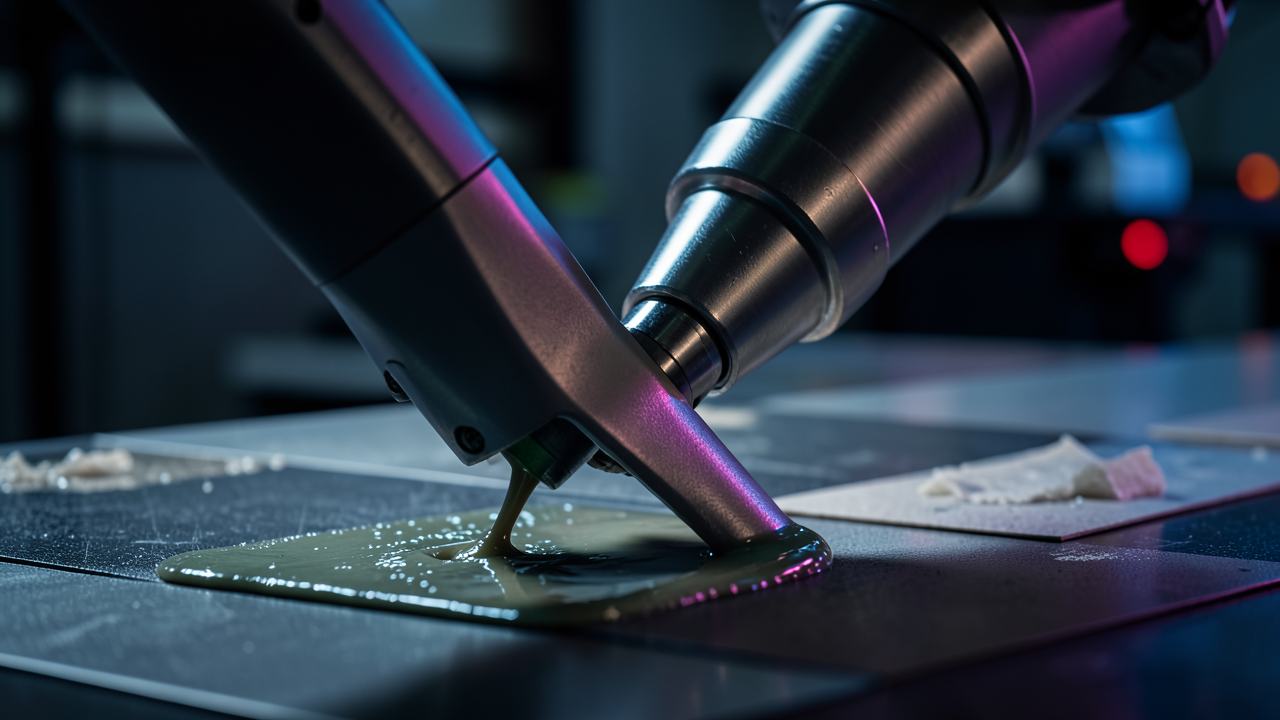
Researchers at KAIST (Korea Advanced Institute of Science and Technology) have successfully developed a glucose-based adhesive that serves as a sustainable alternative to petroleum-derived hot-melt adhesives. This innovation was achieved by engineering *Escherichia coli* to produce novel aromatic polyhydroxyalkanoate (PHA) polymers. The resulting bio-based adhesive exhibits promising adhesive performance and thermal properties, making it suitable for a wide range of applications including packaging, furniture, electronics, and automobiles.
Technical / Clinical Details
The research team initially engineered *E. coli* to produce 4-hydroxybutyrate (4HB), an aromatic monomer. By feeding glucose to these modified bacteria, they efficiently synthesized PHA copolymers incorporating 4HB and other monomers. Notably, polymers containing 24–34 mol% of 4HB demonstrated excellent adhesive performance, closely matching or even surpassing that of conventional petroleum-based hot-melt adhesives. This bio-synthetic process offers a significantly lower environmental footprint compared to traditional petrochemical manufacturing, enabling the production of adhesives from renewable resources. This contributes to reduced energy consumption and CO2 emissions throughout the adhesive’s lifecycle, enhancing overall sustainability.
Background & Context
Hot-melt adhesives are extensively used across numerous industries, including packaging, woodworking, and electronics assembly, due to their rapid curing and strong bonding capabilities. However, the vast majority of these adhesives are derived from petroleum, raising significant environmental concerns regarding resource depletion and pollution. With a global push towards reducing plastic waste and transitioning to sustainable materials, the development of high-performance, biodegradable adhesives from renewable sources has become a critical imperative. KAIST’s research provides an innovative biotechnological approach to address this pressing challenge.
Strategic Significance & Outlook
The development of this glucose-based, bio-derived adhesive represents a crucial step forward in accelerating environmentally conscious product development. With its superior adhesive performance and thermal properties, it holds the potential to replace existing petroleum-based hot-melt adhesives, significantly improving sustainability in the manufacturing of packaging materials, furniture, electronic components, and automotive interiors. Future research will likely focus on optimizing production costs and scaling up to large-scale manufacturing, which will further facilitate the market penetration of bio-based adhesives. This innovation is expected to make a substantial contribution to the transition towards a circular economy and the realization of industries with reduced environmental impact.
Source: https://www.miragenews.com/kaist-creates-glucose-based-adhesive-alternative-1745846/
Get our weekly technology intelligence — free
Receive an infographic that lets you judge at a glance whether each field’s analysis report is worth reading.
Subscribe Free — Weekly Tech Intelligence
By subscribing, you’ll receive Troy-Technical’s weekly technology intelligence newsletter.
- Your email and selected fields are used only to deliver the newsletter.
- We never share your information with third parties.
- You can unsubscribe anytime via the link in each email.
See our Privacy Policy for details.
Takes about a minute · Unsubscribe anytime






Comments