Key Findings
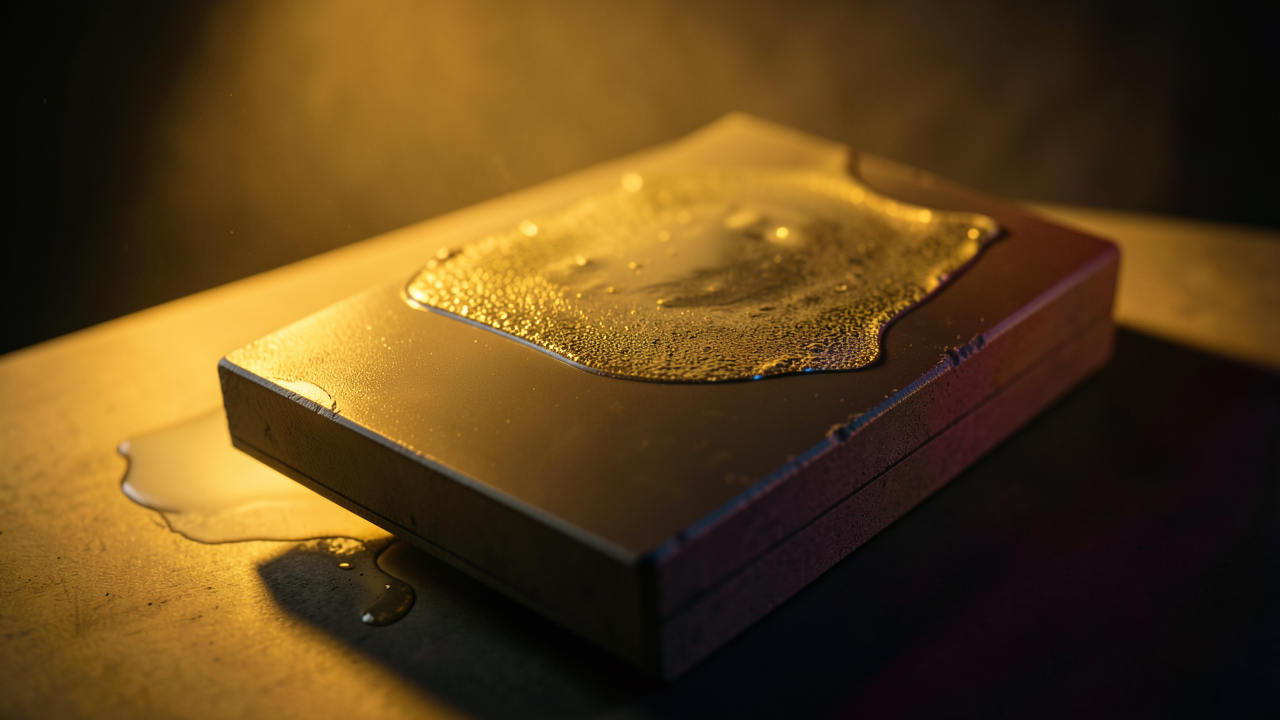
Researchers at the University of Queensland (UQ) have developed a groundbreaking ‘smart’ self-healing coating designed to significantly inhibit steel corrosion. This innovative coating has demonstrated an ability to delay corrosion by over 600 times compared to conventional protective coatings. The core of this technology lies in its capacity for self-sensing and self-repair, representing a transformative advancement that promises to extend the lifespan of structures and drastically reduce maintenance expenses.
Technical Details
This self-healing coating is formulated by incorporating microscopic powdery particles, based on the corrosion inhibitor benzotriazole, into a water-based paint system. When a scratch or crack compromises the coating’s surface, moisture and oxygen at the damaged site react, leading to the ‘activation’ of the benzotriazole particles. These activated particles then migrate to the damaged area, forming a protective barrier on the steel surface that rapidly impedes the corrosion reaction. This process mimics biological healing, effectively stopping corrosion at its nascent stage. Consequently, the coating maintains its long-term protective performance, significantly enhancing the durability of metal structures.
Background and Industry Context
Corrosion inflicts trillions of dollars in economic losses and poses significant safety risks annually across numerous global industries, including infrastructure, transportation, and manufacturing. Traditional anti-corrosion coatings function primarily as physical barriers; however, once damaged, corrosion tends to accelerate rapidly from that point. While self-healing materials have been extensively researched for years, challenges related to cost, scalability, and performance limitations have hindered their practical implementation. UQ’s technology overcomes these obstacles by integrating into a versatile water-based paint, making it a viable solution for widespread industrial adoption.
Strategic Significance and Outlook
This new self-healing coating is applicable to all metal structures where corrosion is a major concern, such as marine structures, bridges, pipelines, automotive bodies, and aircraft components. Its value is particularly high for remote infrastructure where inspection and maintenance are challenging, and for vessels constantly exposed to harsh environments. Moving forward, the research team will focus on further optimizing the material’s durability, repair efficiency, and cost-effectiveness, alongside establishing large-scale production techniques. The commercialization of this technology is expected to mitigate the global economic impact of corrosion and contribute to building a safer, more sustainable society.
Get our weekly technology intelligence — free
Receive an infographic that lets you judge at a glance whether each field’s analysis report is worth reading.
Subscribe Free — Weekly Tech Intelligence
By subscribing, you’ll receive Troy-Technical’s weekly technology intelligence newsletter.
- Your email and selected fields are used only to deliver the newsletter.
- We never share your information with third parties.
- You can unsubscribe anytime via the link in each email.
See our Privacy Policy for details.
Takes about a minute · Unsubscribe anytime



Comments