Key Findings
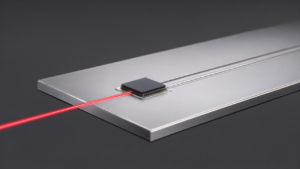
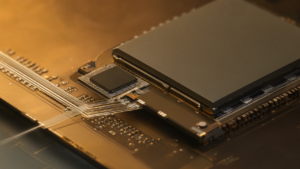
On May 28, 2026, PsiQuantum unveiled its Omega quantum photonic chipset, specifically designed to enable utility-scale fault-tolerant quantum computing. This groundbreaking chipset is manufactured on standard silicon wafers at GlobalFoundries and integrates all the advanced components necessary for building million-qubit scale systems, signifying a major breakthrough in the maturity and scalability of quantum photonic chips. Concurrently, PsiQuantum signed a $100 million Letter of Intent (LOI) with the U.S. Department of Commerce, solidifying government cooperation to accelerate domestic manufacturing capabilities and performance of critical components for utility-scale quantum computing.
Technical / Clinical Details
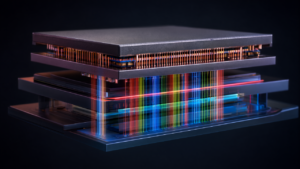
PsiQuantum’s photonic quantum computing approach focuses on manufacturing components like single-photon sources, detectors, and ultra-high-performance optical switches on standard silicon wafers using high-volume semiconductor foundries. The Omega chipset integrates the following key technologies:
- Single-Photon Qubits: Utilizes single photons in the telecommunications band to encode quantum information. This enables long-distance transmission via optical fibers, simplifying networking.
- Highly Integrated Silicon Photonics: Integrates photonic qubits and control electronics into manufacturable packages, improving system miniaturization and reliability. Collaboration with GlobalFoundries leverages existing semiconductor manufacturing infrastructure for large-scale production.
- Barium Titanate (BTO) Optical Switches: PsiQuantum employs barium titanate (BTO), a dielectric material, for its optical switches, enabling ultra-fast and efficient photon routing.
- Construct FTQC Software: The company has released its fault-tolerant quantum computing (FTQC) software, “Construct,” for developers. This tool aids in designing quantum circuits, writing and simulating quantum algorithms, and optimizing resources, fostering the growth of the broader quantum computing community.
These technologies form the foundation for building fault-tolerant, utility-scale quantum computers, with anticipated applications in areas such as new drug discovery and workforce development.
Background & Context
Building fault-tolerant quantum computers remains one of the greatest challenges in the quantum computing field. PsiQuantum addresses this challenge with a unique silicon photonics approach, leveraging existing semiconductor manufacturing techniques to resolve the cost and scalability issues of quantum computer production. The $100 million LOI with the U.S. Department of Commerce signifies strong government support for strengthening the domestic semiconductor supply chain and establishing U.S. leadership in photonic quantum computing. This funding is aimed at deploying large-scale prototype systems and improving the performance of quantum photonic chips.
Strategic Significance & Outlook
The announcement of the Omega chipset and the partnership with the U.S. Department of Commerce clearly demonstrate PsiQuantum’s acceleration of its roadmap towards realizing utility-scale quantum computers. The release of the Construct FTQC software is a crucial step in engaging the developer community and fostering the development of quantum algorithms and applications. Photonic quantum computing is believed to offer significant advantages in scalability and integration compared to other approaches like superconducting qubits and ion trap qubits. PsiQuantum’s technology is expected to become a powerful tool for solving complex problems currently intractable for classical computers, across fields such as drug discovery, materials science, and financial modeling.