Key Findings
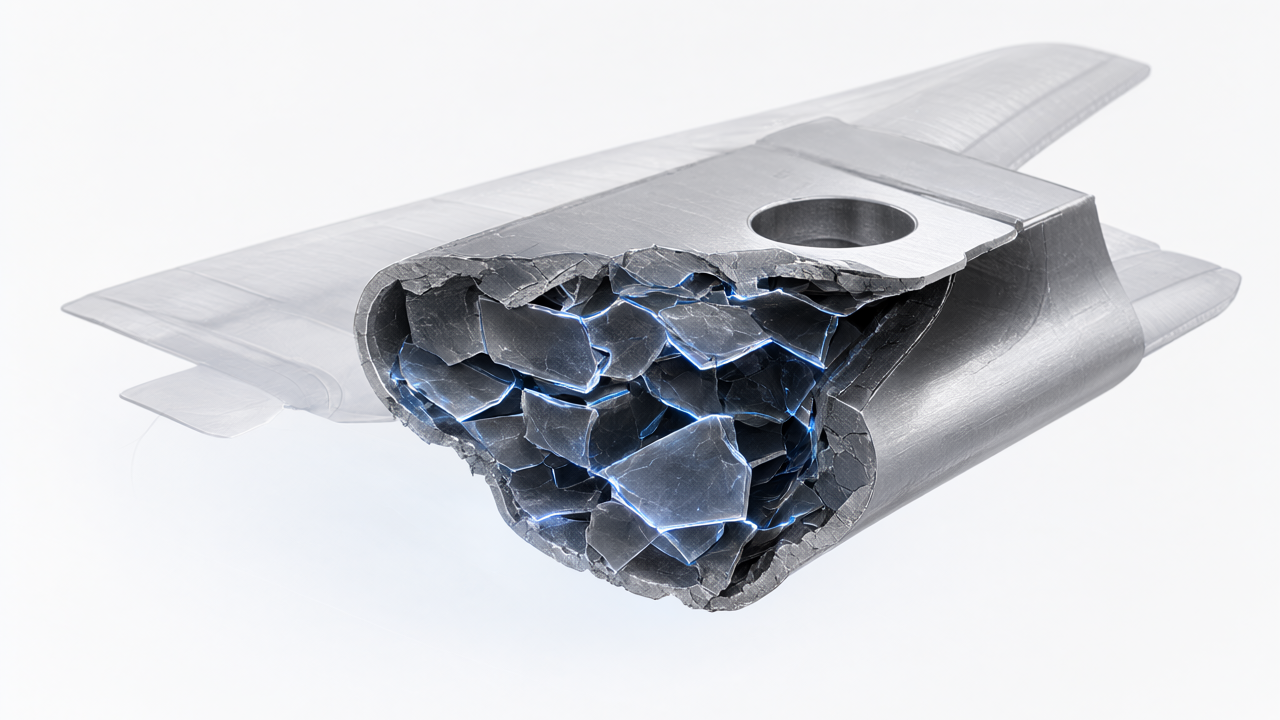
A recent comprehensive review article underscored the paramount importance of microstructure and interface engineering for the industrial maturation of graphene/aluminum composite materials, which are highly promising for key sectors such as aerospace, automotive, and electronics. Specifically, the review indicates that addressing challenges in nanoscale graphene dispersion and precise control over interfacial phases is a prerequisite for the successful commercialization of these multifunctional materials.
Technical/Clinical Details
- Properties of Graphene/Aluminum Composites: Composites combining graphene and aluminum offer multifunctional properties—including lightweighting, high strength, superior electrical and thermal conductivity—that are unattainable with monolithic aluminum. These characteristics make them highly desirable for applications such as aircraft lightweighting, high-performance automotive components, and enhanced heat dissipation in electronic devices.
- Dispersion Challenges: Due to its unique structure, graphene tends to agglomerate when mixed with other materials. Achieving a uniform, nanoscale dispersion of graphene within the aluminum matrix is crucial to maximize the composite’s performance. Non-uniform dispersion can severely impair the mechanical and electrical properties, preventing the realization of the material’s full potential.
- Importance of Interface Phase Control: The bonding condition at the graphene-aluminum interface directly influences the overall strength and stability of the composite. Optimized interfacial bonding improves load transfer efficiency and enhances the material’s fracture toughness. Conversely, the formation of undesirable interfacial phases (e.g., unstable metal carbides) can significantly degrade composite performance. The review discusses advances in interface control for manufacturing techniques such as molten metal processes, powder metallurgy, and sputtering.
Background & Context
Lightweighting and performance enhancement are critical trends across modern manufacturing industries. Specifically, the aerospace sector demands improved fuel efficiency, the automotive industry seeks better fuel economy and electrification solutions, and the electronics sector strives for miniaturization and higher efficiency. Graphene/aluminum composites are poised as next-generation materials to meet these demands, but establishing industrial-scale manufacturing techniques to translate laboratory achievements into practical applications has been a long-standing challenge globally.
Strategic Significance & Outlook
Advances in graphene dispersion techniques and interface engineering are decisive steps towards the commercialization of graphene/aluminum composites. Resolving these challenges will accelerate their adoption in a wider range of products, including automotive chassis, aircraft wings, high-performance battery casings, and thermal management systems. This will enable energy efficiency gains through lightweighting, extended product lifetimes, and the development of entirely new functionalities, leading to significant economic impacts across related industries. This technology represents a crucial competitive edge in the advanced materials sector.
Source: https://www.azonano.com/news.aspx?newsID=41837
Get our weekly technology intelligence — free
Receive an infographic that lets you judge at a glance whether each field’s analysis report is worth reading.
Subscribe Free — Weekly Tech Intelligence
By subscribing, you’ll receive Troy-Technical’s weekly technology intelligence newsletter.
- Your email and selected fields are used only to deliver the newsletter.
- We never share your information with third parties.
- You can unsubscribe anytime via the link in each email.
See our Privacy Policy for details.
Takes about a minute · Unsubscribe anytime








Comments