

Key Findings
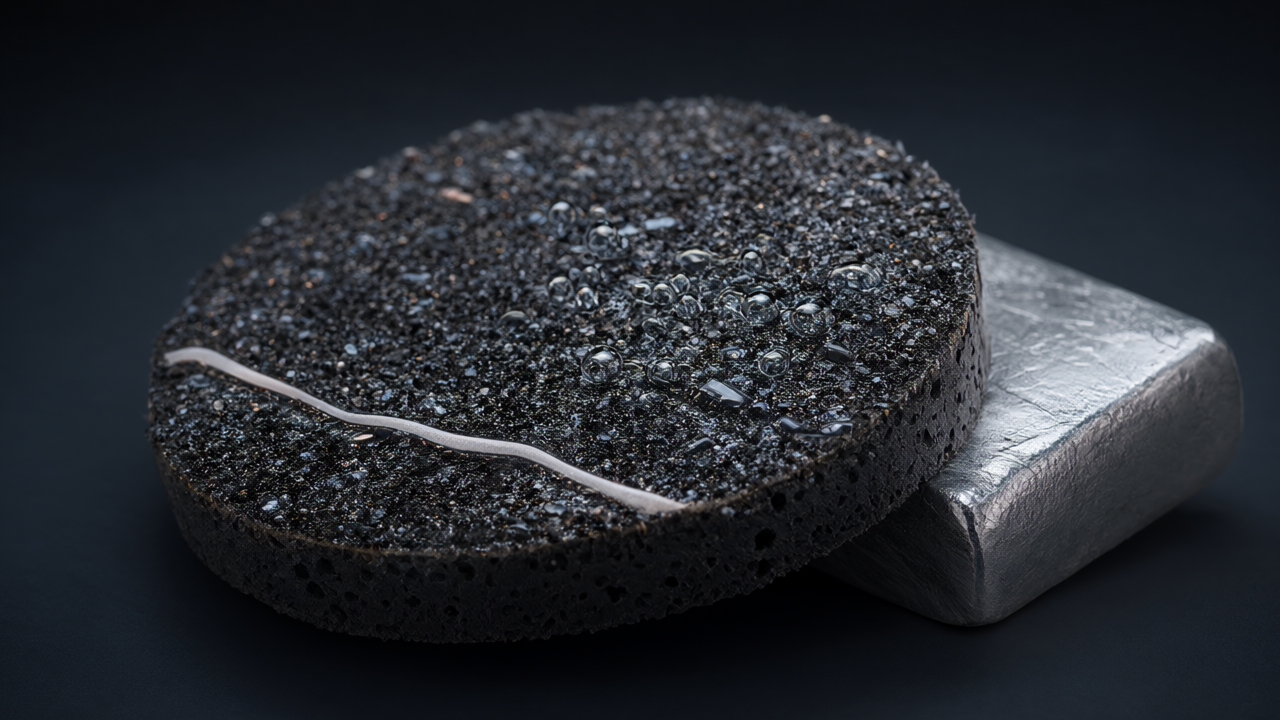
A composite material consisting of perovskite and graphitic carbon nitride (g-C3N4), specifically LCO/g-C3N4, has been developed as a highly efficient bifunctional oxygen electrocatalyst for zinc-air batteries. This innovative catalyst achieved substantial performance enhancements in both the oxygen reduction reaction (ORR) and the oxygen evolution reaction (OER), recording an impressive ORR onset potential of 0.87 V vs RHE and an OER overpotential of 380 mV at 10 mA/cm². This represents a critical breakthrough toward the practical application of zinc-air batteries and contributes to the advancement of sustainable energy storage technologies.
Technical Details
- Composite Material Composition: The catalyst combines a perovskite material, such as lanthanum cobalt oxide (LCO), with graphitic carbon nitride (g-C3N4). Perovskites possess high catalytic activity, while g-C3N4 provides excellent electron conductivity and a stable nanostructure.
- Bifunctional Catalyst: Zinc-air batteries require efficient oxygen reduction from air during discharge (ORR) and oxygen evolution from water during charging (OER). The LCO/g-C3N4 composite demonstrates bifunctional capability, efficiently catalyzing both these reactions.
- ORR Performance: A high ORR onset potential of 0.87 V vs RHE (Reversible Hydrogen Electrode) indicates that oxygen reduction can commence with minimal energy loss, thereby improving battery efficiency during discharge.
- OER Performance: A low OER overpotential of 380 mV at 10 mA/cm² signifies reduced energy consumption during charging, enhancing the battery’s charging efficiency. This performance potentially surpasses the bifunctional performance of commercial Pt/C and RuO2/C catalysts.
- Synergistic Effects: The synergistic interaction between LCO and g-C3N4 leads to superior catalytic activity and durability compared to the individual materials. Specifically, optimization of the electronic structure at the composite interface is believed to tune the adsorption energy of reaction intermediates, enhancing catalytic activity.
Background & Context
Zinc-air batteries are gaining attention as a next-generation solution for large-scale energy storage systems and electric vehicle batteries due to their high theoretical energy density, low-cost materials (zinc, air), and high safety. However, the sluggish kinetics of ORR and OER have been significant barriers to their practical application. There is an urgent need to develop inexpensive, highly durable bifunctional electrocatalysts that can efficiently catalyze both these reactions. Existing noble metal catalysts (Pt, RuO2) are expensive, making the search for alternative materials crucial.
Strategic Significance & Outlook
The development of the LCO/g-C3N4 composite catalyst holds significant potential to improve the performance and reduce the cost of zinc-air batteries. Future steps will involve establishing large-scale production methods for this catalyst and conducting long-term performance and stability evaluations in actual zinc-air battery stacks. If commercialized, this technology is expected to accelerate the adoption of zinc-air batteries in a wide range of fields, including renewable energy storage, smart grids, and electric vehicles, contributing to the realization of a sustainable society.
Source: https://bioengineer.org/perovskite-and-carbon-nitride-team-up-to-build-a-better-battery-catalyst/
Get our weekly technology intelligence — free
Receive an infographic that lets you judge at a glance whether each field’s analysis report is worth reading.
Subscribe Free — Weekly Tech Intelligence
By subscribing, you’ll receive Troy-Technical’s weekly technology intelligence newsletter.
- Your email and selected fields are used only to deliver the newsletter.
- We never share your information with third parties.
- You can unsubscribe anytime via the link in each email.
See our Privacy Policy for details.
Takes about a minute · Unsubscribe anytime