


Key Findings
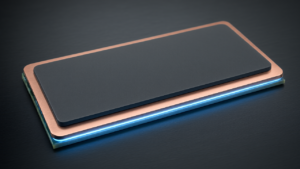
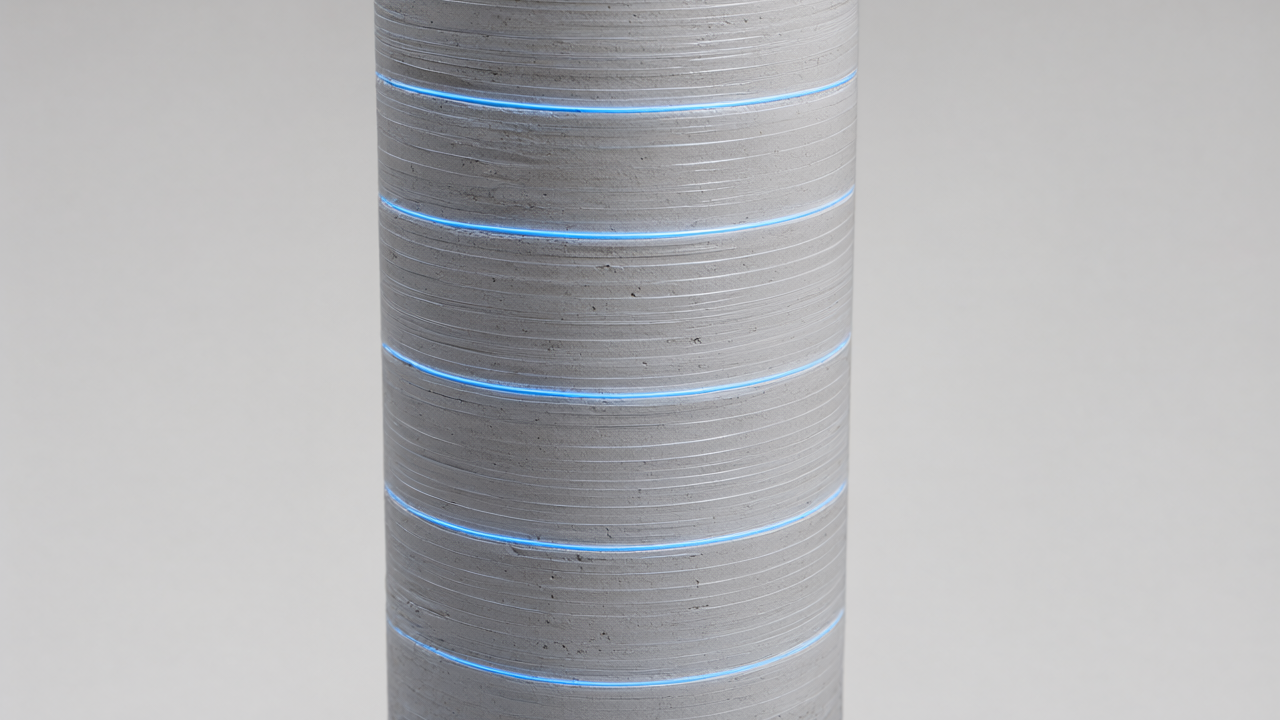
Through research applying 3D printing technology, innovative cement supercapacitors have been developed, enabling building walls to possess energy storage capabilities. This technology integrates carbon nanotubes and carbon black into a cement matrix to form conductive electrode materials. The fabricated supercapacitors successfully powered small LEDs, demonstrating a dual role of energy storage and structural function. This indicates the potential for building materials to evolve from mere structural elements into active energy management systems.
Technical Details
- Integration via 3D Printing: Cement-based materials are shaped into complex geometric structures using 3D printing technology, and by precisely placing conductive ink (containing carbon nanotubes and carbon black), a network is formed that functions as supercapacitor electrodes. This technology holds the potential to seamlessly integrate power storage units of customized shapes and sizes into architectural structures.
- Material Composition:
- Cement Matrix: Provides structural stability and durability.
- Carbon Nanotubes (CNTs): Offer high electrical conductivity and large specific surface area, enhancing the conductive network and ion adsorption sites of the electrode material.
- Carbon Black: Complements the conductivity of CNTs, homogenizes the overall conductivity of the material, and improves cost-efficiency.
- Energy Storage Mechanism: The developed cement-based material stores charge by adsorbing and desorbing ions in an electrolyte as an electric double layer, owing to its porous structure and the conductivity of CNTs and carbon black. This allows for faster charging and discharging compared to conventional batteries.
- Demonstration: The prototyped cement supercapacitors successfully lit small LEDs, demonstrating their effective energy storage capacity and power supply function. This is a crucial step towards realizing “smart buildings” where the buildings themselves store and utilize electricity.
Background & Context
Sustainable urban development and energy management are global challenges. With the increasing adoption of renewable energy, efficient energy storage solutions are essential to compensate for its intermittency. Simultaneously, efficiency and multifunctionality of materials are demanded in building construction. Traditional energy storage systems have faced challenges such as requiring separate spaces and high installation costs. The idea of building materials themselves possessing energy storage functions offers potential solutions to both these challenges, revolutionizing urban energy infrastructure.
Strategic Significance & Outlook
The development of 3D-printed cement supercapacitors has the potential to significantly impact the construction and energy sectors. Future key challenges will include large-scale demonstration of this technology, evaluation of durability and safety (especially fire resistance), and optimization of manufacturing costs. Research is also expected to advance on achieving larger energy storage capacities, longer fast-charge/discharge cycle life, and integration into actual buildings. As this technology matures, building walls, floors, and roofs could function as distributed energy storage units, accelerating the realization of smart cities and net-zero energy buildings, contributing to a sustainable future.
Get our weekly technology intelligence — free
Receive an infographic that lets you judge at a glance whether each field’s analysis report is worth reading.
Subscribe Free — Weekly Tech Intelligence
By subscribing, you’ll receive Troy-Technical’s weekly technology intelligence newsletter.
- Your email and selected fields are used only to deliver the newsletter.
- We never share your information with third parties.
- You can unsubscribe anytime via the link in each email.
See our Privacy Policy for details.
Takes about a minute · Unsubscribe anytime