Key Findings
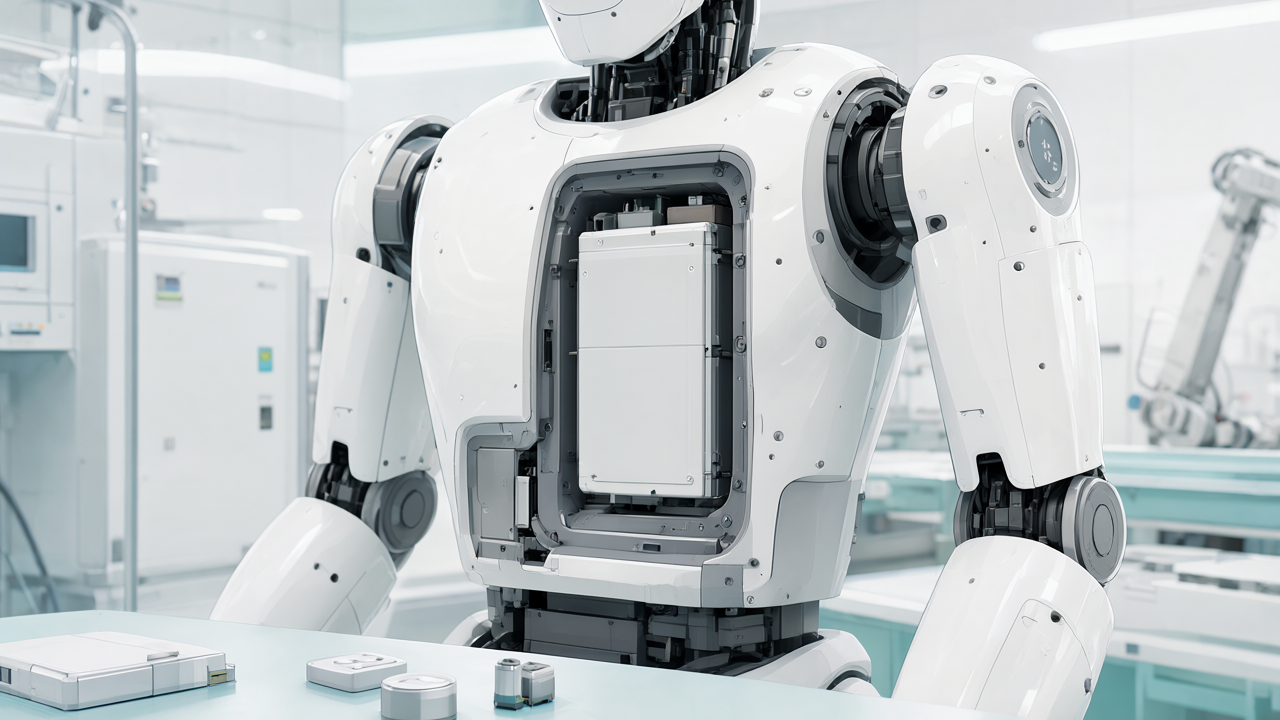
Following Samsung SDI, Panasonic Energy has also indicated a strong focus on humanoid robots as an initial market for solid-state batteries. Panasonic Energy plans to commence sample shipments of small industrial solid-state batteries (coin and prismatic types) in Q4 2026, designed to withstand temperatures up to 150°C. These batteries are targeted for applications such as sensors and monitoring devices in industrial robots and other equipment exposed to high temperatures. In parallel, Japan’s Toyota and Idemitsu Kosan continue to pursue their goal of deploying sulfide-based solid-state batteries in electric vehicles (EVs) between 2027 and 2028.
Technical Details
Panasonic Energy’s small industrial solid-state batteries will be available in both coin and prismatic formats, with a notable feature being their high heat resistance up to 150°C. This allows for stable operation in high-temperature environments prevalent in industrial settings or within certain electronic devices. This capability offers unprecedented performance and reliability for sensors in factory robots, heat-generating monitoring equipment, and other specialized industrial devices where conventional batteries fall short. Conversely, Toyota and Idemitsu Kosan’s joint development of sulfide-based solid-state batteries is primarily focused on achieving extended range and rapid charging performance for EVs, aiming to surpass the limitations of current lithium-ion batteries. While sulfide-based solid electrolytes offer high ionic conductivity, challenges related to manufacturing processes and air stability have existed, but both companies are working to overcome these for EV commercialization by 2027-2028.
Background & Context
The race for solid-state battery development spans diverse sectors including automotive, consumer electronics, and industrial equipment. All-solid-state batteries for EVs are considered the ultimate goal due to their high energy density and safety, but mass production still faces challenges related to manufacturing costs and technical complexities. Against this backdrop, a strategy of early adoption in niche markets such as humanoid robots or industrial equipment operating under high-temperature conditions is gaining traction. This approach aims to mature the technology and drive down costs, serving as a crucial stepping stone towards the broader commercialization of solid-state batteries for EVs.
Strategic Significance & Outlook
Panasonic Energy’s initiation of sample shipments for small industrial solid-state batteries marks a groundbreaking step that will accelerate the practical application of solid-state batteries in specific industrial sectors. This could open up new applications in high-temperature environments. Meanwhile, the development of sulfide-based solid-state batteries by Toyota and Idemitsu Kosan remains a significant challenge that will shape the future of the automotive industry. These distinct approaches highlight the diverse evolution of solid-state battery technology, and success in each respective area is expected to drive broader market adoption. The progress of technological development and market introduction over the next few years will be crucial in shaping the future of next-generation batteries.
Source: https://finance.biggo.com/news/9387c612-a5af-4a80-9760-6c4b16376b51
Get our weekly technology intelligence — free
Receive an infographic that lets you judge at a glance whether each field’s analysis report is worth reading.
Subscribe Free — Weekly Tech Intelligence
By subscribing, you’ll receive Troy-Technical’s weekly technology intelligence newsletter.
- Your email and selected fields are used only to deliver the newsletter.
- We never share your information with third parties.
- You can unsubscribe anytime via the link in each email.
See our Privacy Policy for details.
Takes about a minute · Unsubscribe anytime