Key Findings
Samsung Electronics is significantly advancing thermal management solutions for its next-generation HBM4E, with Hybrid Copper Bonding (HCB) and Heat Path Block (HPB) technologies under development. This strategic focus comes as AI semiconductor interposers are projected to expand by up to 40 times their current maximum EUV exposure area, underscoring the critical need for robust cooling to support the increasing density and performance of AI chips.
Technical / Clinical Details
HBM4E is slated for volume production in 2027, and its successful deployment hinges on innovative thermal solutions. Samsung’s key technologies in development include:
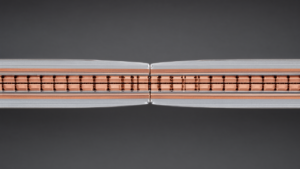
- Hybrid Copper Bonding (HCB): This technology aims to eliminate traditional micro-bumps, enabling direct copper-to-copper interconnects between stacked dies. This direct metallic path significantly reduces the distance heat must travel, lowering thermal resistance. Furthermore, HCB allows for much finer pitch connections, contributing to increased data bandwidth.
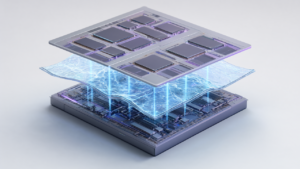
- Heat Path Block (HPB): HPB is designed to improve thermal performance by optimizing heat conduction pathways within the package itself, without relying on hybrid bonding. This approach helps to homogenize temperature distribution across the HBM stack, mitigating the formation of critical hotspots.
These technologies are engineered to efficiently dissipate the substantial heat generated by each die within the HBM4E stack to the external environment. The dramatic scaling of AI semiconductor interposers implies the integration of more HBM stacks and logic chips, which in turn leads to a proportional increase in total heat generation. HCB and HPB are vital components in resolving this thermal challenge, enabling sustained performance improvements for AI chips.
Background & Context
The exponential growth of AI has created unprecedented computational demands, driving a surge in demand for high-performance memory like HBM. Due to its high-density stacking, HBM poses severe thermal challenges, pushing conventional cooling methods to their limits. The prediction of AI semiconductor interposers expanding up to 40 times highlights a significant increase in interconnect area and power density, making advanced thermal management an urgent priority. Samsung’s initiatives reflect the current reality where thermal management is becoming a central determinant of performance and cost-efficiency in AI-era semiconductor design.
Strategic Significance & Outlook
By integrating HCB and HPB into HBM4E, Samsung Electronics aims to substantially enhance its competitive position in the high-performance AI chip market. The company is not only focusing on the HBM stack but also actively developing comprehensive cooling solutions at the entire package and server system levels. Through collaborations with equipment suppliers and back-end partners, Samsung is working to establish new thermal management standards for next-generation AI infrastructure. This holistic and strategic approach is indispensable for supporting the future evolution of AI technology and positions Samsung to potentially lead the entire AI semiconductor ecosystem.
Source: https://finance.biggo.com/news/fbd1df40-4a0b-4577-b566-8613c560068c
Get our weekly technology intelligence — free
Receive an infographic that lets you judge at a glance whether each field’s analysis report is worth reading.
Subscribe Free — Weekly Tech Intelligence
By subscribing, you’ll receive Troy-Technical’s weekly technology intelligence newsletter.
- Your email and selected fields are used only to deliver the newsletter.
- We never share your information with third parties.
- You can unsubscribe anytime via the link in each email.
See our Privacy Policy for details.
Takes about a minute · Unsubscribe anytime