
Key Findings
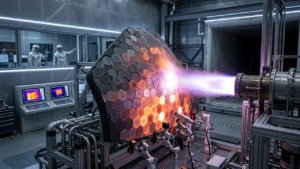
A research team at the U.S. Department of Energy’s Lawrence Berkeley National Laboratory, in a decade-long partnership with NASA, has achieved a groundbreaking feat: real-time, 3D visualization of spacecraft heat shield material degradation under extreme heat. By combining X-ray micro-computed tomography (X-ray micro-CT) at the Advanced Light Source (ALS) with advanced AI training models, scientists can now observe the microscopic decomposition of materials at temperatures exceeding 900°C. This unparalleled capability offers critical insights into the ablative processes, promising to drastically improve the reliability and safety of thermal protection systems during atmospheric re-entry for future space missions.
Technical / Clinical Details
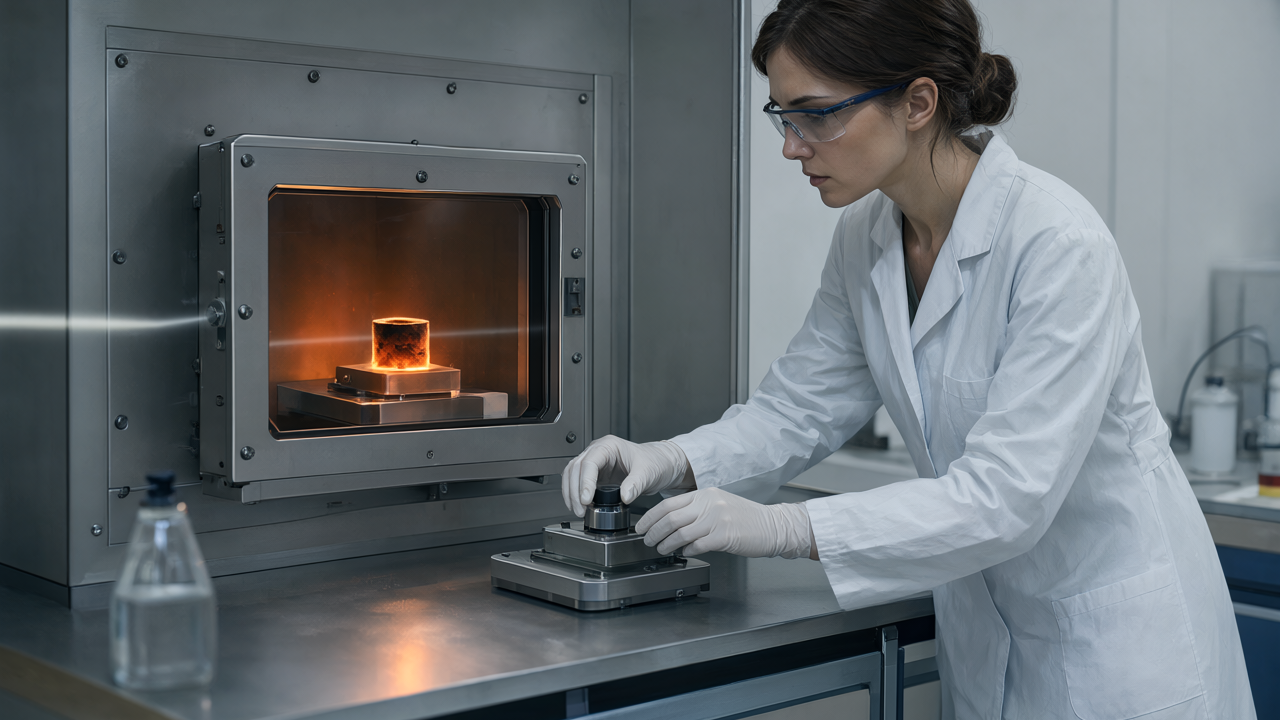
The study focused on two types of ‘super light ablator’ materials, SLA-561V and SLA-220, commonly used in Mars probes and slated for Artemis missions. By heating these materials up to approximately 900°C while continuously acquiring X-ray scans at millisecond intervals, the team captured the dynamic internal structural changes. AI models were then employed to analyze this vast dataset, revealing how distinct components, such as the cork fillers in SLA-561V and silicon channels in SLA-220, exhibit different degradation patterns. This real-time observation elucidated the complex mechanisms of internal structural rearrangement and gas evolution pathways, providing precise data essential for developing more accurate performance models and optimizing material design.
Background & Context
During atmospheric re-entry or planetary landing, spacecraft endure extreme temperatures reaching thousands of degrees, making heat shields critical for protecting both the vehicle and its crew. Historically, research into these thermal protection systems has relied heavily on post-mortem analysis and computational simulations, making it challenging to understand the intricate internal degradation mechanisms in real-time under operational conditions. This breakthrough addresses that long-standing challenge by fusing material science with cutting-edge AI. NASA, in particular, has a continuous need for improving heat shield technology to ensure the safety of its crewed and uncrewed missions, including the ambitious Artemis program aiming for lunar return and eventual Mars exploration.
Strategic Significance & Outlook
The development of this real-time 3D visualization technique has the potential to fundamentally transform spacecraft heat shield design. Researchers aim to leverage the newly acquired data to refine existing ablator material performance models, leading to the development of lighter, more efficient, and robust thermal protection systems. For future missions, such as lunar base construction and Mars exploration, which involve even more demanding environments, this technology is expected to enhance design reliability and contribute significantly to mission success. Beyond aerospace, the methodology could also find applications in terrestrial extreme environment material research, such as in high-temperature furnaces and nuclear power plants, offering broad scientific and industrial impact.
Get our weekly technology intelligence — free
Receive an infographic that lets you judge at a glance whether each field’s analysis report is worth reading.
Subscribe Free — Weekly Tech Intelligence
By subscribing, you’ll receive Troy-Technical’s weekly technology intelligence newsletter.
- Your email and selected fields are used only to deliver the newsletter.
- We never share your information with third parties.
- You can unsubscribe anytime via the link in each email.
See our Privacy Policy for details.
Takes about a minute · Unsubscribe anytime