

Key Findings
A research team at Lawrence Berkeley National Laboratory has achieved unprecedented real-time visualization and analysis of spacecraft heat shield material degradation under extreme high-temperature conditions. This breakthrough was made possible by combining X-ray micro-computed tomography (X-ray micro-CT) with artificial intelligence (AI), allowing for detailed, non-destructive capture of internal material changes with remarkable precision.
Technical / Clinical Details
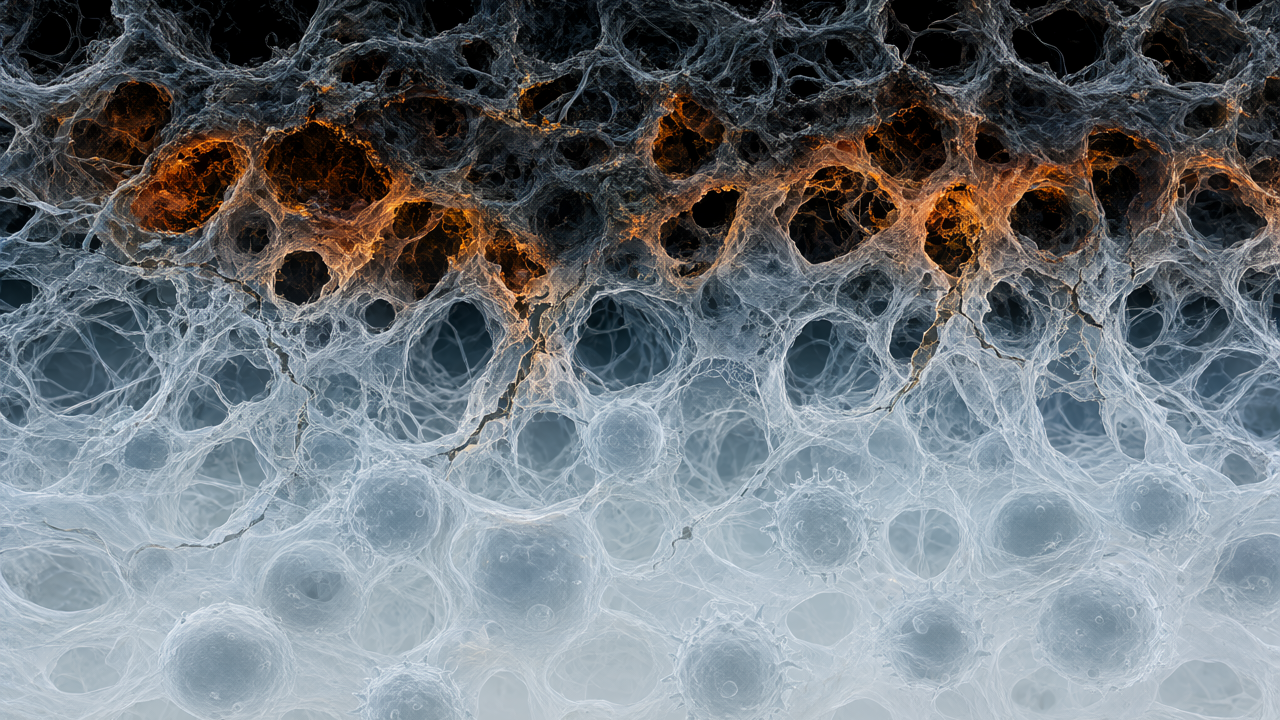
The study focused on two common ablative materials used in spacecraft thermal protection systems: SLA-561V and SLA-220. These materials were exposed to extremely high heat fluxes and temperatures (up to several thousand degrees Celsius) during simulated atmospheric re-entry conditions. X-ray micro-CT continuously captured the subtle microstructural changes occurring within the materials, such as density reduction, crack initiation, and void formation. Critically, an AI-based super-resolution algorithm was applied to low-resolution scan data. This technique not only reduced noise but also enhanced spatial resolution, allowing for high-precision extraction of detailed information about the degradation process. This approach provided new insights into the ablative mechanisms and enabled a deeper understanding of the material’s thermal and structural responses at a microscopic level.
Background & Context
Atmospheric re-entry for spacecraft represents an exceptionally harsh environment, where the performance of heat shields directly dictates mission success and astronaut safety. Prior research on heat shields predominantly relied on post-experimental material analysis and macroscopic evaluations, making it challenging to grasp real-time internal changes during re-entry. Organizations like NASA and SpaceX are actively pursuing the development of reusable spacecraft, making improvements in heat shield durability and predictive accuracy critical for reducing operational costs and ensuring safety. This research represents a pivotal advancement in addressing these pressing industry needs.
Strategic Significance & Outlook
This integrated analytical method, combining X-ray micro-CT and AI, is poised to profoundly impact the design and optimization of thermal protection systems for future space missions. It is expected to facilitate the development of more reliable reusable spacecraft, enhance the safety of sample-return missions from Mars and other planets, and find applications in terrestrial extreme environment technologies such as hypersonic vehicles. Improved real-time degradation monitoring and enhanced prediction accuracy of material behavior will enable risk reduction during the design phase and optimize material selection, providing a foundational technology that powerfully drives the new era of space exploration.
Source: https://wisevoter.com/world/us/2026/09/24/researchers-imaged-spacecraft-heat-shield-degradation
Get our weekly technology intelligence — free
Receive an infographic that lets you judge at a glance whether each field’s analysis report is worth reading.
Subscribe Free — Weekly Tech Intelligence
By subscribing, you’ll receive Troy-Technical’s weekly technology intelligence newsletter.
- Your email and selected fields are used only to deliver the newsletter.
- We never share your information with third parties.
- You can unsubscribe anytime via the link in each email.
See our Privacy Policy for details.
Takes about a minute · Unsubscribe anytime