

Key Findings
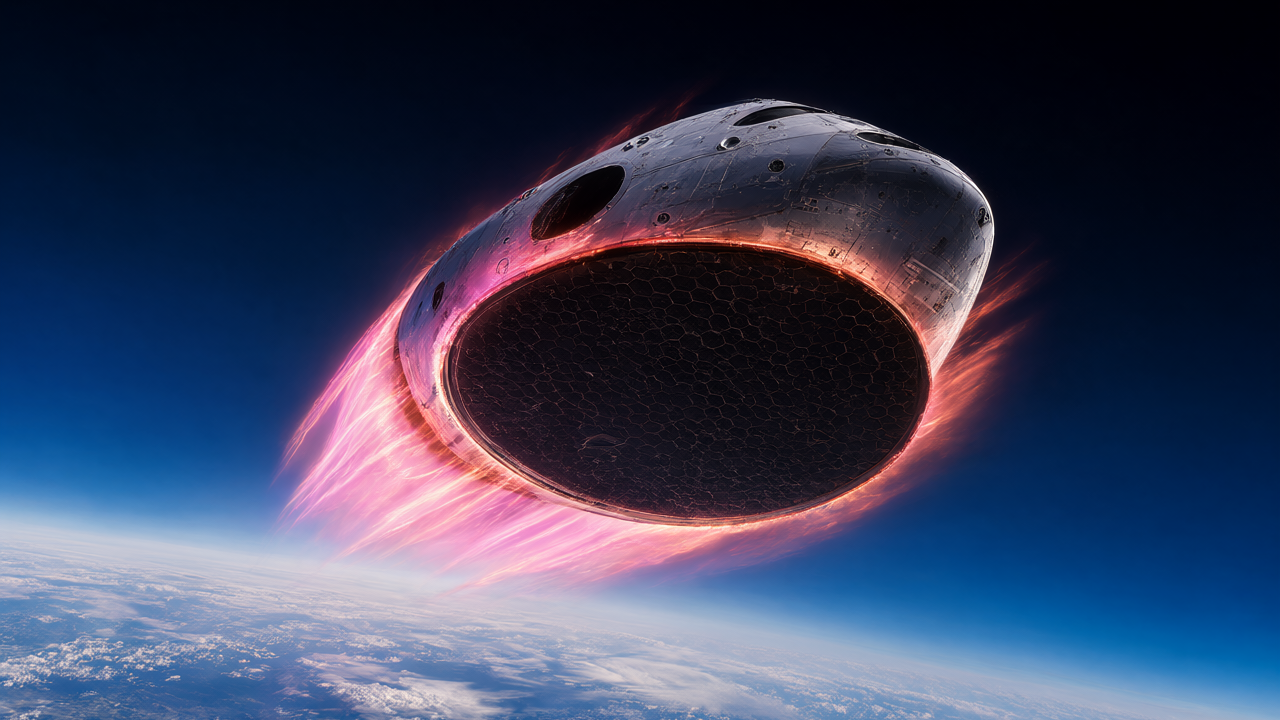
SpaceX’s Starship conducted its maiden orbital flight, executing a crucial test of its heat shield performance, which is a paramount factor in realizing a fully reusable rocket system. This flight yielded invaluable data regarding the behavior of its heat shield, composed of approximately 18,000 hexagonal silica ceramic tiles, and validated recent design enhancements aimed at improving its resilience under extreme conditions.
Technical / Clinical Details
The Starship’s heat shield is an essential system designed to protect the vehicle from the extreme hypersonic heating generated during atmospheric reentry. This shield is constructed from roughly 18,000 individually bonded, heat-resistant silica ceramic tiles. Based on insights from previous test flights, SpaceX engineers implemented reinforced tile attachment mechanisms in areas identified as potentially vulnerable and introduced measures to prevent high-temperature plasma intrusion beneath the tiles. During this orbital flight, the heat shield’s condition was monitored in real-time using cameras mounted on Starlink satellites. Following atmospheric reentry, a detailed analysis and comparison of the recovered tiles were performed, providing a comprehensive assessment of the shield’s performance and durability.
Background & Context
The development of fully reusable space rockets is critical to dramatically reduce space launch costs and democratize access to space. However, achieving a heat shield capable of withstanding the extreme thermal loads of reentry for repeated use remains one of the most formidable technical challenges. Starship’s reusability concept, while reminiscent of the Space Shuttle’s complex tile system, aims for a simpler and more robust design. This inaugural orbital flight was a vital step in validating whether this design functions as intended, holding decisive implications for SpaceX’s vision of a completely reusable launch system.
Strategic Significance & Outlook
The successful validation of the heat shield’s performance during this flight is a litmus test for Starship’s potential to become a fully reusable space transport system. If the heat shield performs as expected and proves reusable with minimal refurbishment, SpaceX will be significantly closer to achieving low-cost, large-scale satellite deployments, human missions to the Moon and Mars, and even space tourism. The data gathered will contribute to further design optimization and advancements in materials science, accelerating innovation across the entire space transport industry. Starship’s success has the potential to usher in a new era of the space economy.
Get our weekly technology intelligence — free
Receive an infographic that lets you judge at a glance whether each field’s analysis report is worth reading.
Subscribe Free — Weekly Tech Intelligence
By subscribing, you’ll receive Troy-Technical’s weekly technology intelligence newsletter.
- Your email and selected fields are used only to deliver the newsletter.
- We never share your information with third parties.
- You can unsubscribe anytime via the link in each email.
See our Privacy Policy for details.
Takes about a minute · Unsubscribe anytime