


Key Findings
The study confirms that a fully solvent-free approach to tandem solar cell production can deliver the efficiency and stability required for industrial-scale manufacturing. A primary result of this research is the demonstrated long-term stability of the cells, which retained 97.06% of their initial efficiency after 6,800 hours of testing.
Technical Details
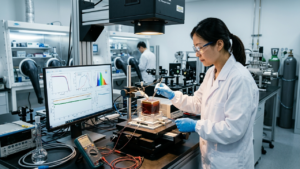
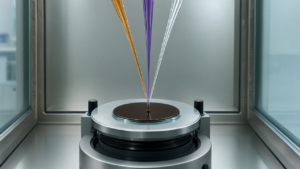
The manufacturing process utilizes physical vapour deposition to construct the solar cells. This specific technical transition removes the need for toxic solvents typically used in production. By eliminating these chemical agents, the process achieves two critical technical improvements: the reduction of contamination within the cell structure and the mitigation of environmental risks associated with solvent handling and disposal.
Background & Context
Traditional tandem solar cell fabrication often relies on solvent-based methods that can introduce impurities or create hazardous waste streams. The shift toward a solvent-free methodology addresses these industrial bottlenecks. The research specifically tests whether removing these solvents compromises the performance or durability of the cell, concluding that the resulting cells maintain high efficiency over extended periods.
Significance & Outlook
The transition to physical vapour deposition offers a scalable route toward the industrial manufacturing of next-generation tandem solar cells. By removing toxic components and ensuring stability over thousands of hours, this approach aligns the technology with the rigorous requirements of commercial solar production. This methodology enhances the scalability of clean energy by providing a cleaner, more stable path from laboratory research to large-scale industrial application.
Source: https://wsset.org/news/how-do-solvent-free-tandem-solar-cells-boost-clean-energy-scalability/
Get our weekly technology intelligence — free
Receive an infographic that lets you judge at a glance whether each field’s analysis report is worth reading.
Subscribe Free — Weekly Tech Intelligence
By subscribing, you’ll receive Troy-Technical’s weekly technology intelligence newsletter.
- Your email and selected fields are used only to deliver the newsletter.
- We never share your information with third parties.
- You can unsubscribe anytime via the link in each email.
See our Privacy Policy for details.
Takes about a minute · Unsubscribe anytime