Key Findings
On September 28, 2026, seven Chinese government departments, including the Ministry of Industry and Information Technology and the National Development and Reform Commission, issued the “15th Five-Year Plan for the Development of the New-Type Battery Industry” (MIIT Joint Regulation No. 220 [2026]). This plan establishes a national timetable for all-solid-state batteries to achieve initial large-scale application by 2030. Additionally, the plan sets rigid indicators for long-life lithium batteries to reach 15,000 cycles and for leading enterprises to reduce product defect rates to the PPB (parts per billion) level.
Technical Details
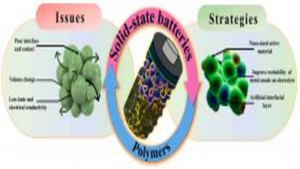
The transition to all-solid-state technology is currently bridged by hybrid solid-liquid (semi-solid) batteries. However, all-solid-state cells face three primary technical barriers:
- Interface Impedance: Interface impedance accounts for 60–80% of total impedance. High voltage on the cathode side causes electrolyte oxidation and decomposition, while lithium metal on the anode drives reduction, creating high-resistance layers.
- Lithium Dendrites: Maintaining contact in sulfide electrolytes requires 50–150MPa of external pressure; insufficient pressure leads to contact failure, while excessive pressure can induce dendrite penetration.
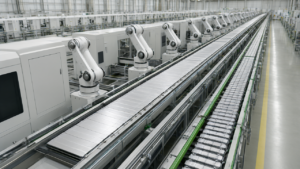
- Manufacturing Costs: Sulfide electrolytes react with water and oxygen to produce toxic hydrogen sulfide, requiring production line dew points below -40℃ or -70℃. Equipment investment per GWh is 2–3 times higher than liquid lines. Initial all-solid-state cell costs are estimated at over 2 or 3 yuan/Wh, compared to less than 0.5 yuan/Wh for lithium iron phosphate cells.
Background & Context
Market adoption of transitional technologies is already visible. The new generation MG4 utilizes second-generation semi-solid-state batteries, and NIO began operating a 150kWh battery pack (360Wh/kg supplied by Welan New Energy) in June 2024. In contrast, Toyota and Nissan have set mass production timelines for solid-state battery vehicles in 2028. Despite these challenges, sulfide solid electrolyte costs have dropped from 20 million yuan per ton to less than 1 million yuan per ton since the start of this year, and 60Ah-class all-solid-state cells have begun rolling off pilot production lines.
Significance & Outlook
The shift from liquid to solid electrolytes removes fluidity, meaning any loss of contact on the interface film is permanent. Overcoming these scaling effects and manufacturing costs will determine the industry leaders for the next decade.
Source: https://eu.36kr.com/en/p/4019304011976585
Get our weekly technology intelligence — free
Receive an infographic that lets you judge at a glance whether each field’s analysis report is worth reading.
Subscribe Free — Weekly Tech Intelligence
By subscribing, you’ll receive Troy-Technical’s weekly technology intelligence newsletter.
- Your email and selected fields are used only to deliver the newsletter.
- We never share your information with third parties.
- You can unsubscribe anytime via the link in each email.
See our Privacy Policy for details.
Takes about a minute · Unsubscribe anytime